
South Africa Safari, Vacations, Tours & Travel Packages


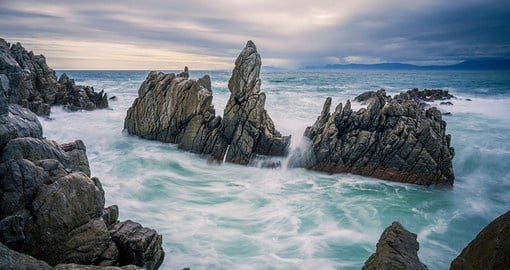
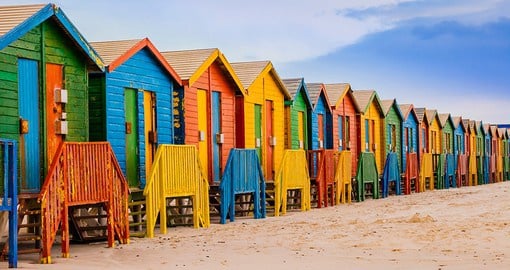
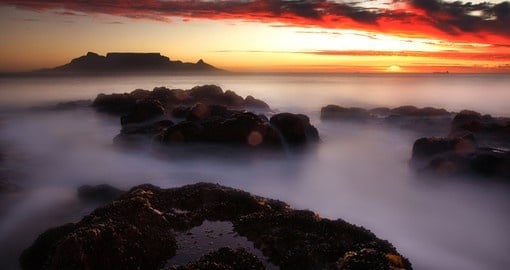
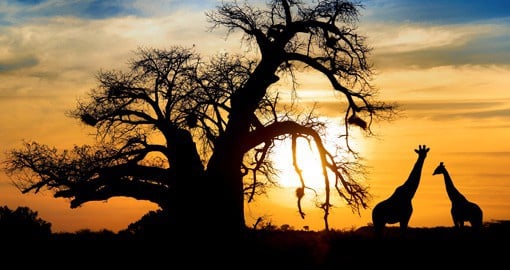
There is absolutely no doubt South Africa is blessed with spectacular natural beauty, a fantastic climate and diversely interesting regions with diverse cultures. To say that South Africa is a virtual paradise is a true statement. The country geographically consists of an unspoiled coastline stretching for 2800 kilometres/1740 miles, dramatic mountains and escarpments, extensive bushveld, subtropical forest and outstanding wetlands. Although a comparatively large country, it is easy to get around on a South Africa vacation due to its excellent air and rail services.
About South Africa
It is bordered by Namibia, Botswana, Zimbabwe and Mozambique and itself surrounds two independent countries, Swaziland and Lesotho. The coastline is part of both the Atlantic and Indian Oceans. Interestingly, South Africa has 3 capitals. Cape Town is the legislative capital, Pretoria, is the administrative and Bloemfontein is judicial. The country is divided into 9 provinces and has 11 official languages.
What are the best things to see and do in South Africa?
Although the main attraction is no doubt the natural beauty on a South African vacation, the visitor can also enjoy the many wildlife reserves suitable for South Africa safaris, outdoor pursuits, historical sites, wine tasting, local arts and crafts, art galleries and museums plus much more. Some interesting facts are South Africa has the deepest mine in the world, the highest commercial bungee jump, 2000 shipwrecks along its coastline, some more than 500 years old and some of the world’s oldest fossils. Table Mountain has more than 1500 different species of plants and Kruger Park has the greatest variety of wildlife on the continent of Africa.
Where should I go on my South Africa trip?
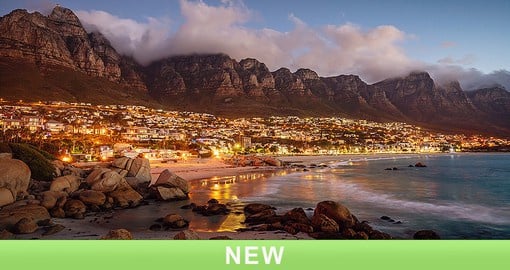
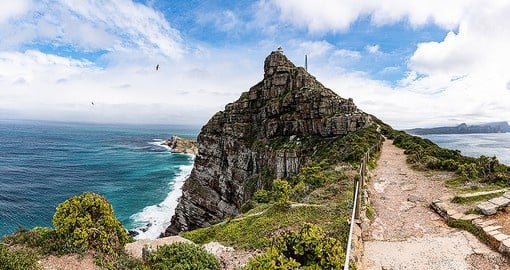
A good starting point on South Africa tours is Cape Town, a cosmopolitan and modern city surrounded by incredible natural landscapes like Table Mountain and a multitude of beautiful beaches. Table Mountain dominates the city and hovers over not only the downtown core but also the near-lying suburbs. It can be reached by cable car and offers amazing views of the surrounding area. The Victoria and Alfred Waterfront is a bustling shopping, dining and entertainment neighbourhood and a pleasant place to simply stroll around or enjoy a meal or a drink. Robben Island, a short ferry ride from the city, is where Nelson Mandela spent many years incarcerated and is now UNESCO World Heritage Site. The Kirstenbosch Botanical Gardens have some of the most beautiful unique flora anywhere and around 2000 plant species are grown here. One of the most interesting cultural attractions in Cape Town is the District Six Museum, a memorial to the forced movement of inhabitants of various races in District Six during Apartheid in the seventies shown in photographs, recordings and testimonials. A must-visit from Cape Town on South Africa travel is the Cape of Good Hope which offers awesome breathtaking scenery, great walks and some 250 different species of birds. Its rocky promontory is where the Atlantic and Indian Oceans meet with sheer cliffs plunging into the pounding ocean. Make sure to see the fascinating penguins at Boulders Beach en route.
Johannesburg is certainly a sprawling metropolis but it is one of the most modern and prosperous cities in South Africa. Interesting things to do here include visits to Gold Reef City to get some idea of what the city was like in the Gold Rush days, the Apartheid Museum, a vivid and powerful experience by means of enlarged photos, artifacts, newspaper clippings, and film and Soweto, built as a separate township community for native African people and former home to Nelson Mandela.
Not far from Johannesburg is the administrative capital, Pretoria with its plethora of blossoming trees that gave it its nickname, Jacaranda City. Here certainly pay a visit on a South African vacation to the interesting parliament buildings, the imposing Voortrekker Monument and Freedom Park with its Garden of Remembrance, built in memory of all who died in the struggle against Apartheid.
Durban with its mild climate and sandy beaches is a good place to relax, swim or maybe surf. It offers an exciting mix of urban Zulu culture, a large Indian population and English-speaking South Africans. Take in the city’s interesting Indian Quarter and explore the markets offering exotic spices. Nearby Uhmlanga is a very popular beach resort with locals and visitors alike with its great sand and attractive rocky coastline.
Port Elizabeth nicknamed "The Friendly City" or "The Windy City" stretches for 16 kilometres/10 miles along Algoa Bay. It is the second oldest city and the fifth largest in South Africa. Life here revolves around the ocean and it is one of the major seaports in South Africa with many fine beaches plus a number of historic attractions, many of which are linked by the Donkin Heritage Trail. These include the Campanile (bell tower), built in 1923 to commemorate the arrival of the 1820 Settlers and which offers a great viewpoint over the city on a South African vacation.
The best Safari in South Africa
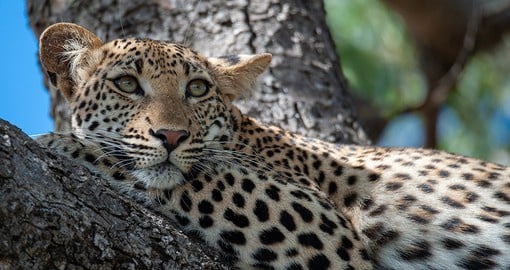
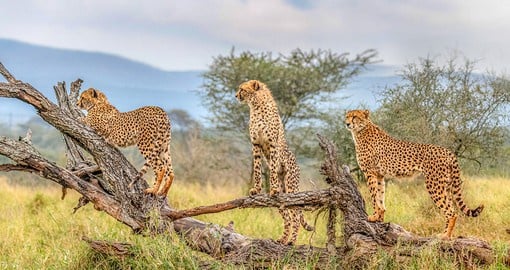
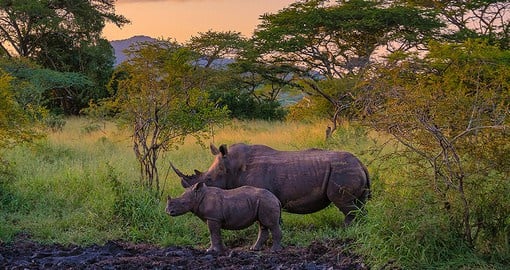
Internationally renowned Kruger National Park is South Africa’s number one wildlife reserve. It encompasses nearly two million hectares and fourteen different ecosystems, Kruger National Park is one of the largest game reserves in Africa and boasts “the Big Five”, the lion, the African elephant, the Cape buffalo, the leopard and the rhinoceros plus coursed a myriad of other wildlife species and birds. One can choose on South African safaris to stay at a private game lodge of which there are many located within the park itself or stay at one of the hotels just outside the park’s perimeter.
Especially beautiful is the scenery along the picturesque Garden Route on South Africa travel which stretches several hundred kilometres/miles from Cape Town to Port Elizabeth. The name comes from the abundance of flora and fauna. However, it also offers lakes, lagoons lush forests and amazing rugged coastal scenery. Some of the major towns are Mossel Bay, George, Knysna and The Wilderness. While the Garden Route road is extremely scenic, the hidden destinations on its side roads are worthwhile visiting. These include Oudtshoorn with its Ostrich farms, Cango Caves with their limestone formations, the Tsitsikama National Park, a coastal reserve well known for its indigenous forests and dramatic coastline and Plettenburg Bay to catch sight of humpback whales, bottlenose and common dolphins and even killer whales that frolic close to shore.
The best Wine Region in South Africa
For oenophiles, some time spent in the Cape Winelands is a must. Besides being South Africa’s wine-growing region, it also offers magnificent soft scenery with its classic Cape-Dutch homesteads and mountainous backdrop. Its many sumptuous restaurants have earned the Cape Winelands the right to call itself South Africa’s culinary capital. Apart from a wide choice of wine estate cellars lined with top-class wines, visitors on South African tours can discover a variety of locally produced cheeses, olives, fruit and organic produce to sample and buy. Principal places to visit are Paarl with its breathtaking scenery and the chance to go cycling and or walk on nature trails, Stellenbosch, a pretty University town and Franschhoek with its galleries and antique stores.
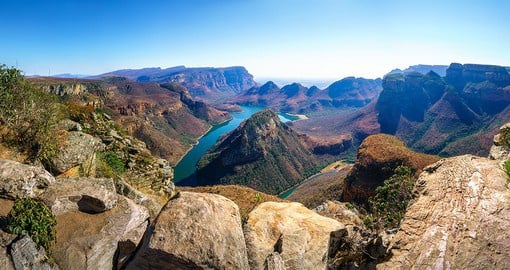
The spellbinding scenery along the Panorama Route has to be seen to be believed with its breathtaking vistas around every corner and waterfalls plunging down faces of sheer rock. Blyde River Canyon is the world’s third-largest canyon with awe-inspiring views. Scenic landmarks here with names like God's Window, Wonder View, the Pinnacle, Bourke's Luck Potholes and the Three Rondawels are all to be wondered at. Nearby is the authentic gold rush town of Pilgrim's Rest which gives you the chance to relive the 1873 gold rush.
The Drakensburg Mountains are an area of outstanding natural beauty to be considered for a visit on South African tours. They are also home to more than 600 rock-art sites with close to 35,000 individual images painted by the San people who once roamed here. The mountains are also home to several species of birds and plants.
Zululand is the home of some of Africa’s most traditional settlements and cultural sites. Known as the heart of the Zulu Kingdom, Zululand was the place where many tribes and clans came together to form a united kingdom. The battlefields here have been witness to many of the clashes between the British and Zulu forces over the past 200 years. It is also a region rich in nature and wildlife which includes Hluhluwe Imfolozi Park, one of the oldest protected game reserves in the country.
St. Lucia Wetlands, also known as Isimangaliso Wetland Park, is one of South Africa’s most beautiful wetland and coastal sites with coral reefs, long, sandy beaches, dunes, lakes with hippos and crocodiles and swamps with birdlife.
For a very different experience, consider a visit to Sun City north of Johannesburg, a unique, self-contained resort centre featuring everything from golf courses to casinos. From here one can take a hot air balloon ride over the Pilanesberg Game Reserve which offers game viewing that includes the Big Five, ideal for South African safaris.
Kimberley, the City of Diamonds, came into existence with the diamond rush of the 1870s. It is the capital of the Northern Cape and is steeped in history and culture. It is now a modern city with malls, art galleries, restaurants and an active nightlife.
Namaqualand is popular with visitors during the early springtime when for a short period this normally arid region becomes covered with a kaleidoscope of colour during the flowering season. This is known as the Namaqualand daisy season, when orange and white daisies, as well as hundreds of other flowering species, spring up.
Swaziland, although not strictly part of South Africa politically can easily be fitted into a visit to South Africa, It is very scenic and offers more wildlife viewing. Two attractions here are the Swazi Candle Factory located in Ezulwini Valley where you can buy beautifully waxed colorful animal figures in all sizes and the Ngwenya Glass Factory. Here you can find lots of glass works made on location.
Other activities to consider during any stay on a South African vacation are whale watching which can be done around Cape Town, the town of Hermanus, possibly the best land-based place in the world, Cape Agulhas and Plettenburg Bay and also swimming with sharks while in a cage. The latter can be done just outside Cape Town along the Indian Ocean coast.
Finally, it is essential to plan your trip to South Africa carefully obviously based on time available and interests. What to leave out could be your hardest decision.
Book a South Africa safari or one of our South Africa tours today and experience a "world in one country"!
"Globetrotting with Goway" blog articles
For some additional reading, the following articles are from our blog “Globetrotting with Goway”….. a great source of information for those people who are, or who want to be, world travellers!
Fulfilling My Bucket List With a South Africa Vacation
Scenic Cape Town - South Africa's Mother City
Extraordinary Dining in Extraordinary South Africa
Month by Month in the Kruger Bushveld, South Africa
South Africa's Iconic Table Mountain in Cape Town
The Inheritance of Zululand in South Africa
Mpumalanga, a World of Wonders in South Africa
Sabi Sands Game Reserve in Kruger South Africa
Sun City, South Africa - So Much More than Sunshine!
Johanesburg - a Great Addition to your South Africa Vacation!
When on a South Africa Vacation, Stay a While in Pretoria, the Jacaranda City
All Aboard the Revived Shongololo Express in Africa!
Extraordinary Dining in Extraordinary South Africa
South Africa’s Iconic Table Mountain in Cape Town
Knysna – Jewel of the Garden Route in South Africa
South Africa Travel Information
At Goway we believe that a well-informed traveller is a safer traveller. With this in mind, we have compiled an easy-to-navigate travel information section dedicated to South Africa trips.
Learn about the history and culture of South Africa, the must-try food and drink, and what to pack in your suitcase. Read about South Africa's nature and wildlife, weather and geography, along with 'Country Quickfacts' compiled by our travel experts. Our globetrotting tips, as well as our visa and health information, will help ensure you're properly prepared for a safe and enjoyable trip. The only way you could possibly learn more is by embarking on your journey and discovering South Africa for yourself. Start exploring… book one of our South Africa tours today!
Extend Your Stay
After your South Africa vacation, why not consider one of Goway's Europe tours or Egypt tours en route from South Africa or perhaps a stopover in Dubai on one of our United Arab Emirates tours.

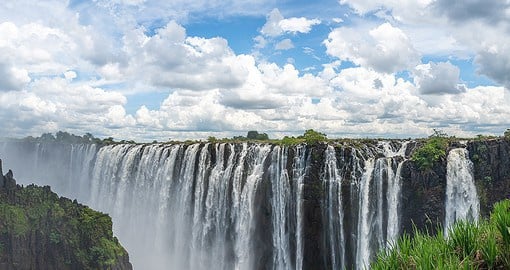
Southern Africa Odyssey
FIRST-CLASS | SMALL GROUP: Embark on a soul-stirring journey through Southern Africa. Connecting from Cape Town’s cosmopolitan charm to Makalali’s wild majesty to the awe-inspiring Victoria Falls, this elevated small group journey promises an unforgettable immersion into Southern Africa’s diverse landscapes and captivating wonders.
More DetailsSouth Africa
-
- Sort by:
- Most Popular
- Duration
- Price
-
- Filter by:
- Price Range
- Duration Range
- Trip Type
- Reset all
-
![]()
Wildlife, Wine and Garden Route
FIRST CLASS | SMALL GROUP: This 6-day South Africa vacation combines the best elements of South Africa's wildlife, wine, and iconic natural scenery for a journey beyond expectation. Travel from Cape Town to South Africa's most sought-after attractions, including the Garden Route, a safari, and a delicious tour of the Cape Winelands.- Duration:
- 6 Days
- Prices From:
- US$ 1,264
- Trip Type:
- Tailor-made Travel Ideas
![]() See Trip Details
See Trip Details
-
![]()
Magic of Africa: Cape Town, Sabi Sands, Victoria Falls & More
DELUXE | TAILOR-MADE: Discover the magic and splendour of Southern Africa on this 12-day luxury journey from South Africa to Botswana. Starting in Cape Town, you’ll venture to the Cape Winelands, Kruger National Park, majestic Victoria Falls in Zimbabwe, and the waters of the Chobe River in Botswana.- Duration:
- 12 Days
- Prices From:
- US$ 9,929
- Trip Type:
- Classics (Bestsellers), Luxury and Beyond, Multi Country Vacation Ideas, Tailor-made Travel Ideas
![]() See Trip Details
See Trip Details
-
![]()
Cape & Kruger Escape: Cape Town & Greater Kruger National Park
FIRST-CLASS | TAILOR-MADE: Explore the most beautiful regions of South Africa on this adventure. Explore the Western Cape before embarking on an African safari through a private game reserve in Kruger National Park.- Duration:
- 9 Days
- Prices From:
- US$ 2,699
- Trip Type:
- Safaris Worldwide, Tailor-made Travel Ideas
![]() See Trip Details
See Trip Details
-
![]()
Savanna in Style: Cape Town, Franschhoek and Sabi Sands Game Reserve
DELUXE | TAILOR-MADE: One of the most beautiful nations on Earth, South Africa boasts the spectacular Cape region, some of the world’s finest wines and unparalleled game viewing in its national parks. After enjoying three days in the ‘Mother City’, head to Franschhoek to enjoy some fine South African wine and take in the stunning scenery. Last but certainly not least, head on your African safari in the famous Sabi Sands as you search out the Big 5.- Duration:
- 10 Days
- Prices From:
- US$ 4,819
- Trip Type:
- Luxury and Beyond, Safaris Worldwide, Tailor-made Travel Ideas
![]() See Trip Details
See Trip Details
-
![]()
Spectacular South Africa: Cape Town, Knysna, Kapama Private Game Reserve & More
FIRST-CLASS | SMALL GROUP: This comprehensive South Africa tour offers a taste of all that makes the country such a great destination, including its wine regions, natural beauty, abundant wildlife, national parks, and rich native culture.- Duration:
- 15 Days
- Prices From:
- US$ 4,539
- Trip Type:
- Small Group Touring
![]() See Trip Details
See Trip Details
-
![]()
Cape Highlights and Safari: Cape Town, Garden Route & Kariega Game Reserve
FIRST-CLASS | SMALL GROUP: Enjoy a stay in South Africa's Mother City; Cape Town before getting up close with African wildlife on the Eastern Cape. Visit the world's ostrich capital, sample the best of South Africa's famous Winelands, and follow the Garden Route to see South Africa in all its diverse beauty.- Duration:
- 11 Days
- Prices From:
- US$ 2,849
- Trip Type:
- Safaris Worldwide, Small Group Touring
![]() See Trip Details
See Trip Details
-
![]()
Signature South Africa: Cape Town, Rovos Rail, Kruger & More
DELUXE | PRIVATE-GUIDED: Discover the magic and splendour of Southern Africa on this 12-day luxury journey of South Africa. Starting in Cape Town, you’ll venture to the Cape Winelands, Johannesburg, and Kruger National Park. Recapture the romance and atmosphere of a by-gone era with 2 nights spent on-board the elegant Rovos Rail train.- Duration:
- 13 Days
- Prices From:
- US$ 8,168
- Trip Type:
- Classics (Bestsellers), Luxury and Beyond, Private Experiences, Rail Travel Ideas, Safaris Worldwide, Tailor-made Travel Ideas
![]() See Trip Details
See Trip Details
-
![]()
City Lights & Safari Sights: Cape Town & Pilanesberg National Park
FIRST-CLASS | TAILOR-MADE: Combine South Africa’s most attractive city with the wonders of the African bush on this city lights and safari sights vacation. Start in Cape Town where you’ll have three days at leisure to experience its charms. Then head on to Pilanesberg National Park to head on daily game drives in search of the Big Five.- Duration:
- 8 Days
- Prices From:
- US$ 1,949
- Trip Type:
- Safaris Worldwide, Tailor-made Travel Ideas
![]() See Trip Details
See Trip Details
-
![]()
A World in One Country: Kruger, Hluhluwe, Cape Town & More
FIRST-CLASS | SMALL GROUP: Enjoy a tour of the best of South Africa, packed full of activities and ‘must-see’ areas from Kruger National Park to the Zulu Kingdom, ending in Cape Town, South Africa’s ‘Mother City’.- Duration:
- 14 Days
- Prices From:
- US$ 2,985
- Trip Type:
- Classics (Bestsellers), Single Friendly, Small Group Touring
![]() See Trip Details
See Trip Details
-
![]()
Ultimate Africa: Masai Mara, Livingstone, Cape Town & More
FIRST-CLASS | TAILOR-MADE: South Africa or Kenya for your African adventure? With this unique itinerary, there’s no need to choose. Enjoy the culture and wildlife of the Masai Mara before flying on to Victoria Falls to see the breathtaking Falls before heading to Cape Town.- Duration:
- 11 Days
- Prices From:
- US$ 4,333
- Trip Type:
- Classics (Bestsellers), Multi Country Vacation Ideas, Safaris Worldwide, Tailor-made Travel Ideas
![]() See Trip Details
See Trip Details
-
![]()
Luxury Cape and Kruger Safari: Grootbos, Cape Town & Sabi Sands
DELUXE | TAILOR-MADE: Experience the beauty and charm of South Africa on this luxury package. Begin with a stay in an eco-reserve tucked between mountains, forest and sea - followed by elegant atmosphere in Cape Town. Finally, head to a sanctuary symbolizing a new era in lodging in the greater Kruger for your African safari.- Duration:
- 10 Days
- Prices:
- On request
- Trip Type:
- Classics (Bestsellers), Luxury and Beyond, Romance & Honeymoon, Safaris Worldwide, Tailor-made Travel Ideas
![]() See Trip Details
See Trip Details
-
![]()
Qatar & South Africa Safari
FIRST-CLASS | TAILOR-MADE: Explore 2 great countries in one trip. Beginning in Cape Town, you'll have 3 full days to discover what makes the 'Mother City' and surrounds one of the most beautiful regions of the world. Next its off to Pilanesberg National Park for your African Safari. Finally, fly to Qatar for a 3 night stay as you explore the capital, Doha - a wonderful blend of culture, tradition and modern innovation.- Duration:
- 12 Days
- Prices From:
- US$ 2,041
- Trip Type:
- Safaris Worldwide, Stopovers/City Breaks, Tailor-made Travel Ideas
![]() See Trip Details
See Trip Details
-
![]()
Rovos Rail: Cape Town to Dar Es Salaam
DELUXE | RAIL: This journey is one of the most famous rail experiences in the world. Travel through South Africa, Zimbabwe, Zambia and Tanzania combining the luxury of pre-war travel with modern touches.- Duration:
- 15 Days
- Prices From:
- US$ 13,600
- Trip Type:
- Bucket List Travel Ideas, Luxury and Beyond, Multi Country Vacation Ideas, Rail Travel Ideas
![]() See Trip Details
See Trip Details
-
![]()
Rovos Rail: Pretoria to Victoria Falls (or v.v.)
DELUXE | RAIL: This journey takes guests from Pretoria westward to Botswana before crossing the border into Zimbabwe and on to the mighty Victoria Falls. This tour also operates in reverse.- Duration:
- 5 Days
- Prices From:
- US$ 2,719
- Trip Type:
- Luxury and Beyond, Rail Travel Ideas, Tailor-made Travel Ideas
![]() See Trip Details
See Trip Details
-
![]()
South Africa and Victoria Falls Escapade: Victoria Falls, Cape Town & Pilanesberg National Park
FIRST-CLASS | TAILOR-MADE: Combine South Africa’s most attractive city with a game safari and a visit to Victoria Falls on one great African vacation. Start in Zimbabwe, where you’ll witness the majesty of Victoria Falls. Onward to Cape Town to tour the city and enjoy some wine tastings. Cap the trip off with a safari in Pilanesberg National Park.- Duration:
- 11 Days
- Prices From:
- US$ 3,499
- Trip Type:
- Classics (Bestsellers), Safaris Worldwide, Tailor-made Travel Ideas
![]() See Trip Details
See Trip Details
-
![]()
Ultimate Kalahari & Lower Zambezi Safari
DELUXE | PRIVATE-GUIDED: Start with Cape Town’s most iconic luxury hotel - celebrating art and design. Next, stay in South Africa's largest private game reserve where your game lodge blends comfort seamlessly with the stunning landscape. Lastly, head to the banks of the Zambezi River, where a luxury safari camp offers the utmost comfort amidst the wild 'real Africa' that is Zambia.- Duration:
- 13 Days
- Prices From:
- US$ 14,006
- Trip Type:
- Bucket List Travel Ideas, Luxury and Beyond, Private Experiences, Romance & Honeymoon, Safaris Worldwide, Tailor-made Travel Ideas
![]() See Trip Details
See Trip Details
-
![]()
Wonders of South Africa: Kruger, Garden Route, Cape Town & More
MODERATE | ESCORTED COACH: Spend two weeks discovering all that makes South Africa one of the world’s most diverse and colourful destinations. Take in natural sights such as Blyde River Canyon, explore the historic lands of the Zulus and Swazis, follow the magnificent South African coastline, and immerse yourself in the beauty, wine, and culture of the Cape. On this tour, a maximum of 40 guests are escorted by a local professional tourist guide. All departures are guaranteed with a minimum of 2 guests. Transportation is in air-conditioned luxury vehicles and tours are only conducted in English.- Duration:
- 15 Days
- Prices From:
- US$ 1,819
- Trip Type:
- Escorted Coach Touring
![]() See Trip Details
See Trip Details
-
![]()
South African Family Adventure: Cape Town, Sanbona Wildlife Reserve & More
FIRST-CLASS | TAILOR-MADE: Start your trip in Cape Town, a highlight of Southern Africa with its unrivalled natural beauty, before continuing on to a unique malaria-free private game reserve located at the foot of the towering Warmwaterberg Mountains. End with a stay at the only private lodge situated inside the Hluhluwe iMfolozi Park.- Duration:
- 10 Days
- Prices From:
- US$ 4,796
- Trip Type:
- Family Vacations, Safaris Worldwide, Tailor-made Travel Ideas
![]() See Trip Details
See Trip Details
-
![]()
Taste Of The Western Cape: Cape Town & Stellenbosch
FIRST-CLASS | TAILOR-MADE: Embark on a culinary journey to Cape Town and Stellenbosch. Enjoy high tea at the Mount Nelson, a craft gin distillery tour, and a hands-on cooking session with a local family in Cape Town. Head to Stellenbosch, where you’ll be able to enjoy a 4x4 tour complete with wine tasting.- Duration:
- 9 Days
- Prices From:
- US$ 1,937
- Trip Type:
- Classics (Bestsellers), Stopovers/City Breaks, Tailor-made Travel Ideas
![]() See Trip Details
See Trip Details
-
![]()
Kruger Spectacular
DELUXE | TAILOR-MADE: Experience two spectacular locations in South Africa on this luxury safari vacation. Start at Kings Camp in the Timbavati Game Reserve before connecting to Dulini Lodge in the Sabi Sands Game Reserve, spending several days on game drives in both pristine reserves.- Duration:
- 7 Days
- Prices From:
- US$ 7,305
- Trip Type:
- Luxury and Beyond, Safaris Worldwide, Tailor-made Travel Ideas
![]() See Trip Details
See Trip Details
-
![]()
A Tale of Two Safaris: Amazulu Private Game Reserve, Umhlanga & Greater Kruger
DELUXE | TAILOR-MADE: Enjoy superb game viewing and luxury accommodations in the Manyoni Private Game Reserve and the Greater Makalali Private Game Reserve on this 9-day South African vacation. Search for the Big 5 and other incredible wildlife living within the country’s finest private game reserves and spend two nights relaxing on Umhlanga's beaches in between.- Duration:
- 9 Days
- Prices From:
- US$ 4,662
- Trip Type:
- Romance & Honeymoon, Safaris Worldwide, Tailor-made Travel Ideas
![]() See Trip Details
See Trip Details
-
![]()
Winelands & Wildlife: Cape Town, Stellenbosch & Sabi Sands Game Reserve
FIRST-CLASS | TAILOR-MADE: Explore vibrant Cape Town and see the sights of the Cape Peninsula. Visit picturesque Stellenbosch, the heart of the Winelands before a ‘Big 5’ encounter at Kruger National Park.- Duration:
- 10 Days
- Prices From:
- US$ 5,208
- Trip Type:
- Safaris Worldwide, Tailor-made Travel Ideas
![]() See Trip Details
See Trip Details
-
![]()
Southern Africa Extravaganza: Greater Kruger, Cape Town & Victoria Falls
DELUXE | PRIVATE-GUIDED: Combining a superb African safari with a trip down the Western Cape, this South Africa travel opportunity takes you to one of the world’s most beautiful cities, Cape Town, before ending at spectacular Victoria Falls.- Duration:
- 12 Days
- Prices From:
- US$ 8,405
- Trip Type:
- Luxury and Beyond, Multi Country Vacation Ideas, Private Experiences, Safaris Worldwide, Tailor-made Travel Ideas
![]() See Trip Details
See Trip Details
-
![]()
Rovos Rail: Cape Town to Pretoria (or v.v)
DELUXE | RAIL: Departing from Cape Town or Pretoria, stopping en-route to view Kimberley's 'Big Hole' and the Mine and Diamond museums, while enjoying the stark beauty of the Northern Cape.- Duration:
- 4 Days
- Prices From:
- US$ 1,862
- Trip Type:
- Luxury and Beyond, Rail Travel Ideas, Tailor-made Travel Ideas
![]() See Trip Details
See Trip Details
-
![]()
Cape Town Discovery
MODERATE | TAILOR-MADE: Uncover Cape Town, the mother city of Africa, and its Western Cape, regarded as one of the most beautiful regions in the world. A rare cultural gem, Cape Town offers a mix of many cultures.- Duration:
- 4 Days
- Prices From:
- US$ 564
- Trip Type:
- Stopovers/City Breaks, Tailor-made Travel Ideas
![]() See Trip Details
See Trip Details