
Tanzania TravelAfricaExperts.com

GENERAL INFORMATION

TRAVEL IDEAS

STAYS OF DISTINCTION

MORE EAST AFRICA

MORE TRIPS THAT INCLUDE TANZANIA

ANIMAL CHECKLIST

When you travel with Goway, you will see lots of wildlife. Click here for your animal checklist.

GET A FREE TRAVEL QUOTE

Request a free travel quote from Goway

or call 1-800-387-8850

Tanzania

THINGS TO KNOW BEFORE YOU GO

Seasons and Climate:

  • SUMMER: December - March
  • WINTER: March - May
Request A Travel Quote
Send Me A Brochure

The climate is tropical on the coast, on the islands and in Selous. It is temperate in the other parks. Temperatures on Mount Kilimanjaro and Meru drop to below freezing. Late March - late May is traditionally the long rainy season and is considered the "winter period" in Tanzania. June - late October is the dry season. June, July and August can be very cold on the rim of Ngorongoro Crater. Mnemba Island is lovely at this time of year, the evenings are cool (not cold) and the daytime can be hot. Late October - mid December is when the short rains occur. These are usually in the form of daily thunderstorms.

The Ngorongoro Crater rim has a wonderful climate at this time of year. The Serengeti and Lake Manyara are quite warm and Mnemba is very hot. Mid December - March is summer weather. It is dry and very warm until March. Due to its altitude Ngorongoro Crater is much cooler than elsewhere.

Environment:

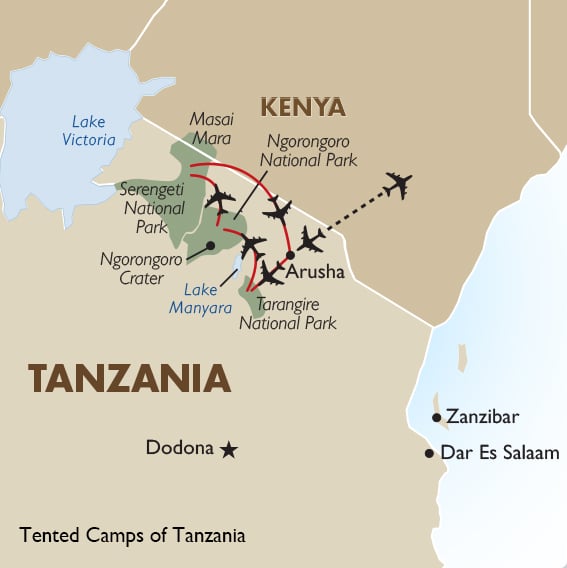
A land of plains, lakes and mountains with a narrow, low-lying coastal belt, Tanzania is East Africa's largest country. The bulk of the country is a highland plateau, some of it semi-desert and the rest savannah and scattered bush. The highest mountains - Meru (4, 556m/14, 943ft) and Kilimanjaro (Africa's highest at 5, 895m/19, 335ft) - are in the north-east along the border with Kenya.

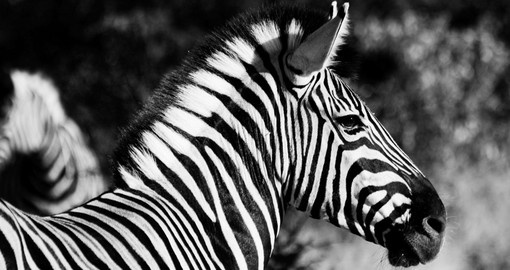
Nowhere else on earth will you see wildebeest, gazelle, zebra and antelope in such enormous numbers - and Tanzania's characteristic plains make spotting wildlife easy. Blessed with some of the world's largest game reserves, the country also has one of the highest concentrations of elephant, buffalo, crocodile, hippo, hunting dog and chimpanzee.

Tanzania's widely varying geography accounts for its differing climatic conditions. The altitude of the high plateau considerably tempers what would otherwise be a tropical climate. In many places it can be quite cool at night. The coastal strip along the Indian Ocean and the offshore islands of Pemba, Zanzibar and Mfia have a hot, humid, tropical climate alleviated by sea breezes. Only on the mountain slopes of the north-east does the country enjoy an almost temperate climate for most of the year. Tanzania offers unparallel game viewing opportunities all year round - even during the rainy seasons of April to May, and November.  For the budget-conscience travellers who don't mind a little rain, the low seasons may be the perfect safari opportunity.)

When to Go:

Tanzania offers an astonishing diversity and concentration of wildlife, from the immense Serengeti and towering Mount Kilimanjaro to the remote national parks of Katavi and Mahale. The best months for climbing Mount Kilimanjaro are August to October and January to March. Tanzania boasts over 1, 000 bird species, with Lake Manyara alone being home to more than 400. It is a year round birding destination, but at the height of the northern winter, some 160 species of migrating birds make their way south. Botanically, Tanzania is a treasure-trove, with habitats ranging from Afro-Alpine to semi-desert. The months immediately after the two rainy seasons provide the best floral displays.

Wildebeest Migration:

The wildebeest migration takes place within Kenya and Tanzania and is one of the greatest wildlife shows on earth. Between the open plains of the Serengeti and the Masai Mara, thousands of wildebeest and zebras migrate to greener pastures as the seasons change. The precise timing of the Wildebeest Migration changes annually and it is a very unpredictable and spontaneous natural event.

The calving season takes place in the Serengeti between the months of January and mid-March before the Wildebeest Migration begins heading towards the Western Serengeti in June. The best time to see the migration is usually between June and August when the wildebeest congregate and prepare to cross the famous Grumeti River.

If you are in the Masai Mara you can expect the wildebeest to make their arrival as early as July, but they generally arrive between August and September and remain in the Mara between October and November. Between December and January the wildebeest gradually begin their migration back towards the Serengeti. As this is a natural phenomenon, the monthly migration patterns can change from year to year and this is to be used as a general guide.

Tanzania offers excellent game viewing throughout the year as not all animals migrate and are year-round residents.

Mount Kilimanjaro, Tanzania

What to Pack:

Generally, casual comfortable clothing is suitable throughout the year. The most practical items to pack are:

  • Khaki, brown, white and beige colours
  • Light cotton tops and cotton trousers/shorts in summer
  • Long sleeved blouses/shirts for game drives, they will protect you from the sun and from mosquitoes
  • Safari trousers for evenings and cooler days
  • Fleece or sweater and a warm jacket for game drives (and at Ngorongoro Crater)
  • Swimwear is a must for the beach and at Kleins and Grumeti which have a pool
  • A hat, sunglasses and sunscreen
  • Comfortable walking shoes
  • For climbing Mount Kilimanjaro and Meru, thermal underwear, light layers, sweater, warm jacket, good socks and sturdy boots

When visiting Zanzibar, it is important for women to dress modestly out of respect for Muslim cultural beliefs, men should not wear shorts on the main island and women should wear dresses that cover their shoulders and knees. This does not apply on Mnemba Island.

Visas:

Canadians and U.S. Citizens will require a visa entering Tanzania.  This visa can be obtained upon arrival for a nominal fee without hassle.  All visitors require a visa except citizens of some Commonwealth countries (UK excepted), Scandinavian countries, the Republic of Ireland, Rwanda and Sudan. (please remove and change to:) For citizens of citizens of some Commonwealth countries (UK excepted), Scandinavian countries, the Republic of Ireland, Rwanda and Sudan these nationalities, a free visitor's pass, valid for one to three months, can be picked up at the point of entry (you'll be asked how long you plan to stay - three months is no problem). You will need proof of yellow fever vaccination if travelling to Zanzibar.

Public Holidays:

  • January 1 – New Year
  • May 1 – May Day
  • August 15 – Assumption
  • November 1 – All Saints’ Day
  • December 25 – Christmas

Useful Ki Swahili greetings:

  • Greeting (to locals) - Habari gani
  • Greeting (to foreigner) - Jambo, Mambo
  • Thank you (correct reply to greeting) - Marahaba
  • Thank you - Asante
  • Goodbye / We'll see you - Kwaheri / Tutaonana
  • You are welcome, come in - Karibu

Culture:

Tanzania's culture is a result of African, Arab, European and Indian influences. The African people of Tanzania represent about 120 tribal groups. The largest group are of Bantu origin including Dukuma, Nyamwezi, Makonde, Haya and Chagga. The Maasai are of Nilotic origin, as are the Arusha and the Samburu. Tanzania is one of the least urbanised countries in Sub- Saharan Africa, but traditional African ideals are being deliberately adapted to modern life.

The Tanzanians are friendly people, to foreigners and amongst themselves. Politeness, respect and modesty are highly valued. It is recommended that you learn some Swahili greetings (see "Language"). Handshakes are very important and you may continue holding hands during conversation. Note that the right hand is usually used for eating, while the left is traditionally used for toilet duties. Immodest attire, public affection and open anger are disrespectful to the Tanzanian people.

In Zanzibar, it is important for women to dress modestly out of respect for Muslim cultural beliefs. Men should not wear shorts on the main island, and women should wear dresses that cover their shoulders and knees. This does not apply on Mnemba Island.

Health:

Some East African roads and game park trails can be very rough, if you have back problems we recommend you check with your health practitioner to make sure you are able to travel safely. Fly-in safaris are also available as an alternative to road safaris.

Visitors must produce a valid yellow fever certificate obtained no less than ten days prior to travel. For travel between South Africa and Tanzania, a Yellow Fever certificate is mandatory, even for passengers in transit. It is imperative that you obtain malaria prophylactics before entering Tanzania. When purchasing these please tell your doctor or pharmacist that you intend visiting Tanzania. Precautionary measures to take to prevent contact with mosquitoes include: insect repellent, cover up at sundown, sleep under a mosquito net and wear long sleeve clothing and long trousers in the evenings.

Immunisation against cholera, polio, hepatitis A & B, typhoid and tetanus is recommended if travelling by road. There is a current warning that certain immigration authorities are insisting on cholera certificates or will administer a vaccine themselves.

Medical Facilities:

Medical facilities are limited and medicines are often unavailable. If medical assistance is given, doctors and hospitals require immediate payment. It is therefore advisable to obtain medical insurance prior to travel. Emergency services and first aid is unavailable outside major cities and tourist areas. It is wise to bring with you any medication which you may require as you will not have access to pharmacies in most of the areas which you will be visiting. There is great concern about AIDS; recent estimates suggest that 10% of the population may be HIV-positive. There are many hospitals in Tanzania, but they are mostly very understaffed.

Water:

Drink only boiled or bottled water, bottled or canned drinks. If camping - bring your own drinking water and all other camping provisions.

Consumer Protection Agency Logos Goway Travel is a BBB Accredited Business.