
BUCKET LIST
COLOMBIA CITY STOP OVERS
- Bogota Stopover, 3 days
- Cafe Colombia, 3 days
- Cartagena - Rosario Islands, 4 days
- Jewel in the Stone Cartagena, 3 days
- San Agustin, 4 days
- Villa de Leyva - Colonial Magic, 3 days
COLOMBIA ITINERARIES
- Tayrona National Park, 3 days
- Trek to the Lost City, 5 days
COLOMBIA VALUE GROUP TOURING
- Value Peru and Colombia, 12 days
LATIN AMERICAN DESTINATIONS
- Antarctica (12 trips)
- Argentina (28 trips)
- Belize (6 trips)
- Bolivia (10 trips)
- Brazil (28 trips)
- Chile (30 trips)
- Colombia (9 trips)
- Costa Rica (7 trips)
- Ecuador (14 trips)
- El Salvador (4 trips)
- Falkland Islands (2 trips)
- Galapagos (14 trips)
- Guatemala (7 trips)
- Honduras (2 trips)
- Panama (6 trips)
- Peru (36 trips)
- Uruguay (3 trips)
- Venezuela (2 trips)

HOLIDAYS OF A LIFETIME
- Splendours of South America (2012), 17 days
- Splendours of South America (2013), 15 days
- Magical Ecuador and Peru (2012), 20 days
- Magical Ecuador and Peru plus Bolivia (2013/2014), 23 days
- Best of Ecuador, 11 days
- Cradle of the Incas, 13 days
Trekking, walking, wildlife encounters, cycling, rafting, sailing, cruising, camping, safaris, overland journeys and more.
Latin America Brochure
World of Adventure Brochure
Colombia
Country General Information
No longer a destination for just daredevils, this extraordinary country has battled decades of civil turmoil to emerge as one of South America's hottest new destinations. It is jammed with unspoilt mountains, coastline and jungle, not to mention stunning archaeological sites and vibrant culture.
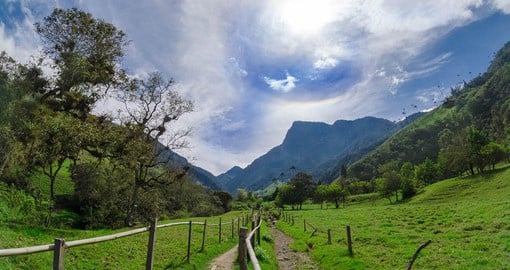
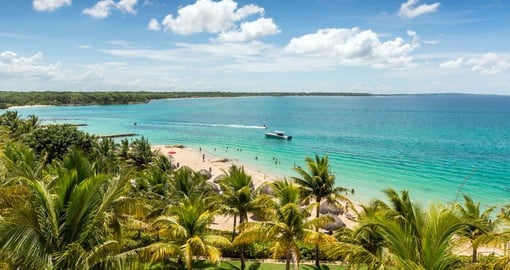
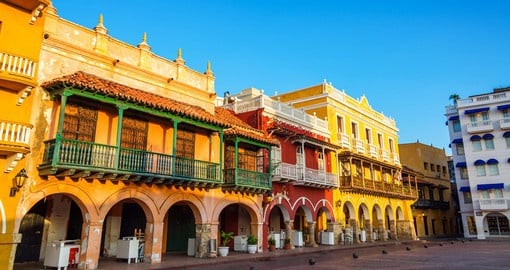
Ten years ago, Colombia was famous only for its drug dealers, left-wing guerrilla groups and paramilitaries. But with the militant groups now at their weakest point in decades, this beautiful country is enjoying a travel renaissance with more and more tourists emboldened to visit. And they are finding much to explore. Natural attractions include rippling mountains, expanses of the Amazon Basin, large lakes, vast plains and a Caribbean coastline that twinkles with azure water. Meanwhile man-made wonders include lost cities, fabulous pre-Columbian sculpture and colourful colonial houses adorn the towns.
Until now, Colombia has received relatively few travellers in comparison with other South American nations, and visitors can expect an unfeigned welcome and genuine curiosity from its people.
- Country Facts
- Climate
- Money
- Food & Drinks
- Travel Info
- Passport & Visas
Region
Northwest South America.
Area
1,141,748 km² (440,831 sq miles).
Population
44,725,543 (July 2011 est.)
Population density
39.4 per km².
Capital
Bogotá. Population: 7.1 million (2007 estimate).
Government
Republic. Colombia declared its independence from Spain in 1810; however, it was proclaimed the Republic of Gran Colombia in 1819.
Geography
Colombia is situated in South America, bordered by the Caribbean and the Pacific Ocean, Panama, Ecuador, Peru, Venezuela and Brazil. The Andes Mountains extend into the country in three ranges running south to north, dipping finally into the lowlands of the Caribbean coast. Along the southern Pacific coast run marshy lowlands and rugged low mountains. The south-western coastal lowlands extend in a trough running from the port of Buenaventura to the Caribbean.
East of this rise the slopes of the Western Cordillera which, with the Central Cordillera range, runs north to the Caribbean lowlands from Ecuador. Further north lies the fertile Cauca Valley, which becomes a deep gorge running between the Cordilleras to the Caribbean lowlands. The Eastern Cordillera, the longest range, rises north of the Ecuadorean border and runs north then northeast towards Venezuela. Flat grassy prairies in the east along with the jungles and towering rainforests of the Amazon make up over half the country's area. Colombia also claims two small islands, San Andrés and Providencia, located 700km (430 miles) north of the coast.
Language
Spanish is the official language. Local dialects and some English, French, German and Italian are also spoken.
Religion
Christianity, with 90% Roman Catholic; small Protestant and Jewish minorities.
Time
GMT - 5
Social Conventions
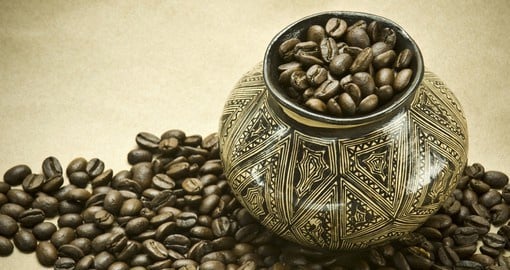
Normal courtesies should be observed. It is customary to offer guests black Colombian coffee, well sugared, called tinto. Spanish style and culture can still be seen in parts of the country, although in Bogotá, North American attitudes and clothes are becoming prevalent. Casual clothes can be worn in most places; formal attire will be necessary for exclusive dining rooms and social functions. Smoking is allowed except where indicated.
Electricity
Mostly 110 volts AC, 60Hz. American-style two-pin plugs.
Head of State
President
History
(With thanks to Lonely Planet)
Colombia's history reads like a romance, a drama and a bad action movie all rolled into one. Just as foreign attraction to oil in Venezuela or silver in Bolivia led to turmoil and upheaval in those countries, international desire for cocaine has pushed existing tensions in Colombia well beyond their boiling point. The country's history is saddening, complex and vastly interesting. To get a fuller understanding of the life of the nation, it is necessary to do significant reading of varying accounts, but the following is a starting point.
Pre-columbus colombia
Colombia is the only overland gateway to South America and is assumed to have been the route pioneered by the continent's first human inhabitants, who migrated from North and Central America. Some tribes, such as the Inca, headed further south and built major civilizations, while smaller groups settled in what is now Colombia and eventually reached a high level of development. These people are little known internationally because they left few enduring monuments.
There are three main archeological sites in Colombia. They are San Agustín, Tierradentro and Ciudad Perdida. Some communities left behind artifacts - mainly gold and pottery - some of which are now in museums across the country. This art reveals a high degree of skill, and the goldwork is the continent's best, both in techniques and artistic design.
In contrast to the Aztecs or Incas, who dominated vast regions, a dozen independent Colombian groups occupied relatively small areas scattered throughout the Andean region and along the Pacific and Atlantic (Caribbean) coasts. Despite trading, these cultures developed largely independently. Among the most outstanding were the Calima, Muisca, Nariño, Quimbaya, San Agustín, Sinú, Tayrona, Tierradentro, Tolima and Tumaco.
Spanish conquest
Colombia is named after Christopher Columbus, even though he never set foot on Colombian soil. It was Alonso de Ojeda, one of Columbus' companions on his second voyage, who was the first European to set foot on the land in 1499. He briefly explored the Sierra Nevada de Santa Marta and was astonished by the wealth of the local Indians. Their gold and their stories about fabulous treasures inland gave birth to the myth of El Dorado, a mysterious kingdom abundant in gold. In its most extreme interpretation, El Dorado was believed to be a land of gold mountains littered with emeralds.
From the moment the Spaniards arrived, their obsession with El Dorado became the principal force driving them into the interior. They did not find El Dorado, but their search resulted in rapid colonization.
The legend of El Dorado became linked to the Muiscas and their famous Laguna de Guatavita. There, the expectations of the Spaniards were to some degree confirmed by the rituals of the Indians, who threw gold offerings into the sacred waters, though very little has been found despite numerous efforts; see Laguna de Guatavita.
Attracted by the presumed riches of the Indians, the shores of present-day Colombia became the target of numerous expeditions by the Spaniards. Several short-lived settlements were founded along the coast, but it was not until 1525 that Rodrigo de Bastidas laid the first stones of Santa Marta, the earliest surviving town. In 1533, Pedro de Heredia founded Cartagena, which soon became the principal center of trade.
In 1536 a general advance toward the interior began independently from three different directions, under Jiménez de Quesada, Sebastián de Benalcázar (known in Colombia as Belalcázar) and Nikolaus Federmann. Although all three were drawn by the Indian treasures, none intended to reach Muisca territory, where they finally met.
Quesada set off from Santa Marta, pushed up the Valle del Magdalena, then climbed the Cordillera Oriental, arriving in Muisca territory early in 1537. At the time, the Muiscas were divided into two clans - the southern one ruled by the Zipa from Bacatá (present-day Bogotá), and the northern empire under the Zaque in Hunza (present-day Tunja). The two caciques quarreled over territory and the rivalry considerably helped Quesada conquer the Muiscas without undue difficulty. In August 1538 he founded Santa Fe de Bogotá on the site of Bacatá.
Belalcázar deserted from Francisco Pizarro's army, which was conquering the Inca empire, and mounted an expedition from Ecuador. He subdued the southern part of Colombia, founding Popayán and Cali along the way, and reached Bogotá in 1539. Federmann started from the Venezuelan coast and, after successfully crossing Los Llanos and the Andes, arrived in Bogotá shortly after Belalcázar. Thus, in a short period of time, a large part of the colony was conquered and a number of towns were founded.
The three groups then battled for supremacy, and it was not until 1550 that King Carlos V of Spain established a court of justice in Bogotá and brought the colony under the control of the Viceroyalty of Peru.
The colonial period
In 1564 the Crown established a new system, the Presidencia del Nuevo Reino de Granada, which had dual military and civil power and greater autonomy. Authority was in the hands of the governor, appointed by the King of Spain. The Nuevo Reino at that time comprised present-day Panama and all of Colombia, except what is today Nariño, Cauca and Valle del Cauca, which were under the jurisdiction of the Presidencia de Quito (present-day Ecuador).
The population of the colony, initially consisting of indigenous communities and the Spanish invaders, diversified with the arrival of Blacks, brought from Africa to serve as the workforce. Cartagena was granted the privilege of being the exclusive slave-trading port in which Blacks were sold as slaves and distributed throughout the colony. Most of them were set to work in mines and plantations, mainly on the Caribbean and Pacific coasts. During the 16th and 17th centuries the Spaniards shipped in so many Africans that they eventually surpassed the indigenous population in number.
The demographic picture became more complex when the three racial groups began to mix, producing various fusions, including mestizos (people of European-Indian blood), mulatos (of European-African ancestry) and zambos (African-Indian). However, throughout the whole of the colonial period, power was almost exclusively in the hands of the Spaniards.
With the growth of the Spanish empire in the New World, a new territorial division was created in 1717, and Bogotá became the capital of its own viceroyalty, the Virreinato de la Nueva Granada. It comprised the territories of what are today Colombia, Panama, Ecuador and Venezuela.
Independence wars
As Spanish domination of the continent increased, so too did the discontent of the inhabitants. Slavery, and the monopoly of commerce, taxes and duties - among other factors - slowly gave rise to protests. The first open rebellion against colonial rule was the Revolución Comunera in Socorro in 1781, which broke out against tax rises levied by the Crown, before taking on more pro-independence overtones. When Napoleon put his own brother on the Spanish throne in 1808, the colonies refused to recognize the new monarch. One by one, Colombian towns declared their independence. Unfortunately, political divisions and infighting appeared almost immediately.
In 1812 Simón Bolívar, who was to become the hero of the independence struggle, appeared on the scene. He won six battles against Spanish troops, but was defeated by the next year. Spain recovered its throne from Napoleon and then set about reconquering its colonies. The 'pacifying' Spanish troops reconquered the interior and full colonial rule was reestablished by 1817.
Bolívar retreated to Jamaica after the defeat and took up arms again. He went back to Venezuela, and after assembling an army of horsemen from Los Llanos, strengthened by a British legion, he marched over the Andes into Colombia, claiming victory after victory. The last and most decisive battle took place at Boyacá on August 7, 1819. Three days later he arrived triumphantly in Bogotá. Colombia's independence was won.
After independence
With Colombia free, a revolutionary congress was held in Angostura (modern-day Ciudad Bolívar, in Venezuela) in 1819. Still euphoric with victory, the delegates proclaimed the Gran Colombia, a new state uniting Venezuela, Colombia, Panama and Ecuador (although Ecuador and large parts of Venezuela were still technically under Spanish rule).
The Angostura congress was followed by another one, held in Villa del Rosario, near Cúcuta, in 1821. It was there that the two opposing tendencies, centralist and federalist, came to the fore. Bolívar, who supported a centralized republic, succeeded in imposing his will. The Gran Colombia came into being and Bolívar was elected president. Francisco de Paula Santander, who favored a federal republic of sovereign states, became vice president.
From its inception, however, the vast state began to disintegrate. Bolívar was far away fighting for the independence of Ecuador and Peru, leaving effective power in Santander's hands. It soon became apparent that a central regime was incapable of governing such a vast and diverse territory. The Gran Colombia had split into three separate countries by 1830 and Bolívar's dream of a sacred union of the nations he had freed came to an end even before he died.
Thus began a new inglorious page of Colombia's history. The political currents born in the struggle for independence, centralist and federalist, were formalized in 1849 when two political parties were established: the Conservatives (with centralist tendencies) and the Liberals (with federalist leanings). Fierce rivalry between these two forces resulted in a sequence of insurrections and civil wars and throughout the 19th century, Colombia experienced no fewer than eight civil wars. Between 1863 and 1885 alone there were more than 50 antigovernment insurrections.
In 1899 a Liberal revolt turned into a full-blown civil war, the so-called War of a Thousand Days. That carnage resulted in a Conservative victory and left 100, 000 dead. In 1903 the USA took advantage of the country's internal strife and fomented a secessionist movement in Panama, then a Colombian province. By creating an independent republic, the USA was able to build a canal across the Central American isthmus under its control. It wasn't until 1921 that Colombia eventually recognized the sovereignty of Panama and settled its dispute with the USA.
La violencia
After a period of relative peace, the struggle between Liberals and Conservatives broke out again in 1948 with La Violencia, the most destructive of Colombia's many civil wars to that point. With a death toll of some 300, 000, La Violencia was one of the bloodiest conflicts in the western hemisphere, comparable only to the Mexican Revolution and the American Revolutionary War. Urban riots, known as El Bogotazo, broke out on April 9, 1948 in Bogotá, following the assassination of Jorge Eliécer Gaitán, a charismatic populist Liberal leader. Liberals soon took up arms throughout the country.
To comprehend the brutality of this period, one must understand that generation after generation of Colombians were raised as either Liberals or Conservatives and imbued with a deep mistrust of the opposition. In the 1940s and 1950s, these 'hereditary hatreds' were the cause of countless atrocities, rapes and murders, particularly in rural areas.
The 1953 coup of General Gustavo Rojas Pinilla was the only military intervention the country experienced in the 20th century. The dictatorship of General Rojas was not to last. In 1957 the leaders of the two parties signed a pact to share power for the next 16 years. The agreement, later approved by plebiscite (in which women were allowed to vote for the first time), became known as the Frente Nacional (National Front). During the life of the accord, the two parties alternated in the presidency every four years. In effect, despite the enormous loss of lives, the same people returned to power. The agreement also disallowed political parties beyond the Liberals and the Conservatives - therefore forcing opposition outside of the normal political system and sowing the seeds for guerrilla insurrection.
An uncivil civil war
The tentacles of the Cold War reached Colombia in the late 1940s and early 1950s. Disillusioned liberals set off to establish their own independent communities - modeled on leftist doctrine - in the countryside. Wealthy landowners began to raise militias and security forces as they feared a breakdown of the status quo. The world was dealing with an ideological struggle between communism and capitalism, and Colombia, with its colonial legacy of poor land distribution, a veritable oligarchy and impoverished mestizo and indigenous underclasses, was ripe for the rise of Marxist guerrilla opposition. By the mid-1960s the political divide hardened into armed conflict. Opposition parties were outlawed from the political process and a new group, the Fuerzas Armadas Revolucionarias de Colombia (FARC), took up arms against what they saw as the corrupt and self-serving government. The security forces, which had grown into paramilitaries, and the government fought back, often taking the offense in the burgeoning conflict. In all, Colombia gave birth to perhaps a dozen different guerrilla groups, each with its own philosophy and its own political and military strategies. The movements that have had the biggest impact include the FARC, the Ejército de Liberación Nacional (ELN) and the Movimiento 19 de Abril (M-19).
Leftist guerrillas battled the government, paramilitaries and even the cocaine cartels for two decades. Tragedy overtook all sides and horrific murders and acts of terrorism were committed. As communism fell around the globe and the political landscape shifted, the FARC and the ELN lost support from Moscow and Havana. They moved on to drugs, extortion, robbery and kidnapping to finance their struggle. The struggle itself became clouded by the cocaine trade. Rambo and Tony Montana replaced Ché Guevara and Leon Trotsky as role models for the conflict. Regardless of the nebulous political goals, the sale of marching powder has kept the soldiers marching well after the end of Cold War conflict in neighboring countries. The guerrillas have controlled large swaths of the countryside - at times estimated up to 40% - and, in 2002, the USA and the EU included the guerrillas on their list of terrorist organizations.
The so-called paramilitares or autodefensas built by the landholders and cartels flourished into standing armies. In the past, Colombia's military has turned a blind eye and even supported the paramilitaries, who share similar objectives. This was often done with money and weapons from the US. The AUC has committed horrendous massacres of civilians (allegedly guerrilla sympathizers) and terrorized the countryside as much as its opposition. One of its techniques is to simply kill off young people in villages that support the FARC or ELN - eliminating potential future combatants.
Some former AUC leaders suggest that as much as 70% of their fund- ing comes from the drug trade. Many of the paramilitary leaders were former employees of the cartels and took over as the cartels were dismantled. Diego Francisco Murillo, the commander of the AUC and known as Don Berna, once worked under Pablo Escobar and allegedly controls much of what was once Escobar's empire. Although the AUC may still receive indirect assistance from the USA, it has also been included on the above-mentioned list of terrorist organizations.
Coke is it
Colombia is the world's largest producer of cocaine, controlling 80% to 90% of the global market. Regional mafias or cartels started small in the early '70s but quickly developed the trade into a big industry, with their own plantations, laboratories, transport services and protection rackets.
The boom years began in the early 1980s. The Medellín Cartel, led by a former car thief named Pablo Escobar, became the principal mafia, and its bosses lived in freedom and luxury. They even founded their own political party, held congressional seats, established two newspapers and financed massive public works and public housing projects. By 1983 Escobar's personal wealth was estimated to be US$2 billion, making him one of the richest criminals in the world.
Concurrently, the government launched a thorough campaign against the drug trade. In response, the cartel bosses disappeared from public life and proposed an unusual 'peace treaty' to then President Belisario Betancur. For immunity from both prosecution and extradition, they offered to invest their capital in national development programs. More tantalizing still, they proposed to pay off Colombia's entire foreign debt, some US$13 billion at that time. The government turned down the proposals and violence escalated between the cocaine mafia and the government.
The war became even bloodier in August 1989, when the drug lords gunned down Luis Carlos Galán, the leading Liberal contender for the 1990 presidential election. The government retaliated with the confiscation of nearly 1000 cartel-owned properties, and announced a new extradition treaty with the US. The drug traffickers responded by declaring an all-out war on the government and assassinating any politician who supported the extradition treaty. Their campaign of terror included burning the farms of politicians and detonating bombs in banks, newspaper offices, political party headquarters and private homes. In November 1989, the cartels bombed an Avianca flight headed from Bogotá to Cali, killing all 107 on board.
The election of Liberal César Gaviria (1990-94) brought a brief period of hope. Following lengthy negotiations, which included a constitutional amendment to ban the extradition of Colombians, Escobar and the remaining cartel bosses surrendered and the narcoterrorism subsided. However, Escobar escaped from his luxurious house arrest following the government's bumbling attempts to move him to a more secure site. An elite 1500-man special unit sought Escobar for 499 days, until they tracked him down in Medellín and killed him in December 1993.
Despite this, the drug trade continued unabated. While the military concentrated on hunting one man and persecuting one cartel, the other cartels were quick to take advantage of the situation; they also diversified into opium cultivation and heroin trafficking. As those cartels fell in the mid-1990s the guerrillas and paramilitaries filled the void. Meanwhile, the international street prices of cocaine dropped and supply paced with an ever-rising demand.
Uribe & the US
Fed up with violence, kidnappings and highways deemed too dangerous to use, the nation turned to right-wing hardliner Álvaro Uribe - a politician from Medellín who had studied at Oxford and Harvard, and whose father had been killed by FARC. Uribe ran on a full-on antiguerrilla ticket during the testy 2002 presidential election. While his predecessor Andrés Pastrana had tried negotiating with FARC and ELN, Uribe didn't bother, quickly unleashing two simultaneous programs: a military push back of groups such as FARC, and a demobilization offer for both paramilitaries and guerrillas, who were promised lenient sentences in exchange for weapons and information. In the post-9/11 era, his branding of guerrillas as 'terrorists' helped garner even more US support, which runs between US$500 and US$600 million annually.
A rare Latin American ally with the US, Uribe is wildly popular in his country - even his harshest critics acknowledge much overdue progress made under his watch. From 2002 to 2008, notably, murder rates fell 40% overall, highways cleared of FARC roadblocks became safe to use, and Uribe's go-ahead for a successful Rambo-style rescue in 2008 of high-profile kidnap victims from FARC (including French-Colombian politician Ingrid Betancourt) did a lot to keep the president's approval ratings regularly near the 80% mark.
In March 2008, Uribe approved a tricky bombing mission across Ecuador's border, resulting in the successful killing of FARC leader Raúl Reyes and the retrieval of computer files that indicated that FARC were trying to acquire uranium for bombs (the files were later authenticated by Interpol). In May 2008, the Economist predicted defeat of the guerrillas was 'only a matter of time.'
The bombing mission, however, nearly set the region into broader conflict, with Venezuelan president Hugo Chávez immediately getting into the action and moving tanks to the Colombian border, but things soon settled - particularly after the contents of seized computer files from the raid embarrassingly showed Chávez had contributed up to $300 million to FARC. Meanwhile, back in Colombia, Uribe's popularity hit 90% approval levels.
Not all news for Uribe has been so cheery, however. Scandals followed him throughout his first term, and - after a controversial amendment to the constitution (allowing him consecutive terms) - his second. By 2008, following his public feuds with the Colombian Supreme Court, 60 congressmen had been arrested or questioned for alleged 'parapolitics' links with paramilitaries (Uribe's cousin was also implicated, and even fled to the Costa Rican embassy for protection, though the charges were later dropped).
Even more embarrassing were widely published reports of falso positivos (false 'positives'), the local moniker referring to killed civilians who were posthumously dressed in guerrilla uniforms. Implications of the controversy spread through the military, and Uribe fired 27 officers in November 2008, the same time leading commander General Mario Montoya resigned. Amnesty International estimates that nearly half of these deaths were by local military groups financed by the US.
Read more: http://www.lonelyplanet.com/colombia/history#ixzz1nbmLTCgJ
Climate
The climate is very warm and tropical on the coast and in the north, with a rainy season from May to November. This varies according to altitude. It is cooler in the upland areas and cold in the mountains. Bogotá is always spring-like, with cool days and crisp nights.
Required Clothing
Lightweight clothes with waterproofs during the rainy season in coastal and northern areas. Medium- to heavyweights are needed in upland and mountainous areas.
Currency
Colombian Peso (COP; symbol Col$) = 100 centavos.
Notes are in denominations of Col$50,000, 20,000, 10,000, 5,000, 2,000 and 1,000.
Coins are in denominations of Col$1,000, 500, 200, 100, 50 and 20.
Currency Exchange
Currency should be exchanged at hotels, banks and bureaux de change only, though most places charge commission. Travellers are advised against changing money on the street. The US Dollar is the easiest currency to exchange.
Credit / Debit Cars
Visa and MasterCard are widely accepted, American Express and Diners Club less so. There are ATMs throughout the main cities; some will allow cash withdrawals using Visa, MasterCard or Cirrus.
Travelers Cheques
The most commonly accepted traveller's cheques are those issued by American Express and Citicorp. Traveller's cheques can be exchanged at banks, hotels or bureaux de change. They are generally not accepted as a form of payment, other than at major hotels.
Currency restrictions
Restrictions apply.
Banking Hours
Mon-Fri 0900-1500. On the last business day of every month, banks close at 1200.
Food and Drink
Restaurants offer local and international cuisine. Local dishes are varied and tasty, with a touch of Spanish influence. Colombian wines are generally of poor quality. Chilean and Argentinean wines are available in restaurants at reasonable prices. Things to know: Table service is the norm. Colombians rarely drink alcohol (except lager) with meals. Gaseosa is the name given to non-alcoholic, carbonated drinks. There are no licensing hours.
National specialties
Ajiaco (chicken stew with herbs, different potato varieties, cream, corn and capers).
Arepas (hard corn pancakes, eaten with savoury toppings).
Bandeja paisa (meat with avocado, rice, fried plantain and red beans), typical to Medellín.
Mariscos (seafood) is a speciality on the Caribbean coast - lobsters in particular.
National drinks
Tinto (small black coffee) - but this term is also used to describe red wine or vino tinto.
Aguila beer.
Aguardiente (a fiery aniseed-flavoured spirit).Canelazo (rum-based cocktail taken hot or cold).
Tipping
A 10% tip is usual in restaurants.
Nightlife
The hot-blooded Colombian people are known for their vibrant nightlife, with busy restaurants, numerous parties and nightclubs filled with dancers twisting hips to the beats of salsa, cumbia and merengue. The busiest nights are Thursday, Friday and Saturday. Bogotá in particular offers ballet, opera, drama and music, as well as casinos.
Public Holidays
1 Jan New Year's Day; 6 Jan* Epiphany; 19 Mar* St Joseph's Day; 1 Apr Maundy Thursday; 2 Apr Good Friday; 1 May Labour Day; 13 May* Ascension; 3 Jun* Corpus Christi; 30 Jun* Sagrado Corazon (Sacred Heart); 3Jul* St Peter and St Paul; 20 Jul Independence Day; 7 Aug Battle of Boyacá; 15 Aug* Assumption; 11 Oct* Columbus Day; 1 Nov* All Saints' Day; 11 Nov* Independence of Cartagena City; 8 Dec Immaculate Conception; 25 Dec Christmas Day.
Note: * When they do not fall on a Monday, these holidays are observed the following Monday.
Things to Do
Cycle or skate along car-free roads in central Bogotá: on Sundays and holidays from 0700 to 1400, 121km (75 miles) of the capital's streets are transformed into ciclovías (cycleways) (website: www.idrd.gov.co).
Dive into the tropical waters of the UNESCO Seaflower Biosphere Reserve around San Andrés and Providencia, home to a multitude of fish and coral species. Other diving hotspots include the Islas del Rosario and Tayrona National Park.
Raft the rapids on the Rio Negro in Cundinamarca and Fonce or kayak through the Chicamocha canyon in Santander.
Climb the snow-capped Nevado del Ruiz: the 5,400m (17,717ft) peak is one of five permanently white-tipped volcanoes in Los Nevados National Park (website: www.parquesnacionales.gov.co). Guided treks are available from Manizales.
Head off-road on a motorbike or 4-wheel drive vehicle: Colombia's rugged terrain is ideally suited to driving enthusiasts seeking a muddy challenge.
Warm up those hips for some serious salsa dancing. The hot-blooded city of Cali (website: www.cali.gov.co) is one of the world's top destinations for salsa.
Take a jungle tour into the Amazon basin, which covers almost one-third of Colombia's territory. Boat trips depart from Leticia to the nearby Amacayu National Park and often include visits to Indian tribes.
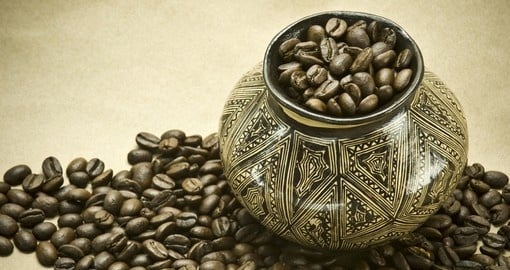
Stay on a coffee farm: over 300 haciendas offer lodging to tourists and can arrange walks through the coffee fields as well as horse riding, fishing, mountain biking and trips to local villages.
Things to See
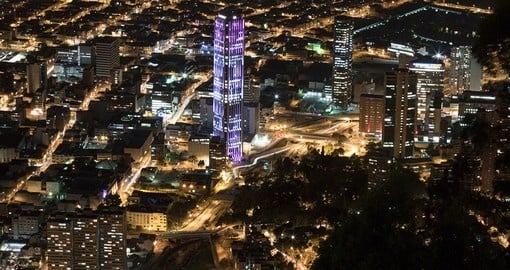
Head for the dizzying heights of Bogotá, which sits at 2,600m (8,600ft). Historical landmarks include the Capitol (congress building) and the cathedral (the Capilla del Sangrario) on the main square, the Plaza Bolivar.
Get sucked into the El Dorado dream: visit Bogotá's astonishing Gold Museum (website: www.banrep.gov.co/museo), housing an extraordinary wealth of glistening pre-Columbian treasures. Also take the cable car to a mountaintop overlooking the city for sunset.
Wander among voluptuous sculptures created by Colombian artist Fernando Botero in the Plaza Botero or see around 120 of his paintings, as well as an impressive collection of Impressionist and modern art, at the Museo Botero (website: www.lablaa.org/museobotero.htm).
Travel to Zipaquirá and enter the famous Salt Cathedral, an underground church built within a salt mine, in the body of a mountain. Stalactites and specks of salt jostle with crosses and chapels (website: www.catedraldesal.gov.co).
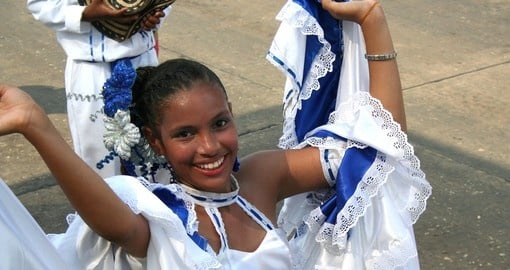
Join in the festivities of the Barranquilla Carnaval, when vibrant costumes, energetic dancing and lively music transform the industrial port. The main parades take place on the three days preceding Ash Wednesday and are second in size only to Rio's carnival (website: www.carnavaldebarranquilla.org).
Go to the Tayrona National Park, some 35km (22 miles) south of Santa Marta, to see one of the country's most popular parks. Its major attraction is its deep bays, shaded with coconut trees, beautiful beaches and several coral reefs (website: www.parquesnacionales.gov.co).
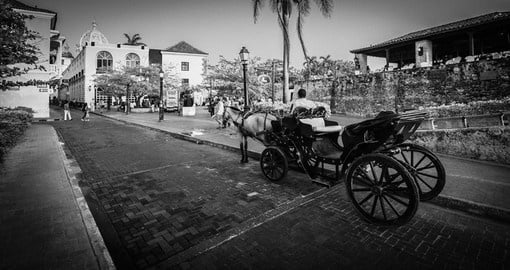
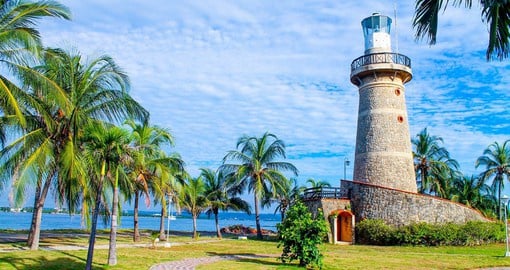
Be bewitched by the colonial port of Cartagena (website: www.turismocartagenadeindias.com), its balconied streets dense with history and overhung by bougainvillea. From here you can take trips to local coral islands, the Islas del Rosario, beaches, dive sites, mangrove labyrinths and a mud volcano.
Climb high into the jungle-covered Sierra Nevada de Santa Marta to the archaeological ruins of the Ciudad Perdida (Lost City), discovered in 1976. (Travellers are strongly advised to check local advice first, as the area has been unsafe in the past.)
Fly to the tropical islands of San Andrés and its smaller sibling Providencia, one of the Caribbean's most unspoilt gems, north of the Colombian coast. They were once the headquarters of the English pirate Captain Henry Morgan (websites: www.sanandres.gov.coandwww.oldprovidence.com).
Weave your way around more than 500 mysterious pre-Columbian stone statues and tombs in one of South America's most fascinating archaeological sites, San Agustín (website: www.sanagustin.com.co). It is the largest group of religious monuments and megalithic sculptures on the continent.
DETAILS - CANADA |
DETAILS - US |
|---|---|
| All travelers will need a passport valid for at least 90 days following your departure date. However, we strongly recommend traveling with 6 months validity on your passport at all times. Citizens of Canada can refer to www.passport.gc.ca for forms and instructions for new passport applications and Canadian passport renewals. | All travelers will need a passport valid for at least 90 days following your departure date. However, we strongly recommend traveling with 6 months validity on your passport at all times. |
6 city stop over(s) and 2 itineraries are available for Colombia
Email: info@goway.com • Accessibility at Goway • Privacy Policy
Booking Conditions Travel Insurance • Careers • Contact Us • Brochures •