
BUCKET LIST
BOLIVIA CITY STOP OVERS
- La Paz Stopover, 3 days
- La Paz Stopover - Golfing in the Clouds, 1 day
BOLIVIA ITINERARIES
- Andean Classic, 14 days
- Andes to the Jungle, 8 days
- Best of Bolivia, 12 days
- Bolivia, a Fascinating Rainbow, 12 days
- La Paz Puno Connector, 1 day
- Lake Titicaca & Uyuni Salt Flats, 6 days
- Potosi - City of Silver, 3 days
- Salt Lakes of Bolivia, 3 days
LATIN AMERICAN DESTINATIONS
- Antarctica (12 trips)
- Argentina (28 trips)
- Belize (6 trips)
- Bolivia (10 trips)
- Brazil (28 trips)
- Chile (30 trips)
- Colombia (9 trips)
- Costa Rica (7 trips)
- Ecuador (13 trips)
- El Salvador (4 trips)
- Falkland Islands (2 trips)
- Galapagos (14 trips)
- Guatemala (7 trips)
- Honduras (2 trips)
- Panama (6 trips)
- Peru (36 trips)
- Uruguay (3 trips)
- Venezuela (2 trips)

HOLIDAYS OF A LIFETIME
- Splendours of South America (2012), 17 days
- Splendours of South America (2013), 15 days
- Magical Ecuador and Peru (2012), 20 days
- Magical Ecuador and Peru plus Bolivia (2013/2014), 23 days
- Best of Ecuador, 11 days
- Cradle of the Incas, 13 days
Trekking, walking, wildlife encounters, cycling, rafting, sailing, cruising, camping, safaris, overland journeys and more.
Latin America Brochure
World of Adventure Brochure
GET A FREE TRAVEL QUOTE
Bolivia
Country General Information
PLEASE NOTE US CITIZENS NOW REQUIRE A VISA FOR BOLIVIA (see below)
Bolivia, landlocked at the heart of Andean Latin America, remains something of a well-kept secret. Throughout the country's colonial history, Bolivia was known as 'Upper Peru', until after Simon Bolivar led the country to independence in 1825, when it was named in his honour. Today, those who venture beyond the mass tourism of neighbouring, modern-day Peru will find a country offering a far more authentic take on Latin American culture.
While upscale hotels and international-standard restaurants do exist, there are also plenty of long bus journeys along mountain passes, rough-and-tumble jeep trips across empty landscapes and chilly nights in low-frills hotels under llama-wool blankets. The infrastructure may need some work but the country's innate charm lies in its staggering breadth of contrasts: the clash of indigenous and European culture, the sweep of landscape from jungle to high-altitude mountains and the diversity of activities from adrenaline sports to ancient monuments.
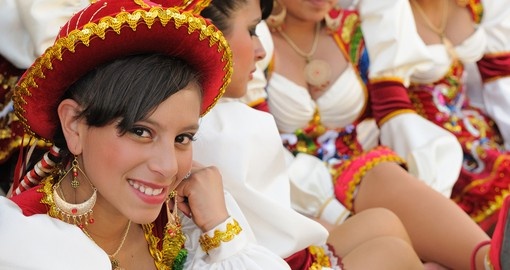
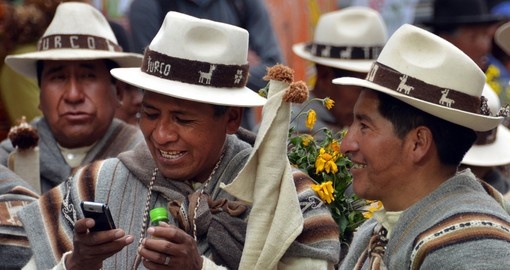
With around two thirds of the population being of indigenous origin, the authentic culture has not been watered down. Native religions, dialects, clothes, music and medicines all form part of the daily life on the street. While the Spanish influence is strong in the colonial architecture, most notably in Sucre, Bolivia has remained close its roots, electing its first-ever indigenous president, Evo Morales, in December 2005.
- Country Facts
- Climate
- Money
- Food & Drinks
- Travel Info
- Passport & Visas
Area
1,100,000 km² (424,164 sq miles).
Population
9.5 million (UN estimate 2007)
Population density
8.4 per km².
Capital
Constitutional: Sucre. Population: 288,290 (2007).
Administrative: La Paz. Population: 839,900 (2007).
Government
Democratic republic. Gained independence from Spain in 1825.
Geography
Bolivia is a landlocked country bordered by Peru to the northwest, Brazil to the north and east, Paraguay to the southeast, Argentina and Paraguay to the south and Chile to the west. There are three main areas: the first is a high plateau known as the Altiplano', a less fertile but populous region lying approximately 4,000m (13,000ft) above sea level.
The second area is a fertile valley situated 1,800m (5,900ft) to 2,700m (8,850ft) above sea level, which is less populous but more productive. The third area comprises the lowland tropics that stretch down to the frontiers with Brazil, Argentina and Paraguay, where the tropical climate and heavy rainfall foster lush vegetation and exotic produce.
Language
The official language is Spanish, but the main indigenous languages are Quechua, Aymará and Guaraní. English is often spoken by a small number of officials and businesspeople in commercial centres.
Religion
Primarily Roman Catholic with a Protestant minority and indigenous beliefs.
Time
GMT - 4
Social Conventions
Normal social courtesies in most Bolivian families and respect for traditions should be observed. Remember to refer to rural Bolivians as campesinos rather than Indians, which is considered an insult. Female campesinos still adhere to their traditional dress. A suit and tie for men and dress for women should be worn for smart social occasions. Casual wear is otherwise suitable. Smoking is accepted unless indicated otherwise. Time keeping is poor.
Electricity
110 and 220 volts AC, 50Hz. European two-pin (circular) plugs or US-style, two-pin (perpendicular flat) plugs.
Head of State
President Evo Morales since January 2006.
History
(With thanks to Lonely Planet)
Tangible history lives on in most of Bolivia’s best known destinations. From pre-Hispanic archaeological sites and living indigenous traditions to colonial architecture and the most recent headline-making political upheaval, the country’s history reflects influences that have shaped South America as a whole.
The great Altiplano (High Plateau), the largest expanse of arable land in the Andes, extends from present-day Bolivia into southern Peru, northwestern Argentina and northern Chile. It’s been inhabited for thousands of years, but the region’s early cultures were shaped by the imperial designs of two major forces: the Tiahuanaco culture of Bolivia and the Inca of Peru.
Most archaeologists define the prehistory of the Central Andes in terms of ‘horizons’ – Early, Middle and Late – each of which was characterized by distinct architectural and artistic trends. Cultural interchanges between early Andean peoples occurred mostly through trade, usually between nomadic tribes, or as a result of the diplomatic expansionist activities of powerful and well-organized societies. These interchanges resulted in the Andes’ emergence as the cradle of South America’s highest cultural achievements.
During the initial settlement of the Andes, from the arrival of nomads probably from Siberia until about 1400 BC, villages and ceremonial centers were established, and trade emerged between coastal fishing communities and farming villages of the highlands.
Early & middle horizons
The so-called Early Horizon (1400–400 BC) was an era of architectural innovation and activity, which is most evident in the ruins of Chavín de Huantar, on the eastern slopes of the Andes in Peru. During this period it is postulated that a wave of Aymará Indians, possibly from the mountains of central Peru, swept across the Andes into Alto Perú (Bolivia), driving out most of the Altiplano’s original settlers. Chavín influences resounded far and wide, even after the decline of Chavín society, and spilled over into the Early Middle Horizon (400 BC to AD 500).
The Middle Horizon (AD 500–900) was marked by the imperial expansion of the Tiahuanaco and Huari (of the Ayacucho valley of present-day Peru) cultures. The ceremonial center of Tiahuanaco, on the shores of Lake Titicaca, grew and developed into the religious and political capital of the Alto Peruvian Altiplano.
The Tiahuanacans produced technically advanced work, most notably the city itself. They created impressive ceramics, gilded ornamentation, engraved pillars and slabs with calendar markings and designs representing their bearded white leader and deity, Viracocha, as well as other undeciphered hieroglyphs. Over the following centuries wooden boats were constructed to ferry 55, 000kg slabs 48km across the lake to the building site, and sandstone blocks weighing 145, 000kg were moved from a quarry 10km away.
By 700 BC, Tiahuanaco had developed into a thriving civilization. Considered as advanced as ancient Egypt in many respects, it had an extensive system of roads, irrigation canals and agricultural terraces. Recent archeological findings suggest that these agricultural systems are more sophisticated than previously thought; they were designed to obtain high crop yields from unproductive land. The series of canals were built up with layer upon layer of substances – cobblestone topped with gravel and impermeable clay – designed to keep salt from the lake’s brackish waters from seeping into the topsoil. This agricultural system is believed to have supported a population of tens of thousands of people in the 83-sq-km Tiahuanaco Valley.
Tiahuanaco was inhabited from 1500 BC until AD 1200, but its power lasted only from the 6th century BC to the 9th century AD. One theory speculates that Tiahuanaco was uprooted by a drop in Lake Titicaca’s water level, which left the lakeside settlement far from shore. Another postulates that it was attacked and its population massacred by the warlike Kollas (sometimes spelt Collas; also known as Aymará) from the west. When the Spanish arrived, they heard an Inca legend about a battle between the Kollas and ‘bearded white men’ on an island in Lake Titicaca. These men were presumably Tiahuanacans, only a few of whom were able to escape. Some researchers believe that the displaced survivors migrated southward and developed into the Chipaya people of the westernOruro department.
Today the remains of the city lie on the plain between La Paz and the southern shore of Lake Titicaca, and collections of Tiahuanaco relics can be seen in several Bolivian museums.
Late horizon – the inca
The Late Horizon (AD 1476–1534) marked the zenith of Inca civilization. The Inca, the last of South America’s indigenous conquerors, arrived shortly after the fall of Tiahuanaco. They pushed their empire from its seat of power in Cuzco (Peru) eastward into present-day Bolivia, southward to the northern reaches of modern Argentina and Chile, and northward through present-day Ecuador and southern Colombia. However the Inca political state thrived for less than a century before falling to the invading Spanish.
The Inca inhabited the Cuzco region from the 12th century and believed they were led by descendents of the Sun God. The 17th-century Spanish chronicler Fernando Montesinos believed the Inca descended from a lineage of Tiahuanaco sages. There were many similarities between Tiahuanaco and Inca architecture.
Renowned for their great stone cities and skill in working with gold and silver, the Inca also set up a hierarchy of governmental and agricultural overseers, a viable social welfare scheme and a complex road network and communication system that defied the difficult terrain of their far-flung empire. The Inca government could be described as an imperialist socialist dictatorship, with the Sapa Inca, considered a direct descendant of the Sun God, as reigning monarch. The state technically owned all property, taxes were collected in the form of labor and the government organized a system of mutual aid in which relief supplies were collected from prosperous areas and distributed in areas suffering from natural disasters or local misfortune.
Around 1440 the Inca started to expand their political boundaries. The eighth Inca, Viracocha (not to be confused with the Tiahuanaco leader/deity of the same name), believed the mandate from the Sun God was not just to conquer, plunder and enslave, but to organize defeated tribes and absorb them into the realm of the benevolent Sun God. When the Inca arrived in Kollasuyo (present-day Bolivia), they assimilated local tribes as they had done elsewhere: by imposing taxation, religion and their own Quechua language (the empire’s lingua franca) on the region’s inhabitants. The Kollas living around the Tiahuanaco site were essentially absorbed by the Inca and their religion was supplanted, but they were permitted to keep their language and social traditions.
By the late 1520s internal rivalries began to take their toll on the empire. In a brief civil war over the division of lands, Atahualpa, the true Inca emperor’s half-brother, imprisoned the emperor and assumed the throne himself.
Spanish conquest
The arrival of the Spanish in Ecuador in 1531 was the ultimate blow. Within a year Francisco Pizarro, Diego de Almagro and their bands of merry conquistadores arrived in Cuzco. Atahualpa was still the emperor, but was not considered the true heir of the Sun God. The Spanish were aided by the Inca belief that the bearded white men had been sent by the great Viracocha Inca as revenge for Atahualpa’s breach of established protocol. In fear, Atahualpa ordered the murder of the real king, which not only ended the bloodline of the Inca dynasty, but brought shame on the family and dissolved the psychological power grip of the Inca hierarchy. Within two years the government was conquered, the empire dissolved and the invaders had divided Inca lands and booty between the two leaders of the Spanish forces.
Alto Perú, which would later become Bolivia, fell for a brief time into the possession of Diego de Almagro, who was assassinated in 1538. Three years later Pizarro suffered the same fate at the hands of mutinous subordinates. But the Spanish kept exploring and settling their newly conquered land, and in 1538 La Plata (later known as Sucre) was founded as the Spanish capital of the Charcas region.
The legacy of potosí
By the time the wandering Indian Diego Huallpa revealed his earth-shattering discovery of silver at Cerro Rico (Rich Hill) in Potosí in 1544, Spanish conquerors had already firmly implanted their language, religion and customs on the remnants of Atahualpa’s empire.
Spanish Potosí, or the ‘Villa Imperial de Carlos V, ’ was officially founded in 1545 and quickly grew to 160, 000 residents, making it the largest city in the western hemisphere. The Potosí mine became the world’s most prolific, and the silver extracted from it underwrote the Spanish economy, particularly the extravagance of its monarchy, for at least two centuries.
Atrocious conditions in the gold and silver mines of Potosí guaranteed a short life span for the local indigenous conscripts and African slaves who were herded into work gangs. Those not actually worked to death or killed in accidents succumbed to pulmonary silicosis within a few years. Africans who survived migrated to the more amenable climes of the Yungas northeast of La Paz, and developed into an Aymará-speaking minority. The indigenous peoples became tenant farmers, subservient to the Spanish lords, and were required to supply their conquerors with food and labor in exchange for subsistence-sized plots of land.
Coca, ace at numbing nerves and once the exclusive privilege of Inca nobles, was introduced among the general populace to keep people working without complaint.
Independence
In May 1809 Spanish America’s first independence movement – sparked by the criollos (people of Spanish ancestry born in the Americas) and mestizos (people of both indigenous and Spanish ancestry) – had gained momentum and was well underway in Chuquisaca (later renamed Sucre, as it stands today), with other cities quick to follow suit. By the early 1820s General Simón Bolívar succeeded in liberating both Venezuela and Colombia from Spanish domination. In 1822 he dispatched Mariscal (Major General) Antonio José de Sucre to Ecuador to defeat the Royalists at the battle of Pichincha. In 1824 after years of guerrilla action against the Spanish and the victories of Bolívar and Sucre in the battles of Junín (August 6) andAyacucho (December 9), Peru won its independence.
At this point Sucre incited a declaration of independence for Alto Perú, and exactly one year later the new Republic of Bolivia was born. The republic was loosely modeled on the US, with legislative, executive and judicial branches of government. Bolívar and Sucre served as Bolivia’s first and second presidents, but after a brief attempt by Andrés Santa Cruz, the third president, to form a confederation with Peru, things began to go awry. One military junta after another usurped power from its predecessor, setting a pattern of political strife that haunts the nation to this day.
Few of Bolivia’s 192 governments to date have remained in power long enough to have much intentional effect, and some were more than a little eccentric. The bizarre and cruel General Mariano Melgarejo, who ruled from 1865 to 1871, once drunkenly set off with his army on an overland march to aid France at the outset of the Franco-Prussian War. History has it that he was sobered up by a sudden downpour and the project was abandoned (to the immense relief of the Prussians, of course).
Shrinking territory
At the time of independence Bolivia’s boundaries encompassed well over two million sq km, but its neighbors soon moved to acquire its territory, removing coastal access and much of its Amazonian rubber trees, as well as attempting to control the potentially oil-rich Chaco; only half the original land area remained.
The coastal loss occurred during the War of the Pacific fought against Chile between 1879 and 1884. Many Bolivians believe that Chile stole the Atacama Desert’s copper- and nitrate-rich sands and 850km of coastline from Peru and Bolivia by invading during Carnaval. Chile did attempt to compensate for the loss by building a railroad from La Paz to the ocean and allowing Bolivia free port privileges in Antofagasta, but Bolivians have never forgotten this devastating enclaustromiento (landlocked status). In fact the government still uses the issue as a rallying cry to unite people behind a common cause.
The next major loss was in 1903 during the rubber boomwhenBrazil hacked away at Bolivia’s inland expanse. Brazil and Bolivia had been ransacking the forests of the remote Acre territory, which stretched from Bolivia’s present Amazonian borders to halfway up Peru’s eastern border. The area was so rich in rubber trees that Brazil engineered a dispute over sovereignty and sent in its army. Brazil convinced the Acre region to secede from the Bolivian republic, and promptly annexed it.
Brazil attempted to compensate Bolivia’s loss with a railway, intended to open up the remote northern reaches of the country and provide a coastal outlet for the Amazon Basin. However the tracks never reached Bolivian soil. Construction ended at Guajará-Mirim on the Brazilian bank of the Río Mamoré.
There were two separate territory losses to Argentina. First, Argentina annexed a large slice of the Chaco in 1862. Then, in 1883, the territory of Puna de Atacama went to Argentina. It had been offered to both Chile and Argentina, the former in exchange for return of the Litoral, the latter in exchange for clarification over Bolivia’s ownership of Tarija.
Finally Paraguay went in for the kill. In 1932 a border dispute for control of the potentially huge deposits of oil in the Chaco was revved up by rival foreign oil companies. With Standard Oil backing Bolivia and Shell siding with Paraguay, Bolivia entered into the Chaco War.
Bolivia fell victim to Paraguayan pride and, within three years, lost another 225, 000 sq km, 65, 000 young men and a dubious outlet to the sea via the Río Paraguai before the dispute was finally settled in 1935 in Paraguay’s favor. The anticipated oil reserves were never discovered, but several fields in the area that remained Bolivian territory now keep the country self-sufficient in oil production.
Chaos prevails
Free from the threat of military intervention, the 1989 presidential elections were characterized mostly by apathy. Hugo Banzer Suárez of the Acción Democrática Nacionalista (ADN) resurfaced, the MIR nominated Jaime Paz Zamora and the MNR put forth mining company president and economic reformist Gonzalo Sánchez de Lozada (‘Goni’). Although Banzer and Sánchez were placed ahead of Paz Zamora, no candidate received a majority, so it was left to the National Congress to select a winner. Congress selected Paz Zamora as the new president (meanwhile, rivals Banzer and Paz Zamora formed a coalition).
In the 1993 election Sánchez was elected. Sánchez’s Aymará running mate, Victor Hugo Cárdenas, appealed to cholos and campesinos (subsistence farmers), while European urbanites embraced Sánchez’s free-market economic policies. This administration attacked corruption and began implementing capitalización by opening up state-owned companies and mining interests to overseas investment. Officials hoped privatization would stabilize and streamline companies, making them profitable. Overseas investors in formerly state-owned companies received 49% equity, total voting control, license to operate in Bolivia and up to 49% of the profits. The remaining 51% of the shares were distributed to Bolivians as pensions and through Participación Popular, which was meant to channel spending away from cities and into rural schools, clinics and other local infrastructure.
Initially Participación Popular drew widespread disapproval; city dwellers didn’t want to lose their advantage, and rural people, who stood to benefit most, feared a hidden agenda or simply didn’t understand the program. Most working-class people viewed it as privatization by another name, and believed it would lead to the closure of unprofitable operations that didn’t attract investors, resulting in increased unemployment. They had a point: while potential investors clamored for the oil company Yacimientos Petrolíferos Fiscales Bolivianos (YPFB) and the huge agribusinesses of the Santa Cruz department, the antiquated Comibol mining operations and the hopelessly inefficient Empresa Nacional de Ferrocarriles (ENFE) railways drew little more than polite sneers (and many components of these operations have indeed closed down).
In 1995 labor grievances over these new policies resulted in a 90-day state-of-siege declaration and the arrest of 374 labor leaders. By mid-year measures were relaxed, but as the year progressed, reform issues were overshadowed by violence and unrest surrounding US-directed coca eradication in the Chapare. Even the establishment of a Spanish-managed private pension scheme and a subsequent payment of US$248 to each Bolivian pensioner – with the promise of future payments from the less-than-fluid plan – did little to boost the administration’s popularity.
In 1997 voters upset by the reforms cast 22.5% of the ballot in favor of comeback king and former dictator General Hugo Banzer Suárez. Congress deemed Banzer the victor, and he was sworn in on August 6 to a five-year term, up from four by a 1996 constitutional amendment.
In the late 1990s Banzer faced swelling public discontent with his coca eradication measures, widespread corruption, unrest in response to increasing gas prices and a serious water shortage and economic downturn in the Cochabamba department. In 2000, public protests over increasing gas prices versus government-controlled transportation fares resulted in the blockade of the Yungas Highway for several weeks, and several issues inspired marches, demonstrations and occasional violence, which sporadically halted all traffic (in some cases even vendor and pedestrian traffic) in La Paz and other cities.
Then in 2000 there was the now-famous Water War in Cochabamba when the World Bank forced the Bolivian Government to sell the province’s water utility to the private US-company Bechtel. When there was a water rate hike, the local people took to the streets and Bechtel was forced out.
In August 2002 ‘Goni’ Sánchez de Lozada was appointed president after winning only 22.5% of the vote. In February 2003 his International Monetary Fund (IMF) –endorsed economic policies, including steep tax hikes and the exportation of gas out of Bolivia for processing elsewhere, were met with widespread protests and several days of police lock-down in La Paz. In October 2003, Lozada resigned amidst massive popular protests and fled to Miami, where he lives today in comfort, to the disgruntlement of Bolivians. His vice president and respected historian Carlos Mesa automatically took office.
A new era
Although the unrest continued, Mesa remained a popular leader during his first two years as president. In 2004 he held a referendum on the future of Bolivia’s natural gas reserves. Bolivians overwhelmingly advocated Mesa’s proposals to exert more control over the foreign-owned gas companies. But in 2005, rising fuel prices led to major protests. Tens of thousands of Bolivians – impoverished miners and farmers – took to the streets. Mesa resigned in June 2005. Supreme Court Judge Eduardo Rodriguez took over as interim president.
In December 2005, Bolivians elected their country’s first indigenous president. Former cocalero (coca grower) activist Juan Evo Morales Ayma (more commonly known as Evo Morales) of Movimento al Socialismo (MAS) won nearly 54% of the vote, having promised to alter the traditional political class and to empower the nation’s poor (mainly indigenous) majority. Soon after Morales’ appointment, the IMF announced a US$2 billion debt-forgiveness plan for Bolivia (along with the debts of 18 other impoverished countries). Morales was quick to set about change, carrying out some hefty initiatives: in May 2006 he nationalized Bolivia’s energy industry, and in July 2006 he formed (through local elections) a National Constituent Assembly to set about rewriting the country’s constitution. The assembly sat for the first time on August 6, 2006 (Independence Day) and will have a year to formulate a new body of law before being ratified in a national referendum. Controversial (at least for the US) is that fact that Morales is challenging the US to rethink its coca eradication efforts. Morales wants to promote the coca leaf and its bi-products, integral to many Bolivians’ wellbeing and culture. (Until this time, coca crops – plants, not their chemical derivative of cocaine – were under a zero-tolerance policy, intended to placate the US.)
While Morales is viewed by some as a populist leader, he is seen also to antagonize the US, especially with his ties with the leftist governments of Venezuela and Cuba. Furthermore, he has set about redefining indigenous identity and empowering the underprivileged indigenous majority, fueling what some sociologists and anthropologists are predicting will be the next cultural revolution.
Read more: http://www.lonelyplanet.com/bolivia/history#ixzz1nbJ1RhcW
Climate
Bolivia has a temperate climate but temperatures can differ dramatically between day and night. The wettest period is November to March, which, in extreme circumstances, may induce landslides in mountainous areas, and cause certain roads to become impassable. The northeast slopes of the Andes are semi-tropical. Visitors sometimes find La Paz uncomfortable because of the thin air due to high altitude. The mountain areas can become very cold at night.
Required Clothing
Lightweight, natural fabrics and waterproofs. Warmer clothing is necessary at night in the Altiplano, especially La Paz, Oruro and Potosi.
Currency
1 Boliviano (BOB; symbol Bs) = 100 centavos. Notes are in denominations of Bs200, 100, 50, 20, 10 and 5. Coins are in denominations of Bs5, 2 and 1, and 50, 20 and 10 centavos. The Boliviano is tied to the US Dollar.
Currency Exchange
Money can be changed in hotels and casas de cambio. The Boliviano is the preferred currency with exchange against the Euro now preferred to the Dollar.
Credit / Debit Cars
American Express, Diners Club, MasterCard and Visa are accepted in most mid- to top-range hotels and restaurants, but otherwise have limited acceptance. There are ATMs in most larger towns and cities.
Travelers Cheques
US Dollar traveller's cheques remain popular but Euro cheques are increasingly favoured. Pound Sterling traveller's cheques are not widely accepted.
Banking Hours
Mon-Fri 0900-1800. Some banks open Sat 0900-1300
Food and Drink
Bolivian cuisine is distinctive and good quality. Dishes are dominated by meat and often slightly spicy. International and local-style restaurants are available in all main towns. Bottled water and other drinks are widely available. Things to know: Local bars are increasing in number and are unrestricted with no licensing hours.
National specialties
Salteña (a mixture of diced meat, chicken, chives, raisins, diced potatoes, hot sauce and pepper baked in dough).
Lomo montado (fried tender loin steak with two fried eggs on top, rice and fried banana).
Picante de pollo (southern fried chicken, fried potatoes, rice, tossed salad with hot peppers).
Chuño (naturally freeze-dried potato used in soup called chairo).
Lechón al horno (roast suckling pig served with sweet potato and fried plantains).
National drinks
Bolivian beer, especially the Huari brand from the Paceña brewery.
Chicha (made from fermented cereals and corn).
Singani, fermented from grapes, is a popular brandy to mix in cocktails.
Bolivia has a fledgling wine-making industry with its 'wines at altitude' from La Concepción label garnering international plaudits.
Tipping
It is customary to add 10% as a tip to the 13% service charge added to hotel and restaurant bills. Porters also expect tips for each piece of luggage.
Nightlife
La Paz has many nightclubs, which generally get going around midnight. There are also numerous bars, while other major cities boast a growing number of discos and bars. A popular night out is a visit to a peña, a folk music and dancing shows, often accompanied by a late dinner.
In La Paz, Peña Restaurant Huari and Peña Restaurant Marka Tambo both serve traditional Andean food and attract performances by well known local musicians. International visitors may also be interested in events, shows and performances arranged by local cultural centres.
Public Holidays
1 Jan New Year's Day; 13-16 Feb Carnival; 2 Apr Good Friday; 1 May Labour Day; 3 Jun Corpus Christi; 6 Aug Independence Day; 2 Nov All Saints' Day; 25 Dec Christmas Day.
Things to Do
Go trekking through ancient Inca trails. Most treks start from La Paz and Sorata, and the most popular trek is the moderate three-day Choros Trail from La Paz to Coroico. The three-day Taquesi Trail is a moderate hike from La Paz, while the Illampus Circuit from Sorata is a rewarding but demanding six-day trek.
Hurtle down 'the world's most dangerous road' on a mountain bike. Starting from the Bolivian Andes outside of La Paz, descend rapidly down twisting mountain roads into the Yungas jungle.
Venture into the Amazon and stay at a jungle eco lodge, such as Chalalan (website: www.chalalan.com). Typical jungle trips include motorised canoe trips, guided rainforest walks with a local guide who knows the indigenous plants and wildlife, and rustic lodge accommodation.
Climb the Cordillera Real, which has several peaks above 5,000m (14,500ft). Climbing excursions (complete with mules, porters and guides) can also be booked in Sorata, an Alpine-style village. Seek out the cafe Pete's Place for the latest news on routes and access.
Follow in the footsteps of the iconic Che Guevara and visit the place where he died by taking the Che Guevara Trail from Santa Cruz through the southeast lowlands of Bolivia to La Higuera.
Join in the street party at the annual Carnival (website: www.orurocarnaval.com), the most faithful expressions of folklore in South America being in Oruro with its historic Entrada and Diablada procession. It is often viewed as one of the world's last 'authentic' cultural celebrations.
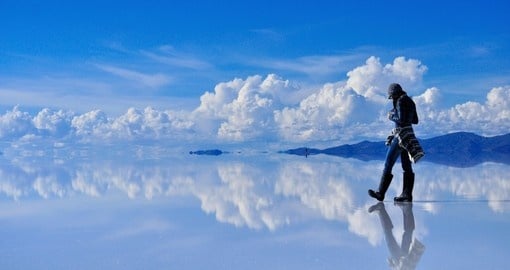
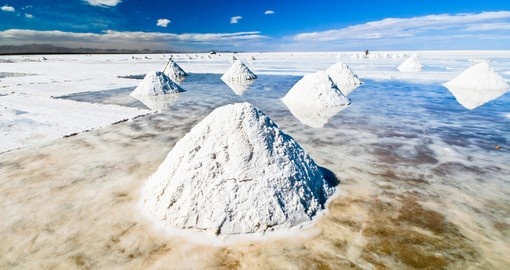
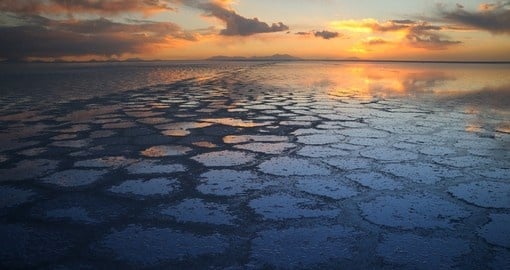
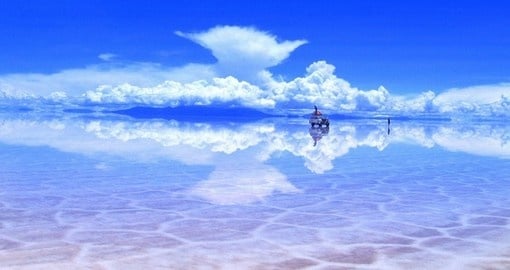
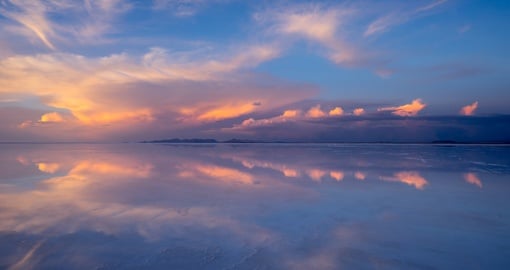
Soak up the unique atmosphere and revel in the exotic wildlife on a tour of the Salar de Uyuni, the world's highest salt flats. Agencies in Uyuni will arrange a two-night excursion with basic accommodation and guides.
Admire some of Bolivia's spectacular mountain scenery on a day hike or horse ride around the Zona Sur region of La Paz. Hotel Calacoto (website: www.hotel-calacoto-bolivia.com) can arrange excursions.
Things to See
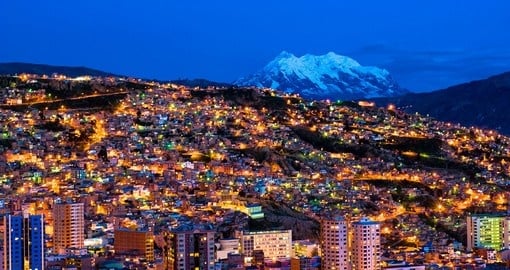
Explore the street life in the world's highest capital city: La Paz is situated 3,632m (11,910ft) above sea level and is overlooked by Mount Illimani.
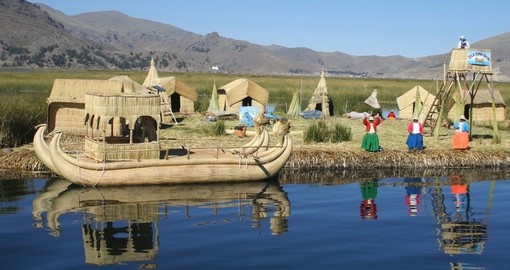
Take a cruise on Lake Titicaca, the highest commercially navigable lake in the world, which straddles the Bolivia-Peru border. The enormous freshwater lake is home to several small island communities, including the Uros islands made entirely from reeds.
Travel around the Salar de Uyuni and marvel at Laguna Colorado, its fiery-red waters illuminating wandering flamingos that criss-cross the terrain, framed by copper mountains, and Laguna Verde with its conical volcano on the Chilean border.
Discover the garden city, Cochabamba, with its excellent local cuisine, warm climate and imposing statue of Christ.
Explore historic Potosí, once the most important city on the continent. Situated at the foot of Rich Mountain, it was famed for its mineral wealth, especially silver. Today guided tours visit the mines and the former Royal Mint, Casa de la Moneda.
Ponder the mysteries of ancient history at Tiahuanaco, believed to be the capital of the Pre-Inca civilisation. The site is dominated by a series of evocative temples and a compelling museum of ancient artefacts.
Marvel at the colonial facades of Sucre, 'the white city', with its UNESCO-listed architecture and tranquil central square for strolling and chatting with the locals.
Admire the striking churches along the Jesuits Missions Trail (website: www.chiquitania.com, built in the 17th-century and rescued from disrepair in from the 1950s onwards by Latter-Day Jesuits. The sites are now UNESCO-protected and home to a bi-annual sacred music festival.
DETAILS - CANADA |
DETAILS - US |
|---|---|
|
All travelers will need a passport valid for at least 90 days following your departure date. However, we strongly recommend traveling with 6 months validity on your passport at all times. Citizens of Canada can refer to www.passport.gc.ca for forms and instructions for new passport applications and Canadian passport renewals. |
Original, signed United States passport with at least 6 months of remaining validity. Passport-type photograph Complete and sign the Credit Card Authorization Form. Itinerary. Copy of round trip tickets or confirmed itinerary. Bank statement. Copy of the applicant's most recent monthly bank statement. The statement must clearly show the applicant's name as the account holder, the balances of the accounts, and the date of the statement. Hotel Reservations. Copy of confirmed hotel reservations. Letter of Invitation. If staying with friends or family, a letter of invitation from the host in Bolivia, can be used instead of the hotel reservation. The letter should be addressed to the Embassy of Bolivia, Visa Section and should state the relationship to the applicant, the dates of the visit, and the address and phone number where you will be staying. |
2 city stop over(s) and 8 itineraries are available for Bolivia
Email: info@goway.com • Accessibility at Goway • Privacy Policy
Booking Conditions Travel Insurance • Careers • Contact Us • Brochures •