
Australia Capital Territory Tours


Our Australian Capital Territory Tours
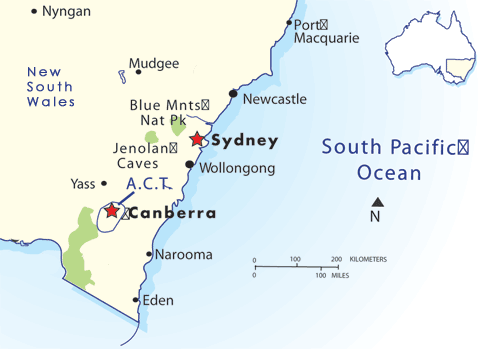
Australian Capital Territory is a territory in the southeast of Australia, enclaved within New South Wales. It is the smallest self-governing internal territory in Australia. Its most populous city is Canberra, the country's capital, which makes an easy addition to an Australia vacation bound for Sydney or Melbourne.
Australian Capital Territory Vacation Highlights
Canberra
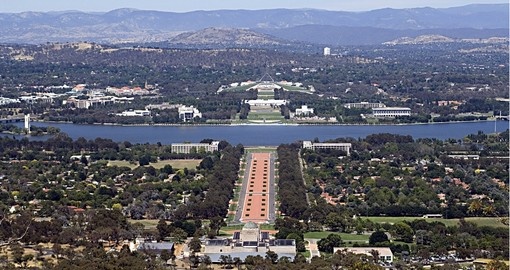
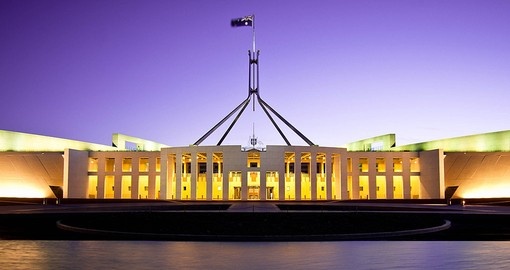
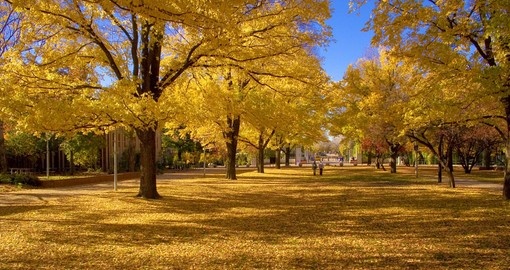
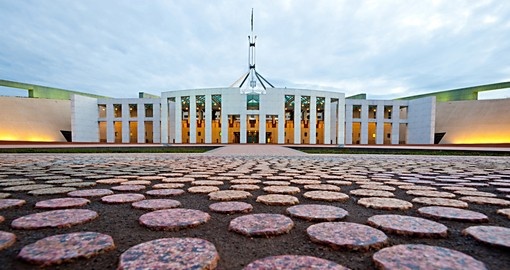
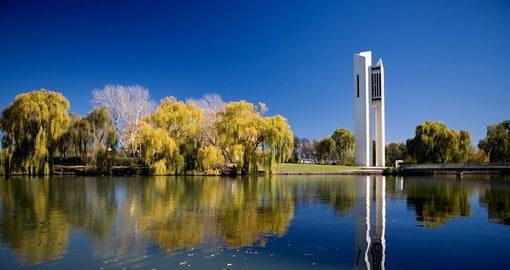
Canberra is an attractive planned city, known as a city in a park,’ steeped in national history and culture. It is surrounded by mountain ranges and hills covered in bushland. It is also almost totally surrounded by the beautiful Lake Burley Griffin. The impressive Parliament Building stands out on the summit of Capital Hill. On trips to Australia, Canberra is also a city of festivals for all seasons such as Floriade when the city celebrates springtime by filling Commonwealth Park with thousands of blooms across artistic flower beds. For food and wine lovers, follow Poachers Way Trail to discover the 140 vineyards and 33 wineries located around the nearby countryside.
Museums and Galleries
One imposing site and one of Canberra’s most iconic attractions is the War Memorial which pays homage to Australia’s military history. There is also an excellent selection of art galleries and museums. Some of the major ones of interest are the National Gallery of Australia, the Questacon Science Centre and the Mount Stromlo Observatory.
Parks and Trails
For the more active Australian tours, try the mountain trails at Mount Stromlo or Brindabella National Park in the heart of the Australian Alps, or follow the Yerrabi Walking Track with views of the Bimberi Peak and its undisturbed ecosystems. You can find kangaroos and wallabies here while exploring wetlands and wildflower-cloaked plains. Namadgi National Park is perfect for rock climbing, hiking, and horseback riding as well as the bushland city of Canberra Nature Park.
C’mon say G’day Downunder. Book one of our Australia vacations today and start exploring!
Australia Travel Information
At Goway we believe that a well-informed traveller is a safer traveller. With this in mind, we have compiled an easy-to-navigate travel information section dedicated to Australian vacations.
Learn about the history and culture of Australia, the must-try food and drink, and what to pack in your suitcase. Read about Australia's nature and wildlife, weather and geography, along with 'Country Quickfacts' compiled by our travel experts. Our globetrotting tips, as well as our visa and health information, will help ensure you're properly prepared for a safe and enjoyable trip. The only way you could possibly learn more is by embarking on your journey and discovering Australia for yourself. Start exploring...book one of our Australia vacations today!
Extend Your Stay
Consider an additional stopover to your Australia vacation at one of Goway's South Pacific destinations. You can choose from our selection of New Zealand vacation packages, Tahiti vacation packages or stay at one of our Fiji resorts or perhaps take a Cook Island vacation. This can be done stopping over en route to or from Australia.
Australian Capital Territory, Australia
1 Trip Available
-
- Sort by:
- Most Popular
- Duration
- Price
-
![]()
Three Capitals Classic
MODERATE | TAILOR-MADE: Take the opportunity to experience three of Australia’s capital cities. See the sights of Sydney before heading to Canberra, the national capital, then visit the highlights of Melbourne.- Duration:
- 7 Days
- Prices From:
- US$ 1,469
- Trip Type:
- Classics (Bestsellers)
![]() See Trip Details
See Trip Details