
BUCKET LIST
COSTA RICA ITINERARIES
- Coast and Rainforest, 7 days
- Costa Rica Coast to Coast, 11 days
- Costa Rica Elements, 7 days
- Costa Rica Express
- Essential Costa Rica, 12 days
- Land of Seas, Suns and Volcanoes, 8 days
- Tortuguero Canals, 4 days
COSTA RICA STAYS OF DISTINCTION
- Arenal Kioro Suites & Spa, Arenal Volcano
- Hotel Parador Resort & Spa, Punta Quepos
- Hotel Punta Islita, Guanacaste
- Si Como No, Manuel Antonio
- Tango Mar Beach resort, Nicoya Peninsula
LATIN AMERICAN DESTINATIONS
- Antarctica (12 trips)
- Argentina (28 trips)
- Belize (6 trips)
- Bolivia (10 trips)
- Brazil (28 trips)
- Chile (30 trips)
- Colombia (9 trips)
- Costa Rica (7 trips)
- Ecuador (14 trips)
- El Salvador (4 trips)
- Falkland Islands (2 trips)
- Galapagos (14 trips)
- Guatemala (7 trips)
- Honduras (2 trips)
- Panama (6 trips)
- Peru (36 trips)
- Uruguay (3 trips)
- Venezuela (2 trips)

HOLIDAYS OF A LIFETIME
- Splendours of South America (2012), 17 days
- Splendours of South America (2013), 15 days
- Magical Ecuador and Peru (2012), 20 days
- Magical Ecuador and Peru plus Bolivia (2013/2014), 23 days
- Best of Ecuador, 11 days
- Cradle of the Incas, 13 days
Trekking, walking, wildlife encounters, cycling, rafting, sailing, cruising, camping, safaris, overland journeys and more.
Latin America Brochure
World of Adventure Brochure
GET A FREE TRAVEL QUOTE
Costa Rica
Country General Information
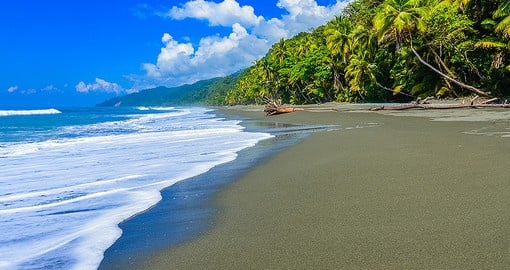
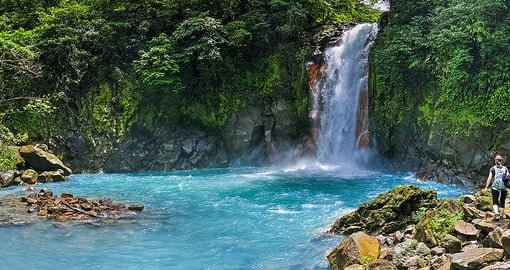
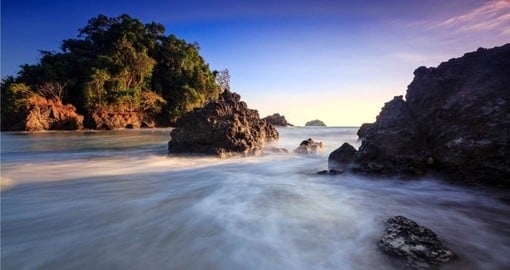
In Costa Rica the visitor can enjoy lovely tropical beaches, the grandest adventures, the wonders of nature, scintillating culture, all the necessary components of an ideal vacation. No wonder, then, that thousands of tourists have made Costa Rica their top travel choice.
Costa Rica extends majestically from the Pacific Ocean to the Caribbean Sea, and its distance is barely 200 miles. Its land portion occupies only 20 thousand square miles.
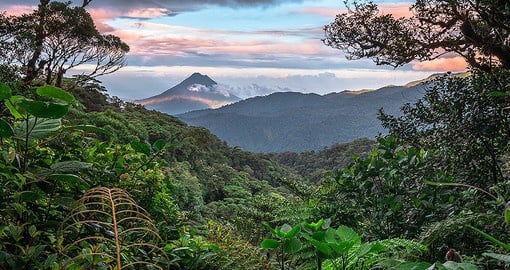
If you travel throughout the provinces of Costa Rica, it's easy to notice that in no other place you shall find fields with so many variations in their landscape and climate as here.
Costa Rica is one of most highly valued tourist destinations in this planet. This small piece of land includes all of the necessary components to satisfy the taste of thousands of travelers visiting each year.
Offering everything from our famous Stays of Distinction to a small range of all inclusives to the innovative Flexi Touring Costa Rica day tour system Goway and its adventure division - ADVENTURESIncorporated is your ideal stop for all things Costa Rica.
- Country Facts
- Climate
- Money
- Food & Drinks
- Travel Info
- Passport & Visas
Region
Central America
Area
51,100 km² (19,730 sq miles).
Population
4,576,562 (July 2011 est.)
Population density
80.8 per km².
Capital
San José. Population: 346,799 (official estimate 2006) (Province of San José: 1.4 million).
Government
Republic. Gained independence from Spain in 1821.
Geography
Costa Rica, lying between Nicaragua and Panama, is a complete coast-to-coast segment of the Central American isthmus. Its width ranges from 119km to 282km (74 to 176 miles). A low thin line of hills that rises between Lake Nicaragua and the Pacific Ocean in Nicaragua broadens as it enters northern Costa Rica, eventually forming the high, rugged, mountains of volcanic origin in the Pacific Northwest and the centre of Costa Rica.
The southern half of the country is dominated by mountains of tectonic origin; the highest peak is Chirripó Grande, which reaches 3,820m (12,530ft). More than half the population live on the Meseta Central, a plateau with an equitable climate. It is the setting for the country's capital, San José. There are lowlands on both coastlines, mainly swampy on the Caribbean coast, with savannah and dry forest on the Pacific Northwest merging into mangrove and rainforest southward. Rivers cut through the mountains, flowing down to both the Caribbean and the Pacific.
Language
Spanish is the official language. English is widely spoken. Some French, German and Italian is also spoken.
Religion
Almost entirely Christian, with Roman Catholic majority.
Time
GMT - 6.
Social Conventions
Handshaking is common although is typically limp, and formal titular address is important. Christian names are preceded by Señor for a man and Señora for a woman, but Don is used to address a highly respected man and Doña for a female equivalent. Normal courtesies should be observed when visiting someone's home and gifts are appreciated as a token of thanks, especially if invited for a meal. For most occasions casual wear is acceptable, but beachwear should be confined to the beach.
Electricity
110 volts AC, 60Hz. Two-pin plugs are standard.
Head of State
President Oscar Arias Sanchez since 2006.
History
(With thanks to Lonely Planet)
Costa Rica is unique. While sharing with its neighbors the experiences of colonial exploitation and commodity-export dependency, Costa Rica managed to rise above. Instead of recurring cycles of dictatorship and poverty, Costa Rica boasts an enduring democracy and the highest standards of living in Central America. What’s more, Costa Rica is unique among all nations for its ‘unarmed’ political democracy and ‘green’ economic revolution.
Lost civilization
Humans have inhabited the rain forests of Costa Rica for 10,000 years. The region long served as an intersection for America’s native cultures. About 500 years ago, on the eve of European discovery, it is guesstimated that as many as 400,000 people lived in today’s Costa Rica.
Knowledge about these pre-Columbian cultures is scant. The remains of lost civilizations were washed away by torrential rains, and Spanish conquerors were more intent on destroying rather than describing native lifestyles. Until recently, Costa Ricans showed little interest in their ancient past.
The region hosted roughly 20 small tribes, organized into chiefdoms, indicating a permanent leader, or cacique, who sat atop a hierarchical society that included shaman, warriors, toilers and slaves. The language of the Central Valley Huetar Indians was known throughout all regions. The Central Valley contains the only major archaeological site uncovered in Costa Rica at Guayabo. Thought to be an ancient ceremonial center, it featured paved streets, an aqueduct and decorative gold.
To the east, the Carib Indians, naked and fierce, dominated the Atlantic coastal lowlands. Adept at seafaring, the Carib tribes were a conduit of trade with the South American mainland. The Indians in the northwest were connected to the great Meso-American cultures. Aztec religious practices and Mayan jade and craftsmanship are in evidence in the Península de Nicoya, while Costa Rican quetzal feathers and golden trinkets have turned up in Mexico. These more concentrated tribes tended corn fields. The three chiefdoms found in the southwest showed the influence of Andean Indian cultures, including coca leaves, yucca and sweet potatoes.
Still a puzzle are the hundreds of hand-sculpted, monolithic stone spheres that dot the landscape of the southwest’s Diquis Valley, as well as the Isla del Caño. Weighing up to 16 tons and ranging in size from a baseball to a Volkswagen, the spheres have inspired many theories: an ancient calendar, extraterrestrial meddling, or a game of bocce gone terribly awry.
Heirs of Columbus
On his fourth and final voyage to the New World, in 1502, Christopher Columbus was forced to drop anchor near today’s Puerto Limón after a hurricane damaged his ship. Waiting for repairs, Columbus ventured into the verdant terrain and exchanged gifts with the friendly natives. He returned from this encounter, claiming to have seen ‘more gold in two days than in four years in Española.’Columbus dubbed the stretch of shoreline from Honduras to Panama as Veragua, but it was his excited descriptions of ‘la costa rica’ that gave the region its lasting name.
Anxious to claim its bounty, Columbus petitioned the Spanish Crown to have himself appointed governor. But by the time he returned to Seville, his royal patron Queen Isabella was on her deathbed, and King Ferdinand awarded the prize to a rival. Columbus never returned to the ‘Rich Coast’. Worn down by ill health and court politics, he died in 1506, a very wealthy man.
To the disappointment of his conquistador heirs, the region was not abundant with gold and the locals were not so affable. The king commissioned Diego de Nicuesa to settle the newly claimed land. But this first colony was abruptly abandoned when tropical disease and tenacious natives decimated its ranks. Successive expeditions launched from the Caribbean coast also failed. The pestilent swamps, oppressive jungles and volcano-topped mountains made Columbus’s paradise seem more like hell.
In 1513 Balboa made it across Panama and gazed at the Pacific. The conquistadors now had a western beachhead from which to assault Costa Rica. They targeted the indigenous groups living near the Golfo de Nicoya. To the glory of God and king, aristocratic adventurers plundered villages, executed resisters and enslaved survivors. None of these bloodstained campaigns led to a permanent presence, however. Intercontinental germ warfare caused outbreaks of feverish death on both sides. Scarce in mineral wealth and indigenous laborers, the Spanish eventually came to regard the region as the ‘poorest and most miserable in all the Americas.’
It was not until the 1560s that a Spanish colony was established. In the interior, at Cartago, a small community eventually settled to cultivate the rich volcanic soil of the Central Valley. Costa Rica’s first church was built here on the banks of the Río Reventazón. The fledgling colony survived under the leadership of its first governor, Juan Vasquez de Coronado. He used diplomacy instead of firearms to counter the Indian threat, surveyed the lands south to Panama and west to the Pacific, and secured deed and title over the colony. Though Vasquez was lost at sea in a shipwreck, his legacy endured: Costa Rica was an officially recognized province of New Spain.
Central valley Sunday
Central America was a loosely administered colony. Its political-military headquarters was in Guatemala and the closest bishop was in Nicaragua. Lacking strategic significance or exploitable riches, Costa Rica became a minor provincial outpost.
Costa Rica’s colonial path diverged from the typical Spanish pattern in that a powerful landholding elite and slave-based economy never gained prominence. Instead of large estates, mining operations and coastal cities, modest-sized villages of small-holders developed in the interior Central Valley. They toiled six days a week, while Central Valley Sundays were for prayer and rest. In national lore, the stoic, self-sufficient farmer provided the backbone for ‘rural democracy.’ Recent historical research shows that colonial society was more complex than this view suggests; still, the Central Valley was a relatively egalitarian corner of the Spanish empire.
Colonial life centered on agriculture. Costa Ricans grew corn, beans and plantains for subsistence, and produced sugar, cacao and tobacco for sale. Despite ample rainfall and rich soil, the Central Valley struggled to prosper. Indian raids and pirate attacks kept villagers on nervous guard. Much of Cartago was leveled in 1723 by Volcán Irazú. New settlements eventually sprouted in Heredia (1706), San José (1737) and Alajuela (1782). As the 18th century closed, the population topped 50,000.
The colony exhibited social hierarchy and ethnic diversity. It is not that Costa Rica lacked an upper class, rather its elite was neither extravagantly affluent nor exclusive. There were several well-connected families, whose lineage went back to the founding of the colony; but anyone could acquire wealth by agricultural processing or trade.
Below the elite, villages included small-holders, tenant laborers and domestic servants. Social mobility existed, but was crimped by economic dearth and cultural conservatism. Patriarchy prevailed at home, an arrangement reinforced by the Church, which was empowered to mediate in family affairs.
The Central Valley population also included free blacks, mulattos and mestizos. With labor in short supply, nonwhites eked out a living on the edge of the colonial economy, but they were denied legal status. The scarcity of European women meant that over time the Central Valley’s white population turned browner.
As Spanish settlement expanded, the indigenous population plummeted. From 400,000 at the time Columbus first sailed, the number was reduced to 20,000 a century later, and to 8000 a century after that. While disease was the main source of death, the Spanish were relentless in their effort to exploit the natives as an economic resource. Central Valley indigenous groups were the first to fall. Outside the valley, several tribes managed to survive a bit longer under forest cover, staging occasional raids. Repeated military campaigns eventually forced them into submission and slavery as well.
Noble homeland
In 1821 the Americas wriggled free of Spain’s imperial grip. Mexico declared independence for itself as well as Central America. The Central American colonies declared independence from Mexico. These events hardly disturbed Costa Rica, which learned of its liberation a month after the fact. With an empire up for grabs, the region descended into conflict.
Independence set off a struggle between Conservatives, Spanish-bred elites who previously dominated colonial administration, and Liberals, New World elites who were denied the status and power that they believed they deserved. Conservatives promoted an orderly continuation of tradition, monarchy and the Church; Liberals favored enlightened progress, a constitutional republic, and secular reform. In the Central Valley, this clash led to a short civil war between Conservatives of Cartago and Liberals of San José. The upstart Liberals prevailed and, as a spoil of war, the victors moved the capital to San José in 1823.
The newly liberated colonies pondered their fate: stay together in a United States of Central America or go their separate national ways. At first, they came up with something in between – the Central American Federation (CAF). But it could neither field an army nor collect taxes. Accustomed to being at the center of things, Guatemala attempted to dominate the CAF, alienating smaller colonies and hastening its demise. Costa Rica formally withdrew in 1938. Future attempts to unite the region would likewise fail.
Meanwhile, an independent Costa Rica was taking shape under Juan Mora Fernandez, first head of state (1824–33). Mora tended to nation-building. He organized new towns, built roads, published a newspaper and coined a currency. His wife designed a new flag. Life returned to normal, unlike the rest of the region where post-independence civil wars raged on. In 1824 the Nicoya-Guanacaste province seceded from Nicaragua and joined its more easygoing southern neighbor, defining the territorial borders. In 1852 Costa Rica received its first diplomatic emissaries from the United States and Great Britain.
As one empire receded, another arose. In the 19th century, the US was in an expansive mood and Spanish America looked vulnerable. In 1856 the soldier of fortune William Walker landed in Nicaragua intending to conquer Central America, establish slavery, and construct an interoceanic canal. Walker was soon marching on Costa Rica. A volunteer army of 9000 civilians was hastily mobilized. The Yankee mercenaries were stopped at Santa Rosa, and chased back into Nicaragua. During the fight, a drummer boy from Alajuela, Juan Santamaría, was killed while daringly setting fire to Walker’s defenses. The battle became a national legend and Santamaría a national hero (and inspiration for an airport). Walker’s messianic ambitions were soon quenched by a Honduran firing squad. You can see a memorial to this battle in Parque Nacional in San José.
Coffee Rica
In the 19th century, the riches that Costa Rica had long promised were uncovered, when it was realized that the soil and climate of the Central Valley highlands were ideal for coffee cultivation. Costa Rica led Central America in introducing the caffeinated red bean, which remade the impoverished country into the wealthiest in the region.
When an export market was discovered, the government actively promoted coffee to farmers by providing free saplings. At first, Costa Rican producers exported their crop to nearby South Americans, who processed the beans and re-exported the product to Europe. By the 1840s, local merchants had wised up. They built up domestic capacity and scoped out their own overseas markets. They persuaded the captain of the HMS Monarch to transport several hundred sacks of Costa Rican coffee to London, percolating the beginning of a beautiful friendship.
The Costa Rican coffee boom was on. The drink’s quick fix made it popular among working-class consumers in the industrializing north. The aroma of riches lured a wave of enterprising German immigrants to Costa Rica, enhancing the technical and financial skills of the business sector. By century’s end, more than one-third of the Central Valley was dedicated to coffee cultivation, and coffee accounted for more than 90% of all exports and 80% of foreign-currency earnings.
The coffee industry in Costa Rica developed differently than in the rest of Central America. As elsewhere, there arose a group of coffee barons, elites that reaped the rewards for the export bonanza. Costa Rican coffee barons, however, lacked the land and labor to cultivate the crop. Coffee production is labor intensive, with a long painstaking harvest season. The small farmers became the principal planters. The coffee barons, instead, monopolized processing, marketing and financing. The coffee economy in Costa Rica created a wide network of high-end traders and small-scale growers; in the rest of Central America, a narrow elite controlled large estates, worked by tenant laborers.
Coffee wealth became a power resource in politics. Costa Rica’s traditional aristocratic families were at the forefront of the enterprise. At midcentury, three-quarters of the coffee barons were descended from just two colonial families. The country’s leading coffee exporter at this time was President Juan Rafael Mora (1849–59), whose lineage went back to the colony’s founder Juan Vasquez. In 1860 Mora was overthrown by his brother-in-law, after the president proposed to form a national bank independent of the coffee barons. The economic interests of the coffee elite would thereafter become a priority in Costa Rican politics.
Banana empire
The coffee trade unintentionally gave rise to Costa Rica’s next export boom – bananas. Getting coffee out to world markets necessitated a rail link from the central highlands to the coast and Limón’s deep harbor made an ideal port. Inland was dense jungle and infested swamps. The government contracted the task to Minor Keith, nephew of an American railroad tycoon.
The project was a disaster. Malaria and accidents forced a constant replenishing of workers. Tico recruits gave way to US convicts and Chinese indentured servants, who were replaced by freed Jamaican slaves. Keith’s two brothers died during the arduous first decade that laid 100km of track. The government defaulted on funding and construction costs soared over budget. To entice Keith to continue, the government turned over 800,000 acres of land along the route and a 99-year lease to run the railroad. In 1890, the line was finally completed, and running at a loss.
Keith had begun to grow banana plants along the tracks as a cheap food source for the workers. Desperate to recoup his investment, he shipped some bananas to New Orleans in the hope of starting a side venture. Keith struck gold, or rather yellow. Consumers went crazy for the elongated finger fruit. Banana fincas (plantations) replaced lowland forests. By the early 20th century, bananas surpassed coffee as Costa Rica’s most lucrative export. Costa Rica was the world’s leading banana exporter. Unlike the coffee industry, however, the profits were exported along with the bananas.
Costa Rica was transformed by the rise of Keith’s banana empire. He joined with another American importer to found the infamous United Fruit Company, soon the largest employer in Central America. To the locals, it was known as el pulpo, the octopus. Its tentacles stretched across the region, becoming entangled with the local economy and politics. United Fruit owned huge swathes of lush lowlands, much of the transportation and communication infrastructure, and bunches of bureaucrats. United Fruit promoted a wave of migrant laborers from Jamaica, changing the country’s ethnic complexion and provoking racial tensions.
In 1913 a banana blight known as ‘Panama disease’ shut down many Caribbean plantations and the industry relocated to the Pacific. Eventually United Fruit lost its banana monopoly in Costa Rica.
Unarmed democracy
Early Costa Rican politics followed the Central American pattern of violence and dictatorship. In the 19th century, a few favored aristocrats competed to control patronage in the new state. The military, the Church and, most of all, the coffee barons were the main sources of influence. Presidents were more often removed at gunpoint, than by the ballot box.
In 1842 Francisco Morazan, the last head of the CAF, returned to Costa Rica and became president via a coup. Morazan set the precedent for using arms to come to power, but he also confirmed that power was fleeting without elite support. He was executed shortly thereafter.
After this inauspicious start, political life slowly became more civil. A number of democratically inspired constitutions were enacted, and just as quickly discarded when elite fears were aroused. By the late 19th century, the eligible electorate expanded from 2% to 10% of the adult population. Military strongman, Tomas Guardia, forced higher taxes on the coffee barons to finance social reform. By the early 20th century, Costa Rica had free public education, a guaranteed minimum wage and child protection laws. Denied the right to participate, disenfranchised groups resorted to protest politics. In 1918 women school teachers and students staged effective strikes against the despotic displays of President Frederico Tinoco, who soon resigned.
Beginning in 1940, events would lead Costa Rica onto a more democratic path. At this time, President Rafael Calderon defied elite expectations, by championing the rights of the working class and the poor. Calderon orchestrated a powerful alliance between workers and the Church. The inevitable conservative reaction was unleashed in full force in the 1948 presidential election. Costa Rica briefly descended into civil war. The business community staged its own strike threatening an economic crisis, armed workers battled military forces, and Nicaraguan and US forces joined in the fray. Peace was restored in less than two months, but with 2000 deaths.
Out of the chaos came a coffee grower and utopian democrat, José Figueres Ferrer. As head of a temporary junta government, Figueres enacted nearly 1000 decrees. He taxed the wealthy, nationalized the banks, and built a modern welfare state. His 1949 constitution granted full citizenship and voting rights to women, blacks, indigenous groups and Chinese minorities. Most extraordinarily, he abolished the military, calling it a threat to democracy. Figueres proved to be a transformative figure in Costa Rican politics. His revolutionary regime became the foundation for Costa Rica’s unique and unarmed democracy.
Oliver’s army
The sovereignty of the small nations of Central America was limited by their northern neighbor, the USA. Big sticks, gun boats and dollar diplomacy were instruments of Yankee hegemony. The USA was actively hostile toward leftist politics. In the 1970s, radical socialists forced the military oligarchies of Guatemala, El Salvador and Nicaragua onto the defensive. In 1979 the rebellious Sandinistas toppled the American-backed Somoza dictatorship in Nicaragua. Alarmed by the Sandinistas’ Soviet and Cuban ties, fervently anticommunist President Ronald Reagan decided it was time to intervene. The Cold War arrived in the hot tropics.
Costa Rica did not experience the same upsurge in radical politics as its northern neighbor. Its more inclusive social democracy effectively moderated the extremist tendencies visible elsewhere in the region. The political left in Costa Rica was reformist, not revolutionary.
The organizational details of the counter-revolution were delegated to Oliver North, an eager-to-please junior officer working out of the White House basement. North’s can-do creativity helped to prop up a collection of caudillo wannabes – the Contra rebels – to incite civil war in Nicaragua. While both sides invoked the rhetoric of freedom and democracy, the war was really a turf battle between left-wing and right-wing thugs.
Under intense US pressure, Costa Rica was reluctantly dragged in. The Contras set up camp in northern Costa Rica, from where they staged guerilla raids. Not-so-clandestine CIA operatives and US military advisors were dispatched to assist the effort. Costa Rican authorities were bribed to keep quiet. A secret jungle airstrip was built near the border to fly in weapons and supplies. To raise cash for the rebels, North neatly used his covert supply network to traffic illegal narcotics through the region. Diplomatic relations between Costa Rica and Nicaragua grew nastier; border clashes between the two became bloodier.
The war polarized Costa Rica. From conservative quarters came a loud call to re-establish the military and join the anticommunist crusade. The Pentagon agreed to underwrite this proposal. On the opposing side, in May 1984, over 20,000 demonstrators marched through San José to give peace a chance. The debate came to climax in the 1986 presidential election. The victor was 44-year-old Oscar Arias. Born to coffee wealth, Arias was an intellectual reformer in the mold of Figueres, his political patron.
Once in office, Arias affirmed his commitment to a negotiated resolution and reasserted Costa Rican national independence. He vowed to uphold his country’s pledge of neutrality and to vanquish the Contras from the territory. His stance prompted the US ambassador to suddenly quit his post. In a public ceremony, Costa Rican school children planted trees on top of the CIA’s secret airfield. Most notably, Arias became the driving force in uniting Central America around a peace plan, which ended the Nicaraguan war. In 1987 he was awarded the Nobel Peace Prize.
Climate
In the Central Valley, where the main centres of population are located, the average temperature is 22°C (72°F) and the region enjoys a spring-like climate year round. In the coastal areas, the temperature is much hotter and humid, while the Pacific Northwest can be extremely hot and dry.
The rainy season starts in May and finishes in November, although there are distinct regional variations. The warm dry season is December to May, though temperature differences between summer and winter are slight.
Required Clothing
Lightweight cottons and linens most of the year, warmer clothes for cooler evenings. Waterproofing is necessary during the rainy season. Loose-fitting clothing is best. Wear neutral browns and greens for birding and wildlife viewing.
Currency
Costa Rican Colón (CRC; symbol ?) = 100 céntimos.
Notes are in denominations of ?10,000, 5,000, 2,000 and 1,000.
Coins are in denominations of ?100, 50, 25, 20, 10 and 5.
US Dollars are also widely accepted.
Currency Exchange
Available at banks and bureaux de change. Some hotels may also change money.
Credit / Debit Cars
Diners Club, MasterCard and Visa are all accepted; American Express slightly less so. Many banks will only process MasterCard for cash credits. Cash may be the only form of payment in smaller towns and rural areas. ATMs usually accept foreign cards.
Travelers Cheques
Although travellers can avoid additional exchange rate charges by taking traveller's cheques in US Dollars, fewer and fewer businesses in Costa Rica are willing to accept them.
Banking Hours
Mon-Fri 0800/0900-1500/1800.
Food and Drink
Restaurants in towns and cities serve a variety of foods including Chinese, French, Italian, Mexican and North American. Food usually ranges from satisfactory to sublime. In San José, options range from expensive and exemplary gourmet restaurants to cheap sodas (small, simple restaurants) serving local food, including set lunches called casados at bargain prices.
National specialties
Casado (a fixed daily lunch, usually featuring rice, beans, stewed chicken or beef, fried plantain, salad and cabbage).
Olla de carne (soup of beef, plantain, corn, yuca and chayote).
Sopa negra (black beans with a poached egg).
Picadillo (meat and vegetable stew).
Bocas (savoury snacks served at bars or before main meals in restaurants).
National drinks
There are many types of cold drinks made from fresh fruit, milk or cereal flour, for example:
Cebada (fermented barley; an indigenous beverage).
Pinolillo (corn and cocoa).
Horchata (liquid corn meal or ground rice with cinnamon).
Batidos (fresh fruit shakes made with either milk or water blended with ice).
Pipas (fresh coconut water served in the husk).
Local lager-style beers such as Imperial are a perfect cure for hot days.
Coffee is good, but many local restaurants serve lesser-quality domestic brand coffee.
Tipping is not necessary but is acceptable if the service was particularly outstanding. Restaurants add a 13% sales tax plus a 10% service charge to the bill.Nightlife
San José especially has many nightclubs, venues with folk music and dance, theatres and cinemas. Elsewhere nightlife is mostly restricted to tourist resorts by the beach.
Public Holidays
1 Jan New Year's Day;
2-5 Apr Easter;
10 Apr Juan Santamaría's Day;
1 May Labour Day;
25 Jul Guanacaste Annexation;
2 Aug Virgin of Los Angeles, Feast of Patroness of Costa Rica*;
15 Aug Mothers' Day and Assumption;
15 Sep Independence Day;
11 Oct Dia de la Raza (Columbus Day)*;
25 Dec Christmas Day. * Not legally binding.
Note: Most businesses close for the whole of Holy Week and between Christmas and New Year.
Things to Do
Relax in San José's numerous parks (website: www.sinaccr.net), including Parque Nacional, Parque Central and Parque Morazán. Avoid them at night, however. Tree-shaded Parque Nacional is the most interesting for its national monument, various busts and statues.
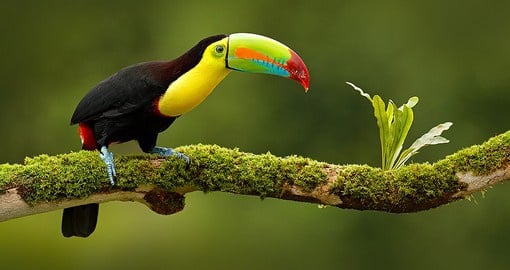
Seek out a quetzal, the Holy Grail of Costa Rica's tropical birds, and considered the most beautiful bird in the Neotropics. Most people head to Monteverde Biological Cloud Preserve, one of the best places in the country to see them.
Be thrilled by a white-water raft trip. Two of the country's best rivers for rafting are the Reventazón (class III) and Pacuare (class IV). The best times to go are from May to November.
Whizz across the waters of Lake Arenal, one of the world's top windsurfing spots. Situated at 5,580ft (1,700m) above sea level, the lake offers its best windsurfing between April and December.
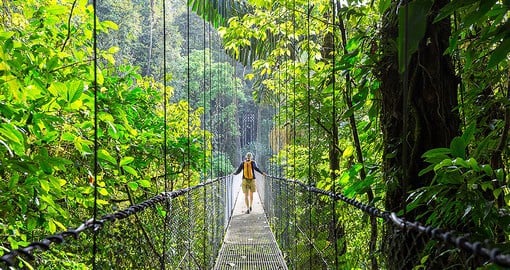
Be Tarzan for a day. Harness up and swing through the rainforest on a canopying ecotour, enjoying the up-close view of tree-dwelling wildlife including monkeys and birds. Tours are available in several locations, including Rincón de la Vieja national park.
Wrestle a marlin in the Pacific coast, which offers excellent sport fishing from Gulf of Papagayo to Golfito. Sailfish, marlin, tuna and wahoo are among the catches. The Tortuguero Canals and the area around Barra del Colorado offer world-class battles with tarpon.
Trek to the summit of Cerro Chirripó. It is easily done with advance reservations through the national park office. All you need is stamina and the proper hiking gear. After a night in a lodge near the summit, trekkers are up before dawn to reach the summit before the clouds.
Drive to the summit of smouldering Poás volcano, which has the country's only dwarf cloud-forest. You can also drive to the top of Irazú volcano, offering fantastic views over the Caribbean and Pacific on clear days. Both national parks have hiking trails, although be sure to stick to official trails and keep away from the crater edge.
Cruise aboard the Calypso catamaran to Isla Tortuga (website: www.calypsocruises.com). This day-long excursion makes for a relaxing and enjoyable day from Puntarenas. This gorgeous island is rimmed with palm-shaded white sands shelving into turquoise waters, good for snorkelling. Watersports are offered, and a traditional beach barbecue rounds out the day.
Things to See
Discover a mixture of traditional and modern Spanish architecture in the capital San José. Places of interest include the Teatro Nacional (website: www.teatronacional.go.cr), the Legislative Assembly building and the Catedral Metropolitana. The National Museum (website: www.museocostarica.go.cr) and the Museum of Pre-Columbian Gold (website: www.museosdelbancocentral.org) are also worth a visit.
Explore the cities around San José. The nearby town of Cartagowas founded in 1563 as the first capital; although earthquakes destroyed most historic buildings, the Basilica is an astonishing architectural gem. Excursions can be made from here to the beautiful valley of Orosi, with its colonial church - the oldest in Costa Rica.
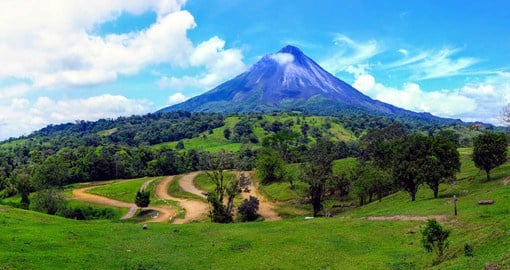
Admire Arenal volcano as it erupts in a spectacular show of pyrotechnics. It has been particularly active over the past few years. Although the lava is difficult to see by day, at night on cloudless nights it can be seen running and tumbling down the flanks.
Wander the historic centre of Liberia, which is home to the most typical colonial-era architecture in the nation. Most important buildings are concentrated along and around Calle Real, one block east of the main plaza.
Learn something about Costa Rica's neglected contemporary indigenous cultures at the Centro Neotrópico Sapapiquí (website: www.sarapiquis.org), in the Northern Lowlands. This superb museums honours the various tribes and exhibits examples of their pottery, bows and arrows, clothing and other artefacts, and shows a fascinating video.
Witness marine turtles laying their eggs in soft sands along both Caribbean and Pacific shores. Strict rules are enforced when viewing hawksbill, green, loggerhead, Ridley and leatherback turtles, which lay at predictable times of year. Tortuguero National Park is one of the best places.
View wildlife at Zoo Ave (website: www.zooave.org) before seeking the creatures in the wild. This superb site exhibits most of the critters and birds you're likely to find, plus most of those that you're not likely to see, such as jaguars, tapirs and snakes.
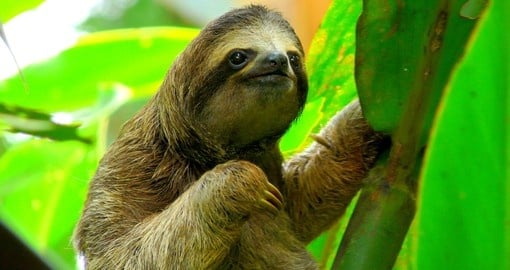
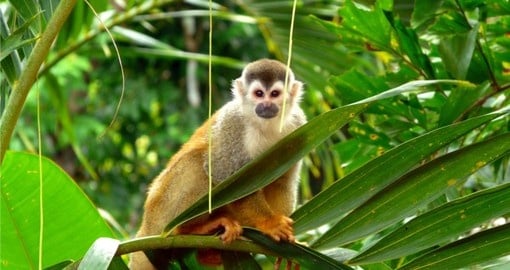
Explore Tortuguero National Park by boat to admire the rainforest. The various levels of soaring forest ecosystem are easily identified from the canals, and a guide can explain the ecology of each level and the various common species, including sloths and monkeys.
DETAILS - CANADA |
DETAILS - US |
|---|---|
| All travelers will need a passport valid for at least 90 days following your departure date. However, we strongly recommend traveling with 6 months validity on your passport at all times. Citizens of Canada can refer to www.passport.gc.ca for forms and instructions for new passport applications and Canadian passport renewals. | All travelers will need a passport valid for at least 90 days following your departure date. However, we strongly recommend traveling with 6 months validity on your passport at all times. |
7 itineraries are available for Costa Rica
Email: info@goway.com • Accessibility at Goway • Privacy Policy
Booking Conditions Travel Insurance • Careers • Contact Us • Brochures •