Overview
Take a trip to Lalibela on your Ethiopia Vacation
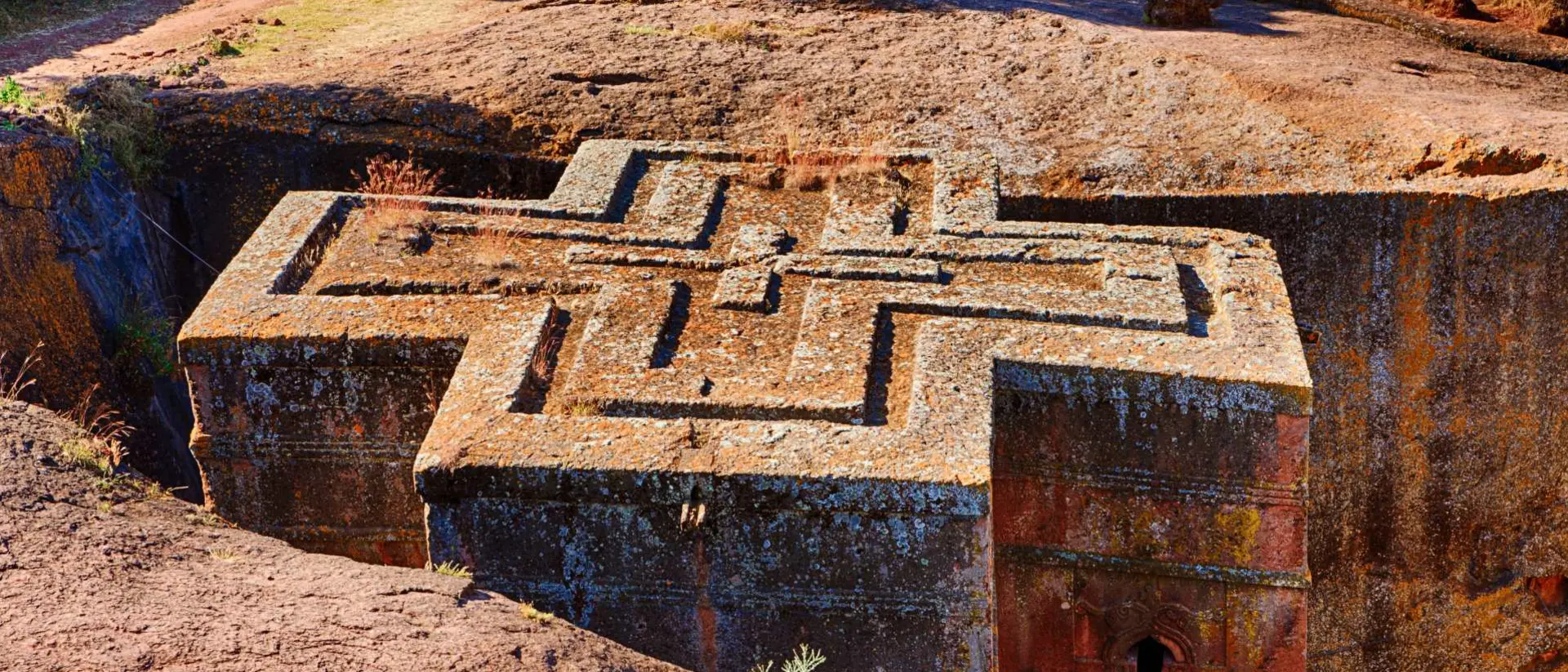
While on an Ethiopian vacation, Lalibela is a small town located at an altitude of almost 2,800 metres/9100 feet in the Ethiopian highlands. Here in the 13th Century, devout Christians began hewing out the red volcanic rock to create 13 churches. Four of them were finished as completely free-standing structures attached to their mother rock only at their bases. The remaining nine range from semi-detached to ones whose facades are the only features that have been 'liberated' from the rock. The Jerusalem theme is important.
When travelling to Ethiopia, the rock churches, although connected to one another by maze-like tunnels, are physically separated by a small river that the Ethiopians named the Jordan. Churches on one side of the Jordan represent the earthly Jerusalem; whereas those on the other side represent the heavenly Jerusalem, the city of jewels and golden sidewalks alluded to in the Bible. Their building is attributed to King Lalibela who set out to construct in the 12th century a ‘New Jerusalem’ after Muslim conquests halted Christian pilgrimages to the Holy Land.
The churches were not constructed in a traditional way but rather were hewn from the living rock of monolithic blocks. These blocks were further chiseled out, forming doors, windows, columns, various floors, roofs etc. This gigantic work was further completed with an extensive system of drainage ditches, trenches and ceremonial passages, some with openings to hermit caves and catacombs, an interesting aspect of Ethiopia tours.
The Rock-Hewn Churches of Lalibela are still preserved in their natural settings. The association of the rock-hewn churches and the traditional vernacular circular houses, in the surrounding area, still demonstrate evidence of the ancient village layout. The original function of the site as a pilgrimage place still persists and provides evidence of the continuity of social practices. The intangible heritages associated with church practices are still preserved.
Languages
AmharicCurrency
Ethiopian Birr (ETB)What do the experts say?

If you are looking to experience something truly unique then plan your trip to coincide with Timkat (Epiphany) on January 19th for colourful processions of priests carrying the Tabots (Ark replicas)

When in the Addis Ababa, coffee lovers should make sure to visit Aster Bunna: A cozy and long-standing coffee house renowned by locals for serving some of the best-quality Ethiopian coffee in the city.
Ethiopia is one of the few places in the world that uses a 13-month calendar and its own 12-hour clock system, meaning the country is currently seven years behind the rest of the world.
Most Popular Time to Travel
Know when to go.
Travel Stories
Get Inspired About Your Trip to Ethiopia
Unlock more by subscribing to our newsletter.
With our newsletter, you’ll get access to regular communications that inspire you and help you explore the world your way.