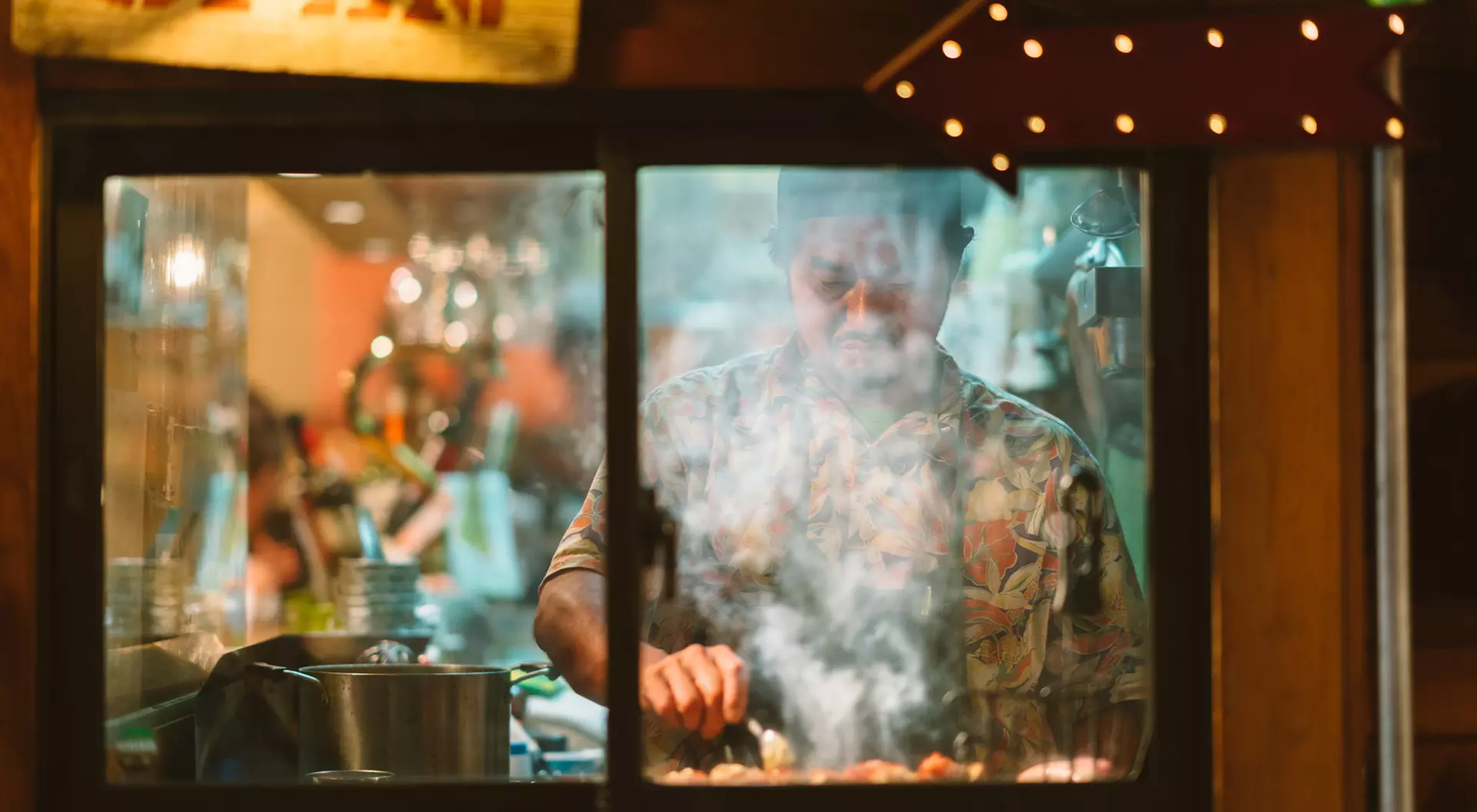


It’s said that in Japan, the real workday starts at after-work drinks. Fortunately, we’re on vacation, so we can enjoy exploring Tokyo’s unique izakaya culture without the distraction of small talk with the boss. But if you think the izakaya is simply Japan’s take on the humble local pub, be ready for it to subvert your expectations in true Japanese style.
Japan is an ultimate foodie destination at every level. Tokyo alone boasts a whopping 180 Michelin-starred restaurants (at time of writing), making it the world’s fine dining capital. But it also contains a wide range of restaurants passed down through generations: labyrinth upon labyrinth of narrow laneways packed with bustling counters; ramen and sushi bars; relaxed cocktail lounges; busy dessert stands and patisseries; somewhat goofy themed cafes where charming kitsch overshadows cuisine; and overpriced, hyper-colourful snacks made more for Instagram than for human consumption (yes, Takeshita Street, we see you).
Slowing down the feast in eastern Tokyo.
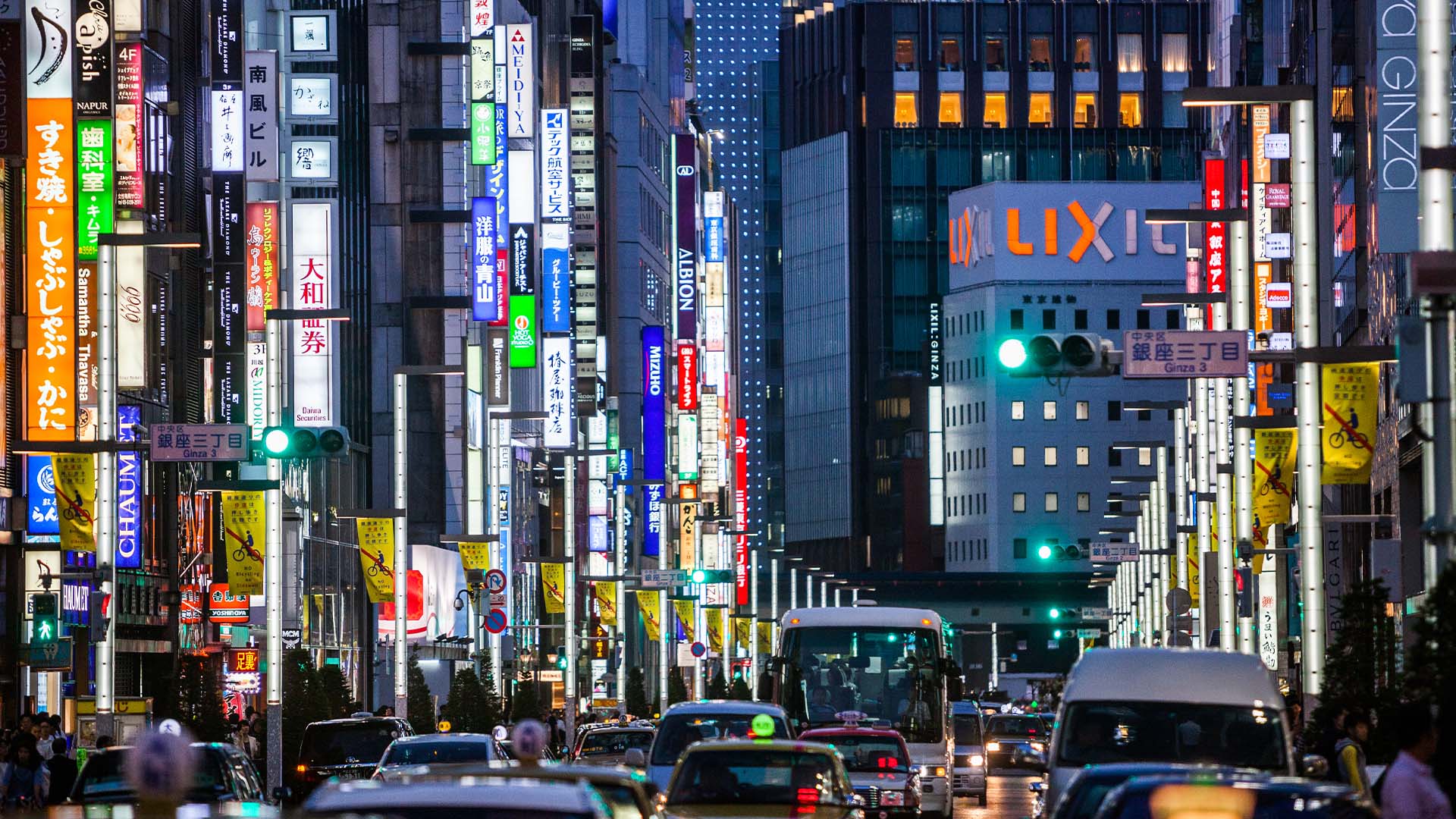
Tonight is all about izakaya culture. Eschewing the busy streets of Shinjuku where many Tokyo food tours take place (though these are still a great way to explore Tokyo’s most frenetic neighbourhood), we meet our guide on the edge of Ginza, Tokyo’s premiere shopping district where many Japanese and international brands have their flagship stores. Just to our north sits Tokyo Station and the Imperial Palace, while to the southwest, the Shinbashi district offers a more local taste of Tokyo surrounded by popular tourist areas. Great restaurants abound in every direction in Tokyo, so no matter where you’re headed, arrive hungry.
Compared to Shinjuku or Shibuya, however, this is a quieter area of Tokyo, albeit a convenient one for reaching popular neighbourhoods like Ueno and Asakusa, Odaiba, Akihabara and Roppongi, not to mention jumping aboard the Shinkansen for day trips as close as Yokohama or as far away as Hokkaido or Hiroshima. While we opted to stay in Shinjuku to experience some of that fast-paced Tokyo energy and nightlife, an izakaya tour around Ginza is absolutely a great way to experience local eateries in a more relaxed part of Tokyo.
It’s not all about the sushi… but it could be.
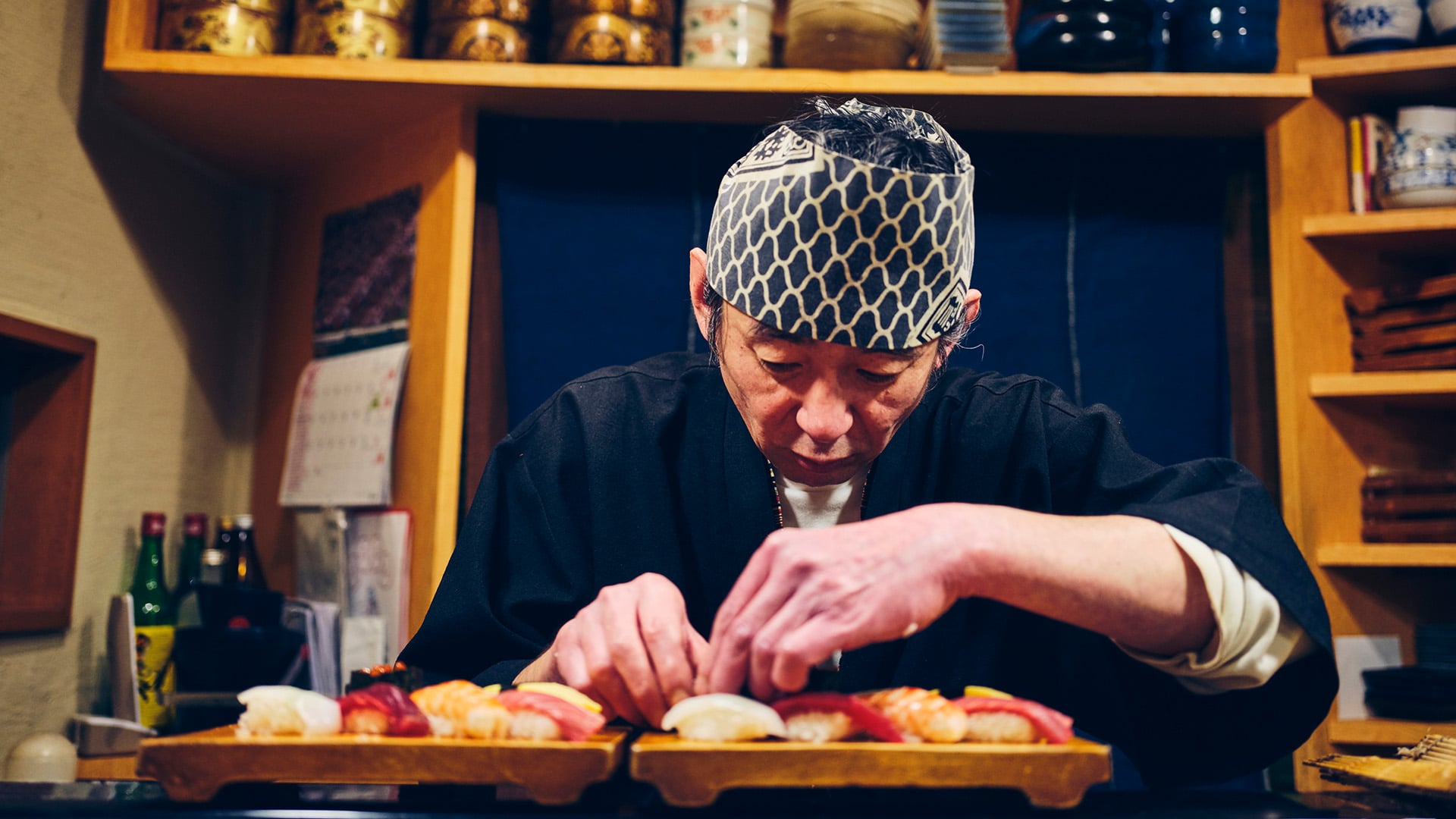
Our first stop takes us to a Japanese favourite, sashimi—or gyoza if you’re like my partner and don’t eat fish. Yes, fish is a staple in the Japanese diet—see notes on the iconic Tsujiki Outer Market below—but if it’s not your thing, don’t fret. It’s only a small part of what defines local cuisine. Accompanied by some refreshing local plum wine, we sample our way through fresh cuts of tuna, whitefish, salmon and many more, learning the proper way to balance the flavour with soy sauce and wasabi. Tonight’s first lesson? Locals do not stir their wasabi into the soy sauce.
It turns out my partner’s not the only sashimi-shy member of our group, and as an unabashed fan, their loss is my gain as I savour each light, refreshing bite. This would repeat itself in Shinjuku a few nights later. Blue mackerel sashimi with citrus soy sauce? 10 out of 10. Would highly recommend. Still, I’m careful not to fill up as our next stop tempts us with cuts of succulent beef ready for barbequing right at our table.
Fresh from Tokyo’s grills and griddles.
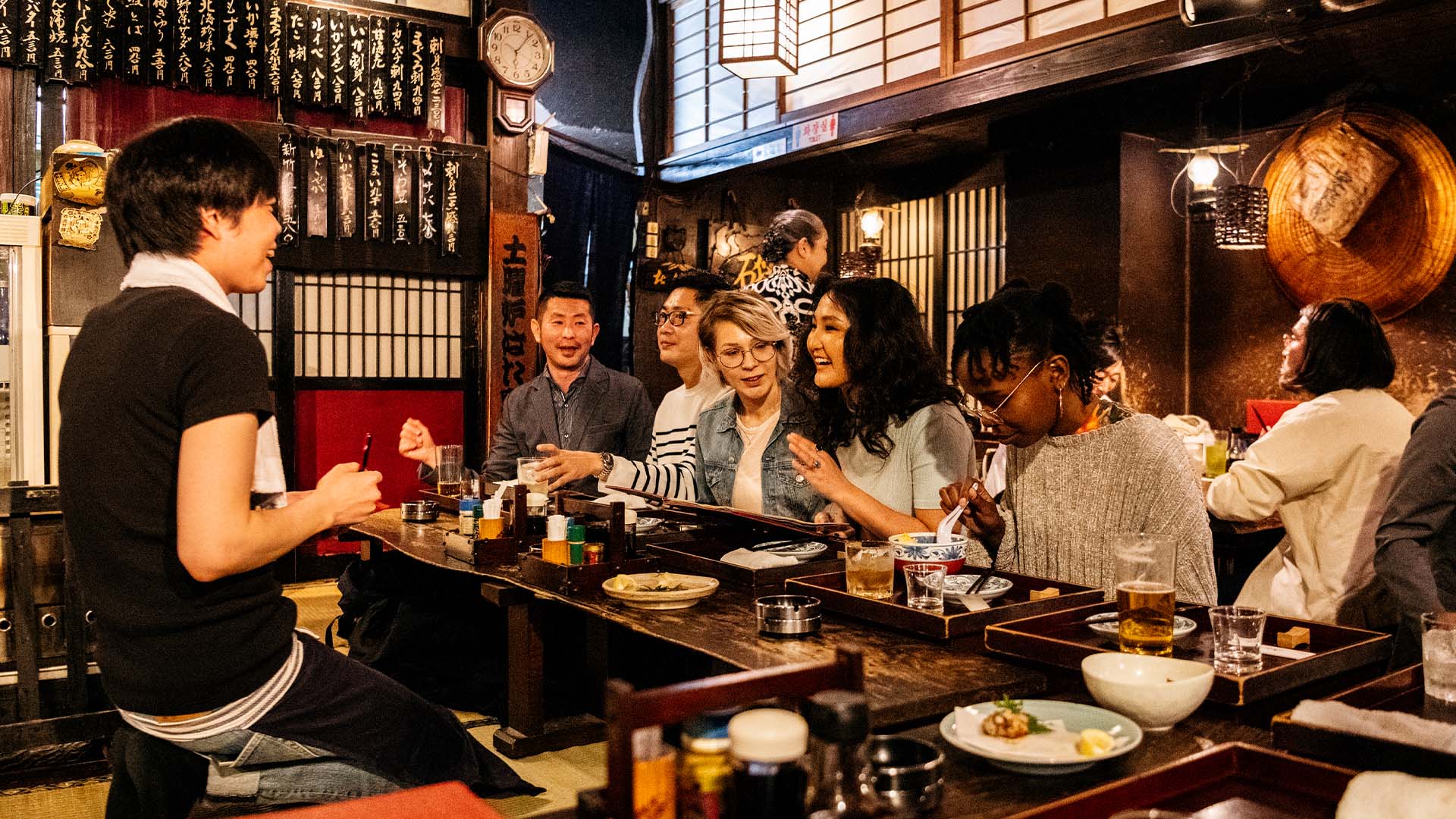
Here’s one thing that sets the izakaya and its menu apart from the pub meal: most small izakaya in Tokyo specialize in doing a small number of similar dishes—sometimes just one—really, really well. Not that they’re fine dining experiences. On the contrary, these are everyday, comforting haunts offering consistent quality at a fair price, and that focus on good food and community has kept many of them in business for decades. It would be pretentious to say we could taste that commitment in every bite of our perfectly seasoned beef… but only just. Each perfectly marinated or seasoned piece is grilled as we like it on our tabletop barbeque, going down perfectly with a good glass of red.
Ready for dessert? Okay, maybe just a sweet street snack. Taiyaki is a pretty innocuous but also extremely delicious and wildly popular fish-shaped pastry filled with melted chocolate, bean paste, custard, matcha cream, or just about anything else (one flavour at a time, please) that complements its sweet, waffle-like shell. We know the snack is wildly popular because it not only appeared on both our food tours but in various forms in just about every stop we made in Japan including Osaka, Kyoto, and Hiroshima. Still, my advice is to skip imitators like the 10-yen coin-shaped grilled cheese version and go for the original taiyaki in whatever flavour takes your fancy. It’s not overly sweet, but it is always freshly made and it’s impossible to go wrong with any of the popular flavours.
Anyone for a nightcap (and one more snack)?
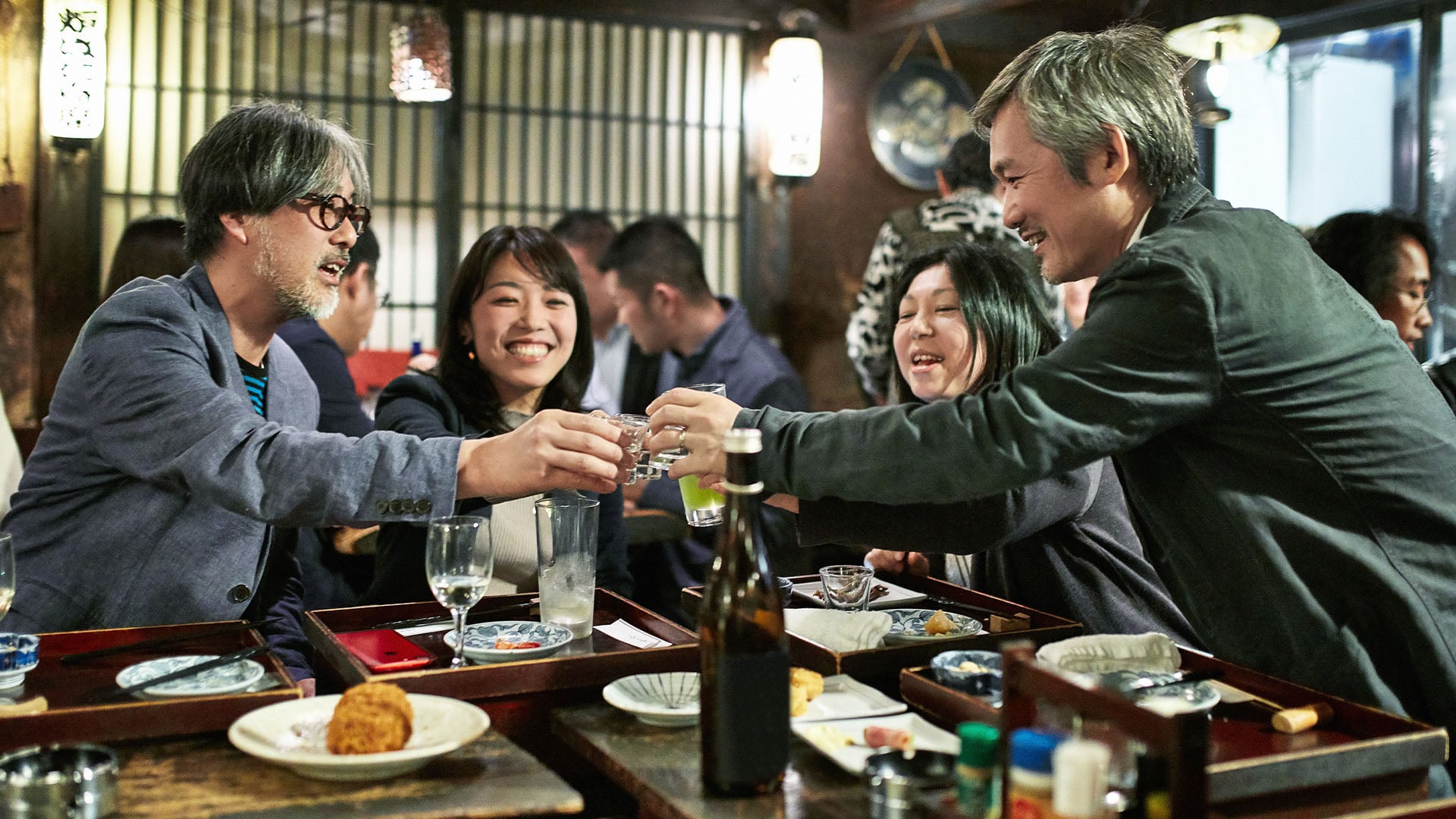
It’s not a Japanese tasting tour without sake, and if your experience of Japan’s favourite brew is limited to warm or cold at your local restaurant, you’re about to discover a whole new world of sake options once you reach its home. First of all, warm sake is no more or less authentic than cold sake (thanks for that myth, Kill Bill). Instead, the optimal serving temperature depends on the type of sake, which can vary widely in terms of how smooth, sweet or dry it is. One of our favourite discoveries on this trip was sparkling sake, served cold and ideal for accompanying crispy tempura. At this stop though, we sample three of more traditional sakes, each one distinct, but always delicious. Just as satisfying is the people watching, with the relaxed local bars offering a gentler, more human pace than those in Shinjuku.
Just when I think we can absolutely eat no more, our guide has one last snack in store. If you’re a fan of Japanese katsu, or any form of the humble fried pork cutlet, you’ll absolutely want to try katsu sando. One of Japan’s favourite meals on the go, this is a perfectly simple creation of a fresh fried pork cutlet wrapped in fluffy milk bread, and it’s delicious. Before we wrap up, our guide asks us if there’s one Japanese dish we’d choose to make widely available back home. Katsu sando is usually the most popular answer, and while Hiroshima’s okonomiyaki pancake is a close second, I might have to agree.
Nine foodie tips for a trip to Tokyo.
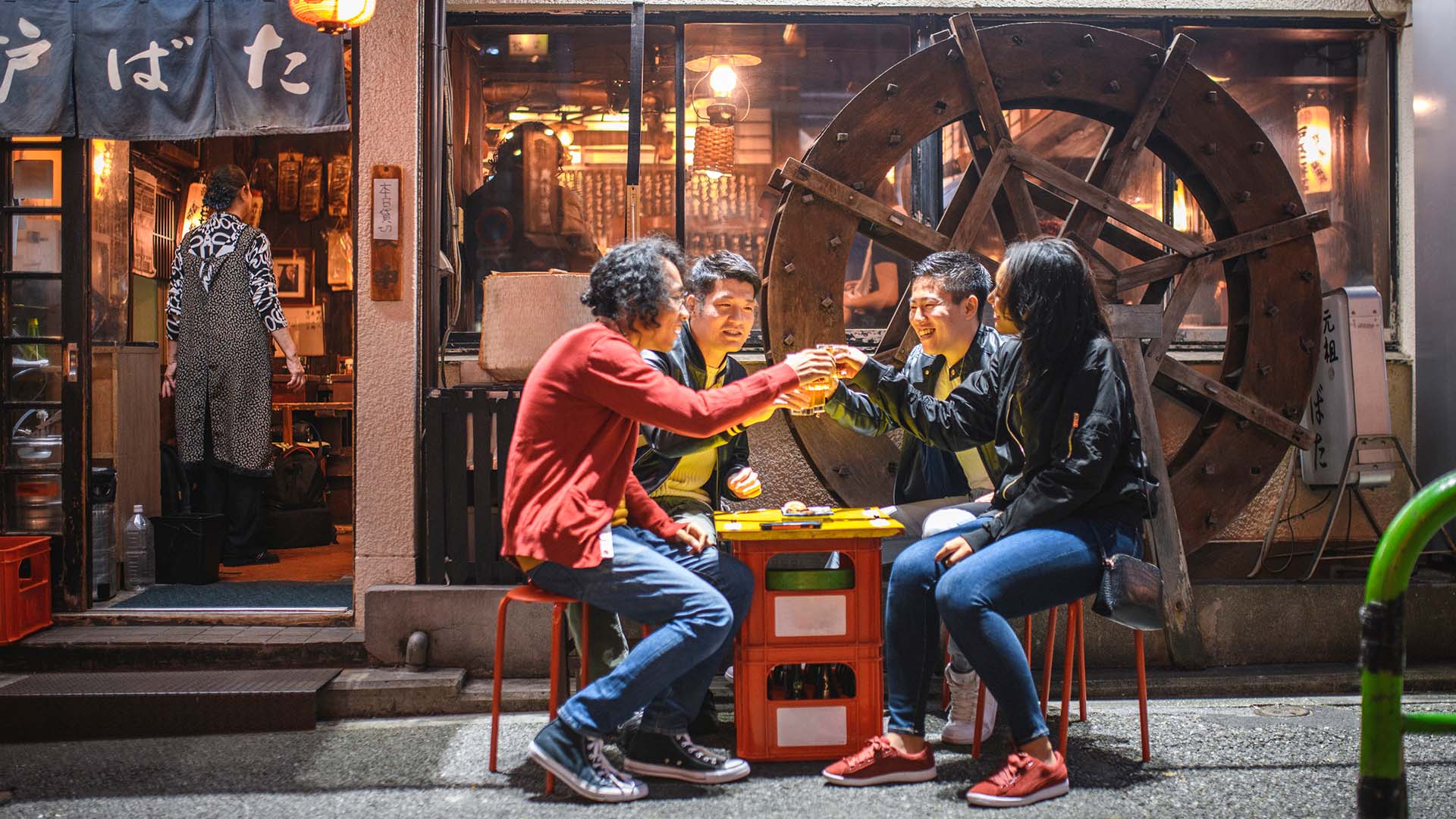
1. Small, local restaurants are often single-counter layouts designed for no more than eight or 10 customers at a time. Check your venue’s size if you’re with a group.
2. Have cash or a payment app like Alipay on hand. Many small businesses don’t accept credit cards.
3. It’s quite normal at many restaurants to seat tourists in private rooms behind sliding doors. Don’t take offence, and don’t worry—there’s no extra charge.
4. Tipping is not the norm in Japan, and you may even offend your server by offering. The final bill is what you pay.
5. The Tsujiki Outer Market remains a popular foodie hub in Tokyo, even though the fish market itself has moved on to Toyosu. It’s fun to explore, but infamously overpriced, so consider a guided tour or simply pop in for a look before eating elsewhere.
6. Don’t walk and eat. Find a place to sit and finish your street snack. Public trash cans can also be few and far between in Tokyo, so either return your trash to the vendor for disposal or keep a small bag on hand to carry it.
7. Eating on public metro transit is a no-no. Eating on the Shinkansen (particularly from an ekiben or bento box) is perfectly fine.
8. Many high-end restaurants will only take reservations via a hotel concierge. If you do score a reservation, honour it, or give them at least a day’s notice if you need to cancel. Many will have bought ingredients for your meal fresh that day, and a no-show will make them more reluctant to take bookings from travellers in the future.
9. If you want to try one of Tokyo’s kitschier café or restaurant options, go for it. They’re popular for a reason. Just go in understanding you’re there for the theme, not the food.
Goway’s Destination Specialists are experts at tailoring foodie tours through Shinjuku or other centres across Japan. Request a free quote to start planning your own trip today.

Christian’s first globetrotting adventure saw him get lost exploring the streets of Saigon. Following his nose to Asia’s best coffee, two lifelong addictions were born. A freelance writer and novelist, Christian’s travels have since taken him around his native Australia, Asia, Europe, and much of North America. His favourite trips have been through Japan, Spain, and Brazil, though with a love of off-beat, artsy cities, he’ll seize any opportunity to return to Paris, New York, or Berlin.