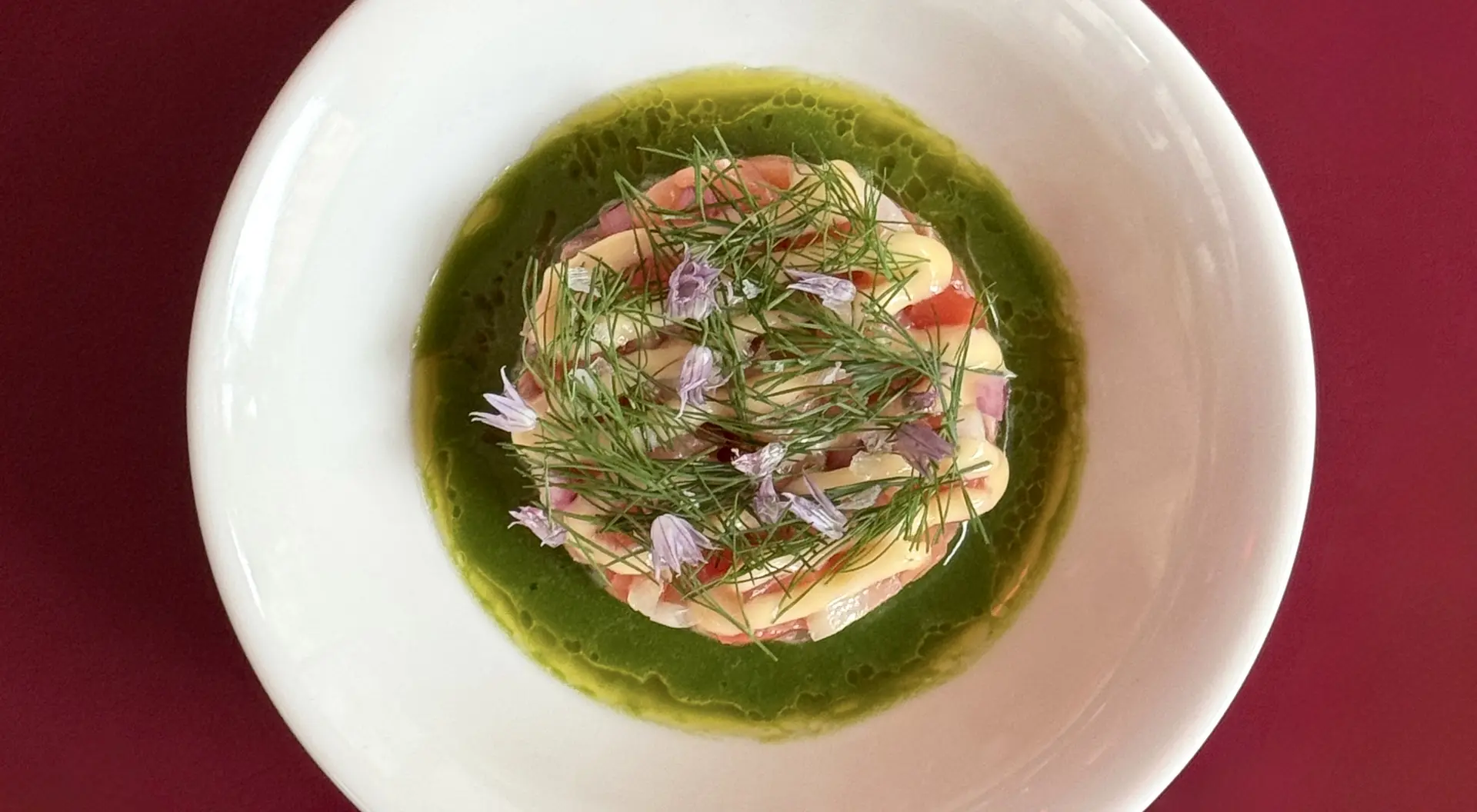

Just after the server slid the bowl in front of me, my glasses began steaming up. The fumes, laden with the scent of rich beef and sweet, peppery paprika, dwelled in my nostrils. I dipped my spoon in and then carefully took a slurp, as a luscious sensation slid over my tongue with notes of sweet, savoury, fatty, and then slightly spicy notes pinged different parts of my palate. I was in Budapest, eating at Stand25—the more casual sibling to Stand, the city’s only two-star Michelin restaurant—in the midst of tasting the best goulash of my life.
It was my first visit back to Budapest in more than two decades. To say things have changed would be an understatement. Budapest has plenty of attractions vying for a tourist’s attention—a castle on a hill, a stunning Neo-Gothic parliament building, and centuries-old thermal bathhouses—but it’s the food that most visitors come back home talking about.
That’s because the biggest transformation in Budapest since my last visit has been the restaurant scene. Gone are the smoky communist-era taverns with stodgy, indifferent servers and questionable quality of ingredients. And in is a constellation of inspired restaurants helmed by chefs who worked around the world and then came home to help start a culinary revolution. There are seven Michelin-starred restaurants in the Hungarian capital, the most of any post-communist city in Europe. I spent five days eating, slurping, and sipping the results of that edible upheaval.
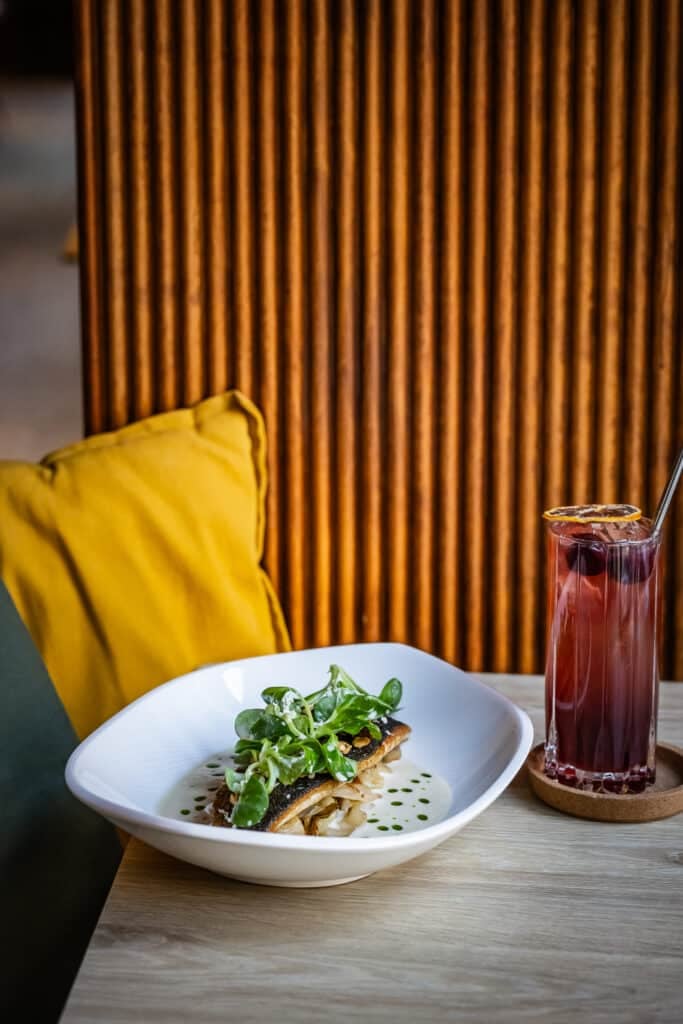
“The biggest change in Hungarian cuisine in Budapest is intention,” said chef Bence Dalniki when he stopped by my table at Stand25. “Until about a decade ago, Hungarian food at restaurants was either stuck in a communist-era freeze or reinterpreted beyond recognition. Now chefs are interested in deeper questions like what makes a dish particularly Hungarian and if the answer to that question lies in technique, ingredients, or memory.”
The answer might be a bit of all three, as Hungarian cuisine is a reflection of its geographical location through history as the Romans, Turks, and Austrians have added seeds to the culinary bounty that is Hungarian fare. During the 40-year Soviet-dominated communist period, the scope of the cuisine was pruned, as the government limited the cuisine to whatever the collective economy could support (answer: not much). And in the decades that followed the 1989 revolution, Budapest saw mediocre Italian and French restaurants move in, as well as a kebab shop on every block (the mediocre restaurants are mostly gone, but the ubiquity of kebab shops remain).
“Ten years ago, the fine dining scene was still in a phase of defining itself,” said Eszter Palagyi, the former chef at Costes, the first restaurant in Hungary to earn a Michelin star (in 2020). “There is now a confident generation of young chefs who are no longer trying to imitate Western European gastronomy, but rather interpreting Hungarian cuisine through a contemporary, global lens.”
Two restaurants that exemplify this are Szaletly, a bistro located in the Zuglo district near City Park, and Cabrio, a natural wine bar in District V. At Szaletly, chef Daniel Bernat infuses some worldly goodness into Hungarian staples. The catfish paprikash that I tried was laced with a pesto made of dill, a common Central European ingredient. At Cabrio, the kitchen crafts pan-European dishes with Hungarian ingredients—a duck and mangalitsa pork terrine—to go along with bottles of natural wine from small Hungarian producers.
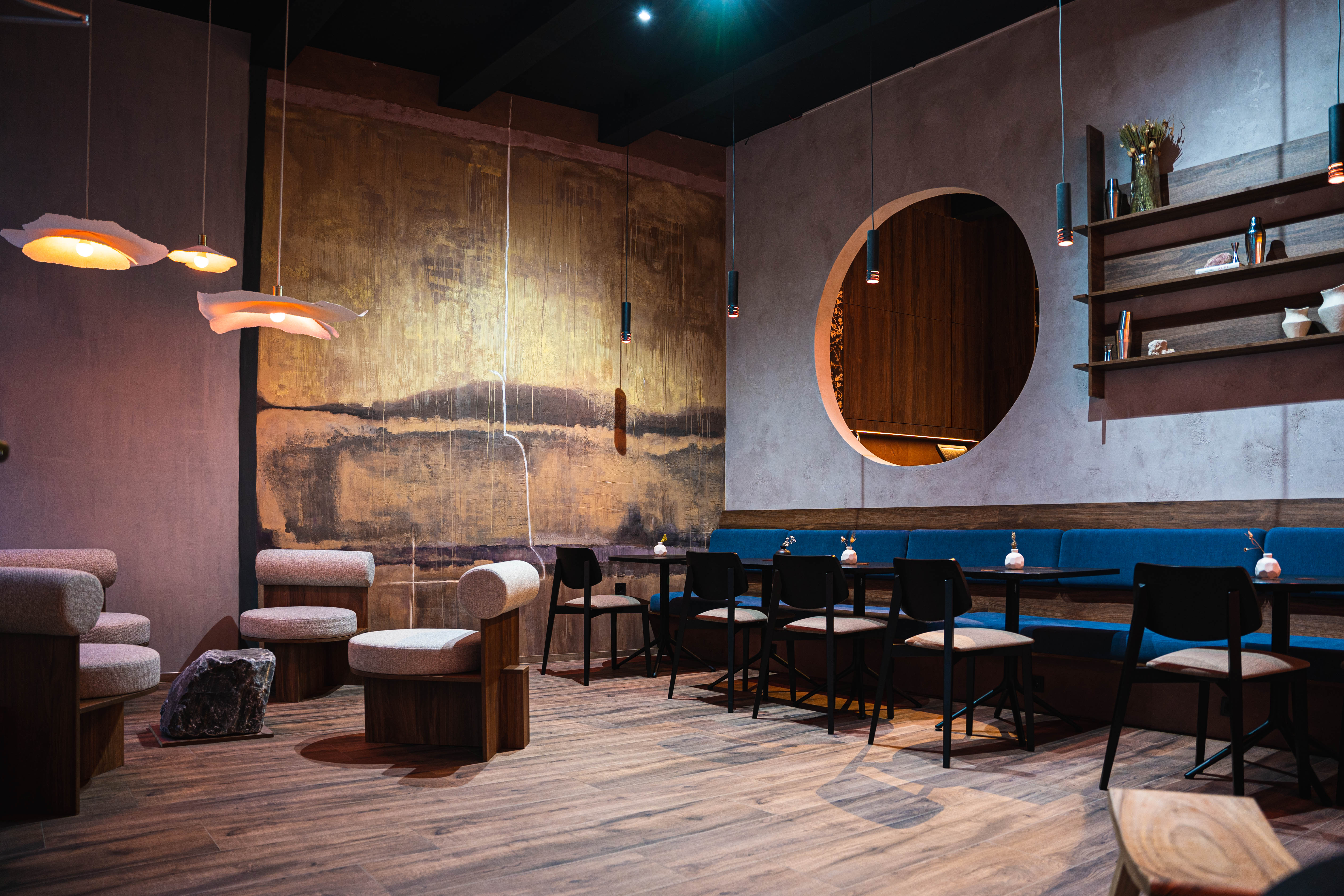
On my last night in Budapest, I stopped into Elysian, the city’s most cutting-edge cocktail bar where I sipped a drink shaken with a local vodka, coffee from a Budapest-based roaster, and ice cream made from Hungarian oak bark and poppy milk.
Viktor Orban had just been voted out of office, and there was jubilant energy in the air. It made me think of something chef Eszter Palagyi had told me a few days earlier about food and politics in Hungary. “Any change here—political or otherwise—can indirectly influence the way we think about food,” she said. “But ultimately, gastronomy speaks a more universal language—a motion, a memory, and a connection that transcends politics.”
Explore the landmarks of the Hungarian capital with Goway’s Escape to Budapest.
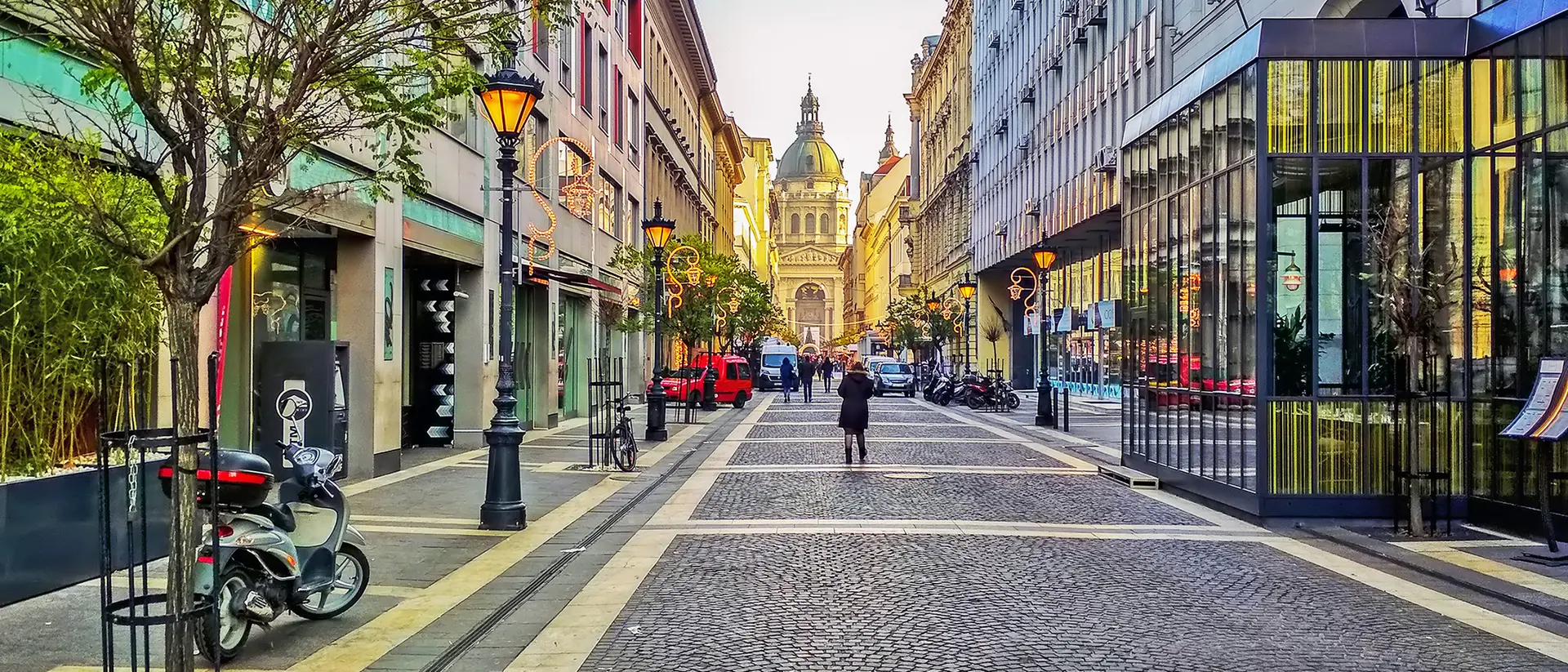
Escape To Budapest
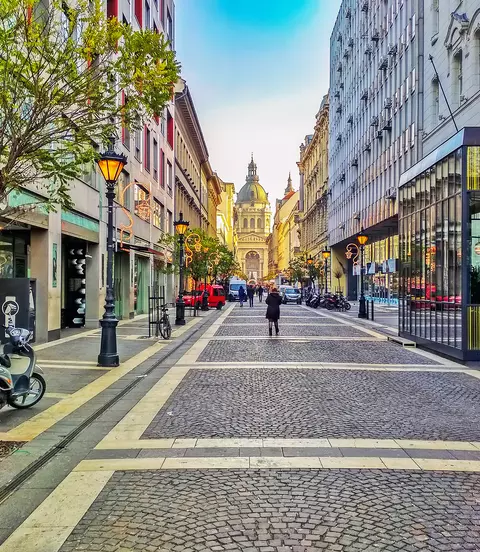
Start your stay in Budapest, one of the most beautiful cities in Europe, with a tour of the city which includes Heroes Square, the Hungarian State Opera House, the Hungarian parliament building, the Royal Palace and the tall and imposing St Stephen’s Cathedral. Later have a walking tour in the old Castle District and enjoy the view from Fishermen’s Bastion situated on Castle Hill, with its many stairs and walkways and where one has amazing panoramic views of the city.
The next day takes you out of the city for a full day’s sightseeing in the Hungarian countryside as you travel to the Danube Bend. Here you will visit three old cities – Visegrad with its medieval castle and early Renaissance style Royal Palace, the ancient capital of Hungary, Esztergom with a visit to the interior of the largest cathedral in the country and Szentendre, a charming town known for its museums and galleries as well as its well preserved houses and churches. You will also have a cruise on the River Danube.
The same evening, you will be taken to the Citadel on Castle Hill for dinner and a traditional folklorique show while enjoying the amazing panoramic views of Budapest by night.

David Farley has lived in San Francisco, Berlin, Prague, and Rome, where he spent two years writing his first book, An
Irreverent Curiosity: In Search of the Church’s Strangest Relic in Italy’s Oddest Town. He writes regularly for the New York Times, Food & Wine, and National Geographic. He currently resides in New York City.