“I love Mexico and all things Mexican. I love the food, the culture, the history, and the people.” – Anthony Bourdain
We couldn't agree more. Mexico offers the modern globetrotter everything they could ask for: culture and cuisine enthusiasts can spend an eternity exploring Mexico City. Nature lovers will easily fall in love with the endless beaches, jungles, and cenotes. And history buffs can uncover stories of ancient civilizations at nearly every turn. The variety and abundance of history, nature, and cultural experiences make Mexico one of the world's most compelling travel destinations. But if you want to experience all of this variety in just one place, then you should head straight to the Yucatan Peninsula.
Join us and discover the epic Maya ruins, picture-perfect beaches, and quintessential Mexican culture and cuisine of the Yucatán Peninsula.
Mérida: Cultural & Gastronomic Capital of Southeastern Mexico
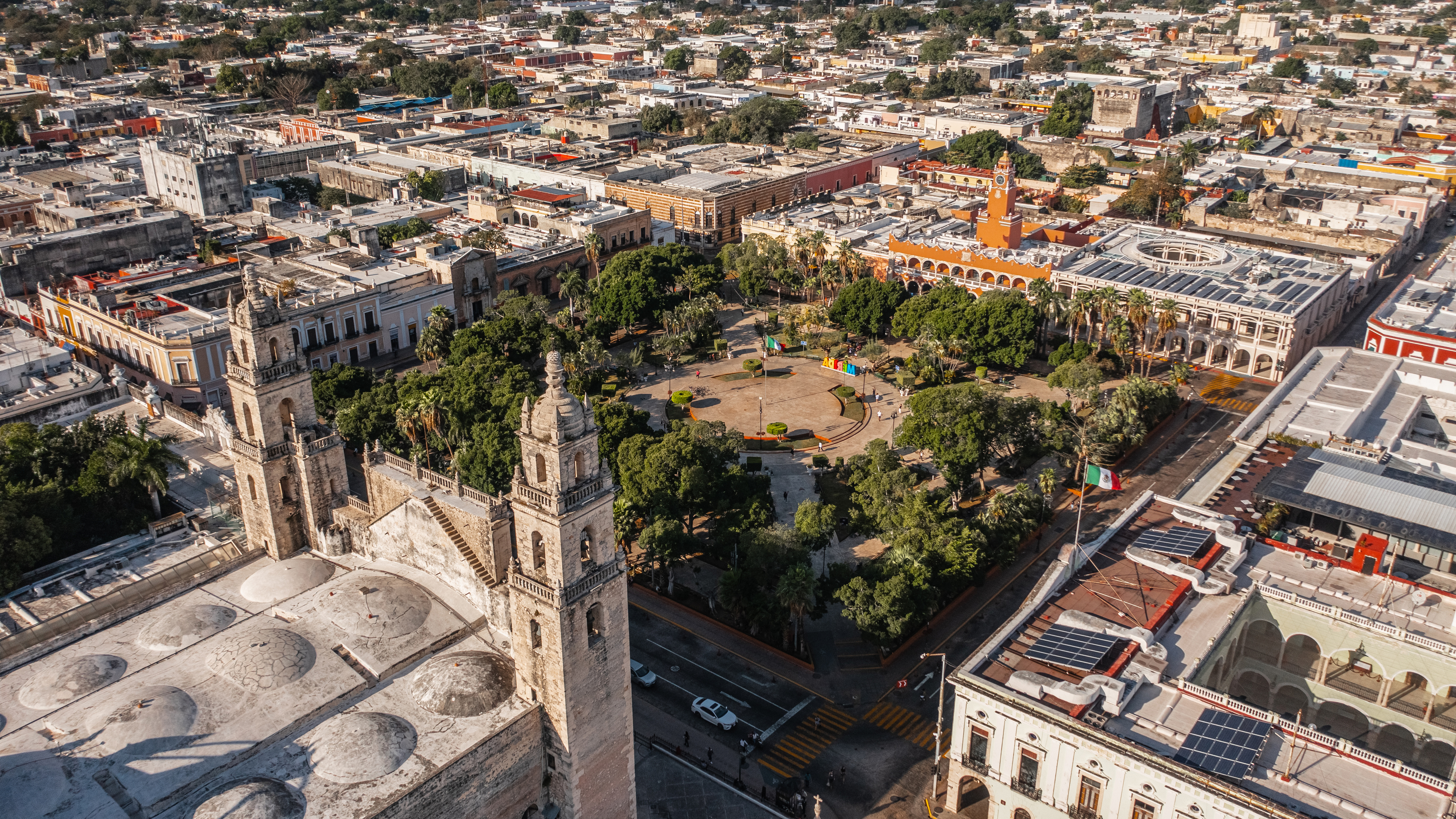
Anyone familiar with the Yucatán Peninsula already knows about Cancun, Tulum, and Playa del Carmen: three of Mexico's most famous beach destinations. These icons are perfectly suitable for those looking for all-inclusive beach getaways, but globetrotters keen to add extra depth to their Mexico vacation should look to Mérida.
Mérida is the capital city of the Yucatán province and the best starting point for your southeastern Mexico vacation. It's renowned as the cultural and culinary capital of the Yucatán Peninsula, with hundreds of excellent restaurants, lively markets, exciting festivals, and a rich past. Mérida was founded nearly 500 years ago, in 1542, on the ancient Mayan city of T'ho. This history lives on in Mérida's narrow colonial streets, grand central plazas, and immersive world-class museums like the Great Museum of the Maya World, modelled on a sacred Maya ceiba tree and home to over 1,100 Maya artifacts.
Mérida's modern side is equally as spectacular, no more evident than when night falls, and the music begins. Dancers, musicians, and performers fill the plazas on a nearly nightly basis, providing free entertainment as you stroll to dinner to indulge in local classics like cochinita pibil (Yucatán-style barbecue pork) and papadzules (a dish similar to enchiladas, made of egg-filled tortillas covered in a smooth, rich pumpkin seed and epazote broth).
Yucatecan cuisine is influenced by the region's historical isolation from the rest of Mexico, with significant international influences from Europe, Cuba, and New Orleans. In 2019, UNESCO recognized Mérida for its contributions to Yucatán's historic and influential gastronomy by adding it to its Creative Cities Network.
You must also ensure you dedicate enough time—and space in your luggage—to collect plenty of unique souvenirs from Mérida's artisan markets, boutique outlets, and international department stores. Classic items like colourful hand-woven hammocks, local henequen accessories, Mayan textiles, and Mayan chocolate are some of the best ways to commemorate your time in Yucatán and bring a piece of Mérida home with you.
Uxmal & Campeche: Sanctuaries of Mayan & Spanish History
While Mérida exudes a wealth of Mayan and Spanish history, there are two other destinations you absolutely cannot miss when visiting the Yucatán Peninsula: Uxmal and Campeche.
Let's begin our journey in chronological order. Take a short hour-long drive south of Mérida into the lush, forested countryside of the Yucatán province, and you'll soon discover the Puuc Route, which guides you to the pre-Hispanic town and UNESCO World Heritage Site of Uxmal, among other incredible archeological sites. Uxmal was founded in 700 A.D., growing from a small peasant town into a political and administrative centre of up to 20,000 people, before eventually being abandoned sometime after the 10th century. Uxmal is in incredible condition with some of the best-preserved archaeological sites and structures of the Maya Empire. The major highlight is undoubtedly the Governor's Building, standing 15 metres (50 feet) tall and spanning 100 metres (328 feet) long. The extraordinary facade is adorned with ornate geometric designs and Chaac face carvings. Yet, the most impressive feature of this structure may be its design, which reveals the builders' knowledge of astronomy. The structure is positioned perfectly to witness solar equinox and solstice events and faces the planet Venus as the morning star. Walking through the Governor's Building, seeing the intricate architecture and design firsthand, immerses you in the lives of Uxmal's citizens from over 1,300 years ago.
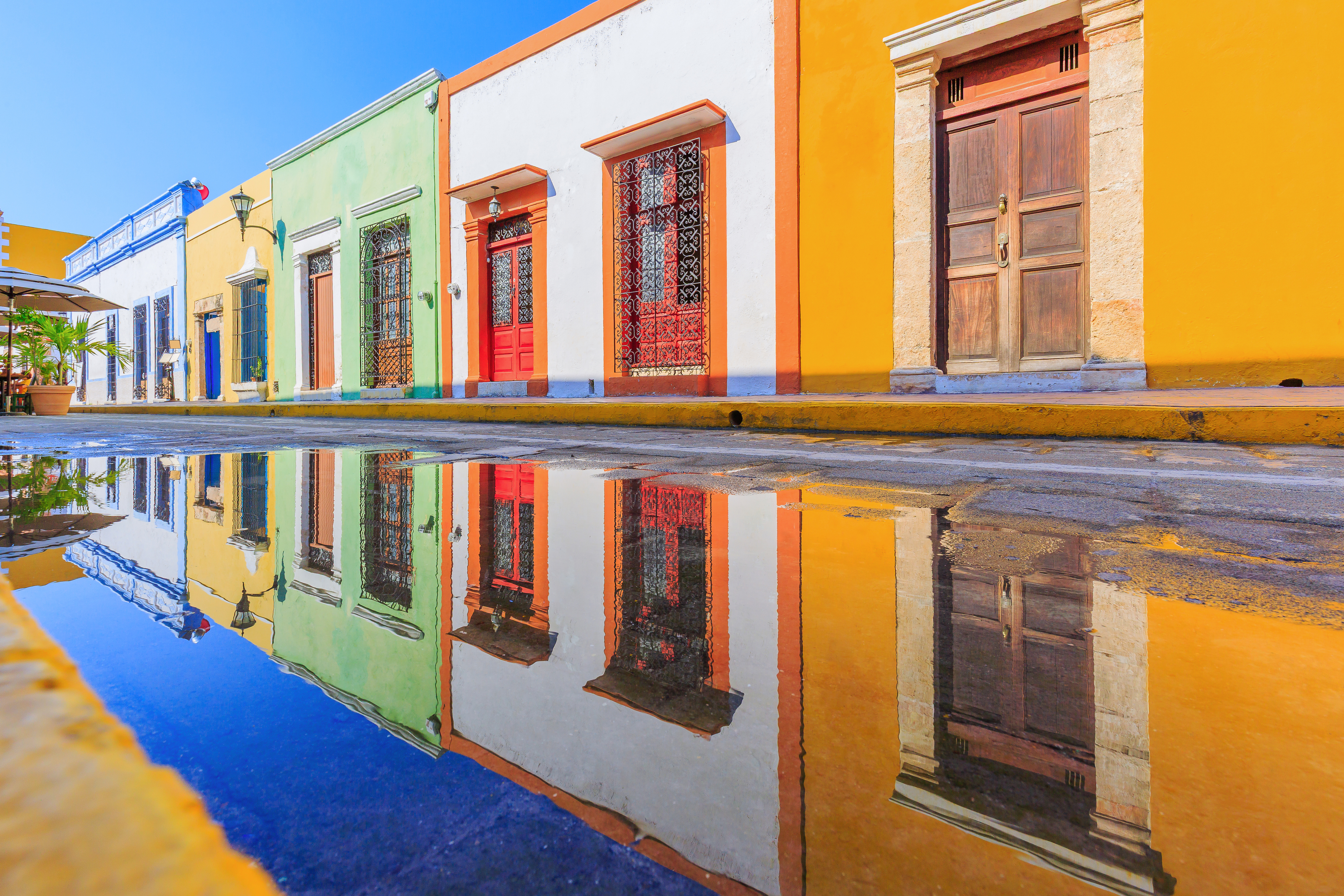
To the west, on the shore of the Gulf of Mexico, is the port city of Campeche, capital of the state of Campeche. The city was founded in the Maya region of Ah-Kim-Pech by Spanish conquerors in the 16th century and played a significant role in the conquest of the Yucatan Peninsula. Campeche offers a unique glimpse into Mexico's Spanish colonial history. UNESCO recognizes nearly 1,000 heritage buildings, including the Cathedral of the Immaculate Conception, several churches, and the early-19th-century Toro theatre. Most notably, however, are the outer walls and fortification systems surrounding the historic centre, erected in the latter half of the 17th century to defend the Caribbean port city against pirate attacks. Campeche is unique among North American cities as one of the only cities with most of its historic old walls still intact. Campeche remains a hidden gem among other destinations on the Yucatan Peninsula, but a single stroll through its colourful colonial streets is all it takes to realize you should never overlook this historic city on a trip to the Yucatán Peninsula.
A Natural Playground of Cenotes, Caves, Beaches, & More

Equally fascinating as the culture and history of the Yucatán Peninsula are the pristine, diverse natural phenomena throughout the region. Most travellers are aware of Mexico's picture-perfect beaches; however, the abundance of cenotes, hundreds of kilometres/miles of coastline, and unique endemic wildlife deserve just as much attention.
Yucatán province alone boasts over 3,000 cenotes. These atmospheric underground caves contain deep pools of water and collapsed ceilings where rays of sunlight shine through. One of the most popular cenotes in Yucatán is Ik Kil, located just a few minutes from the Chichén Itzá archaeological site. The vine- and fern-covered walls surround a deep, blue-green pool of water perfect for swimming. Additionally, Ik Kil, like most other sites in Yucatán, has an interesting connection to the Mayan era. The Mayans believed the waters were the sacred abode of their rain deity, Chaac, and conducted several human sacrifices, leaving bones and jewelry behind for archeologists to uncover in the depths of the cenote.
Another unique natural site in Yucatán is Las Coloradas: the only pink lagoon in the world. The lagoon's flamingo-pink waters are a result of extremely salty evaporation ponds filled with pigment-rich algae, halobacteria, and tiny crustaceans that tint the water a vivid rose hue. While swimming isn't permitted in the pink waters, it's still a unique sight to behold and a common area for bird watching, so keep your eye out for some local flamingos.
Travellers craving beaches beyond the big-name resort hubs will find sanctuary along Yucatán's quieter stretches of coastline, where they'll discover some of the best unspoiled beaches in Mexico. Celestún is a standout, with vast, powdery sands backing onto the Celestún Biosphere Reserve, where mangroves teem with wildlife, including seasonal flocks of flamingos. Further along the northern shore is Sisal's warm, turquoise waters and laid-back fishing-village atmosphere. Those looking for a more rugged, windswept setting, will enjoy El Cuyo’s bright teal surf, pastel sunsets, and intimate, off-the-beaten-path feel. Together, these tranquil seaside treasures prove that Yucatán's natural beauty extends far beyond its cenotes and pink lagoons.
Born to two parents who met travelling, Sael has always wanted to travel the world. Sael has hiked the Inca Trail in Peru, visited blue-footed boobies on the Galapagos Islands, stood on both hemispheres of the equator in Ecuador, climbed the Sydney Harbour Bridge, hiked the base of Uluru, surfed Pacific Ocean waves in Mexico, and skydived over the Great Barrier Reef in Cairns. Meeting new people and sharing stories are some of Sael's favourite parts of travelling, and he hopes he can help ignite this passion for discovery in others.
Get Inspired
Inspire your wanderlust with our globetrotting tales.
Unlock more by subscribing to our newsletter
With our newsletter, you’ll get access to regular communications that inspire you and help you explore the world your way