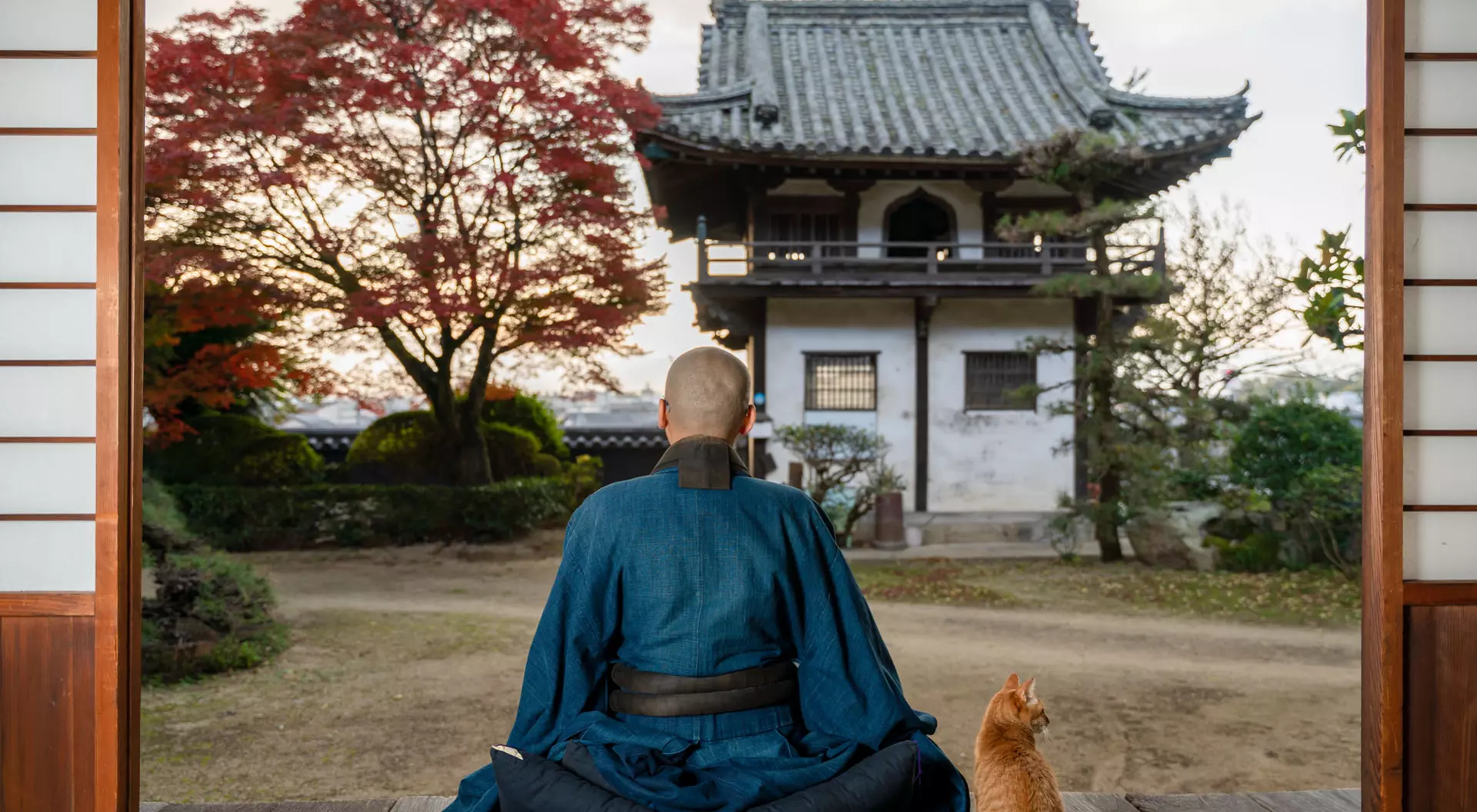


In today’s Japan, tradition persists in the shadow of modernity. Unique cultural icons break out from the conformist norm to find fans around the world. Japanese cuisine appears simple, yet chefs often devote a lifetime to mastering the balance and beauty of just one dish.
No surprise then, that while only a quarter of Japan’s people claim a religion, two ancient faiths shape daily life for everyone, from the emperor to curious tourists. It’s said that in Japan one is born Shinto and dies Buddhist. Shinto is the country’s indigenous faith, with millions of gods honoured at shrines around the country. Buddhism first appeared in Japan in the mid 6th century and today is practiced by around 46 million Japanese across numerous schools.
Koyasan: The Sacred Heart of Shingon Buddhism
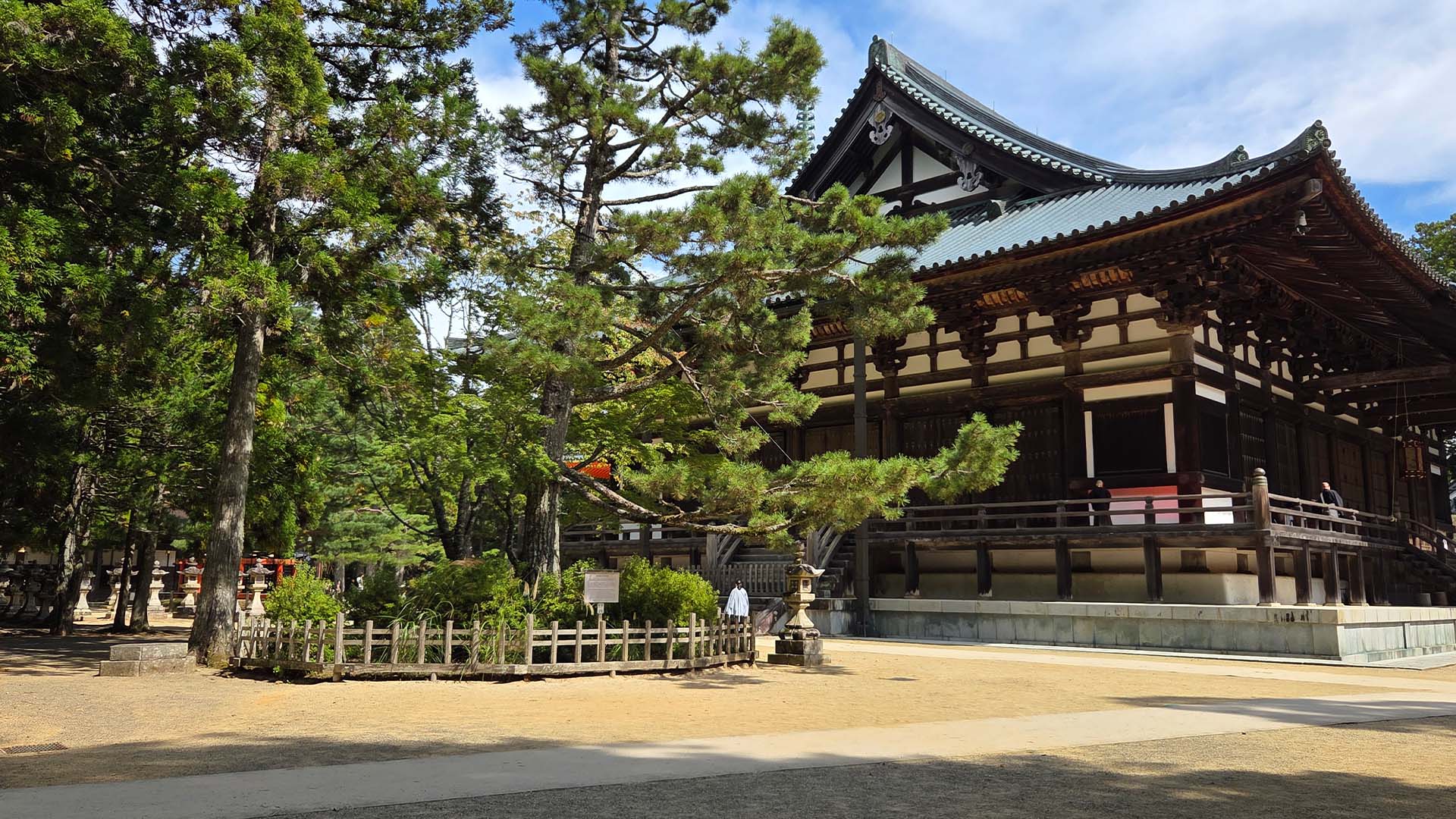
A train ride south from Osaka, a funicular, and finally a bus ride to the top of the mountain brings visitors to Mount Koya or Koyasan, where the monk Kūkai—better known as Kōbō-Daishi—founded Shingon Buddhism, the nation’s third largest sect. Our guide Noriko has been to Koyasan many times, inviting visitors to walk the pilgrimage paths before exploring the sites that have defined Shingon Buddhism throughout Japan.
But it’s a very special day at Kongobu-ji, Koyasan’s main temple complex. Our visit coincides with the Kechien Kanjo, a ritual that is all about finding one’s bond with the Buddha, held from birth. It’s one of two such 1,200-year-old rituals held in spring and autumn each year in the Kondo ceremonial hall, and one that Noriko has seen people line up for many times. But she has never participated herself, even though foreigners and people of non-Buddhist faiths are welcome.
How can we visit the Buddha’s sacred home in Japan and refuse an invitation like this?
Waiting for the next open slot for three gives us time to tour the monastery of Kongobu-ji, admiring its decorated sliding doors and celebrated rock garden. When we return, the Kechien Kanjo begins with a repetition of Buddhist precepts. So prepared, we wait. Incense thickens the atmosphere over the chanted mantras of groups ahead of us. To be fair, fully describing this most important of Shingon Buddhist rituals would both take away some of its mystery, and put a false sense of objectivity around a highly individual experience designed to reveal one’s own Buddha nature. But I will say I’ve witnessed or participated in quite a few religious ceremonies, gatherings, and rituals belonging to faiths across Asia, and this experience gave me a far greater appreciation and connection both to Koyasan and the faith it inspired.
Having such a time-honoured ritual reveal the personal manifestation of one’s Buddha feels like an appropriate embodiment of Japan’s spiritual contradiction. Talked through the ritual by an English-speaking monk, the Kechien Kanjo wound up being a surprise highlight not just of our Koyasan visit, but of our trip to Japan as a whole. There are many sacred rituals and traditions held at Kongobu-ji throughout the year, so I highly recommend checking the temple’s calendar of events when planning your visit.
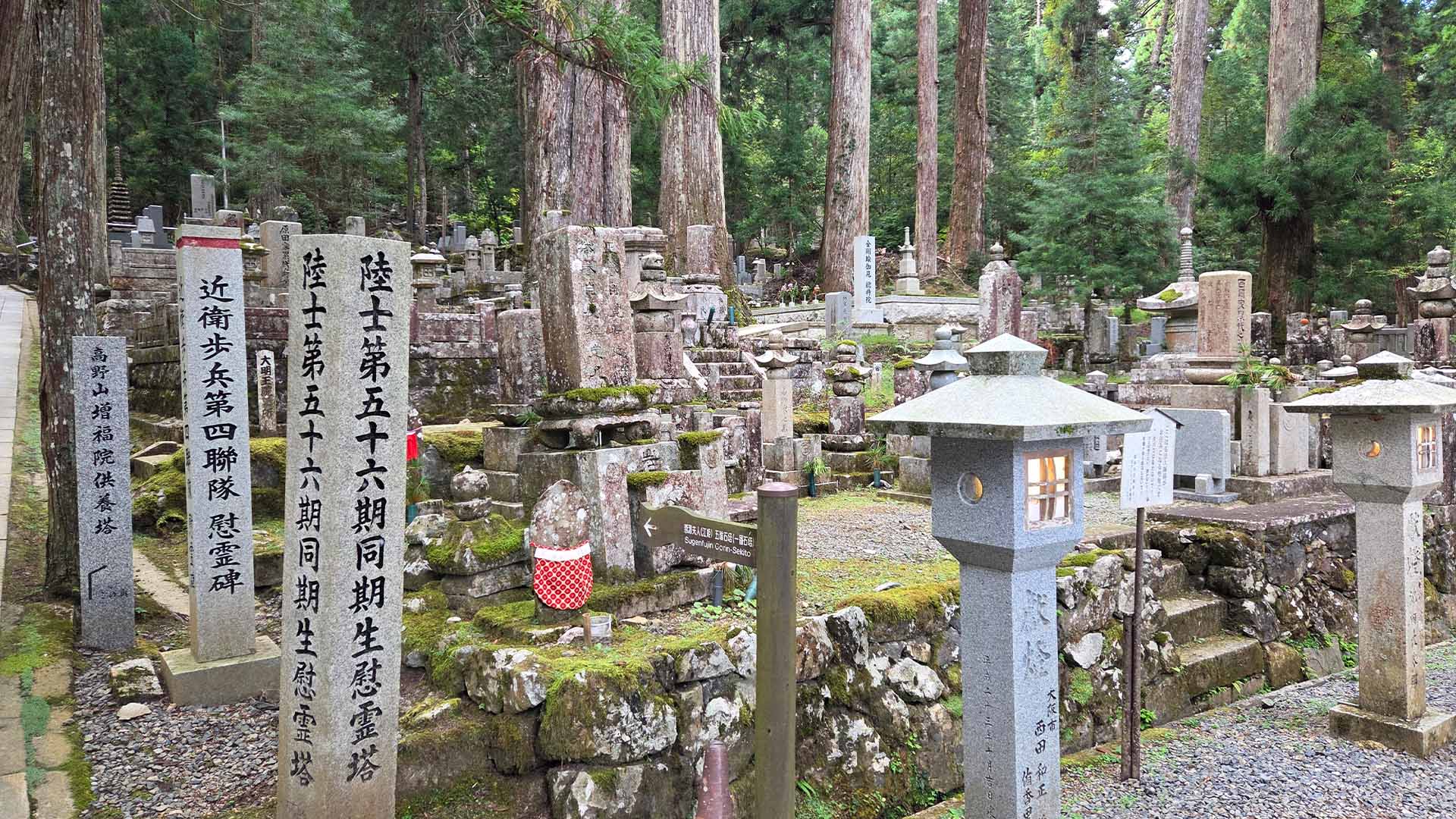
Koyasan’s most famous experience, available year-round, is a stay at one of its many pilgrim lodging temples. Fukuchi-in welcomes us with natural hot-spring baths, traditional tatami-matted lodgings, the chance to watch the monks at morning service, and an exquisitely prepared vegetarian dinner and breakfast featuring more courses than I could keep track of for the purposes of this article. It’s also a short walk from the Tokugawa Clan Mausoleum, though the one attraction in Koyasan (besides Kongobu-ji) you cannot miss is Okunoin Cemetery. Spread between the main road and Kōbō-Daishi’s mausoleum, this incredible complex holds the tombs and memorials to Japanese nobles and wealthy families, as well as those of commoners, victims of war and natural disaster, and countless others. While it was a fascinating place to visit during the day, we regretted not returning at night, when the cemetery is said to be at its most atmospheric.
Take Your Trip to Kyoto Beyond Instagram
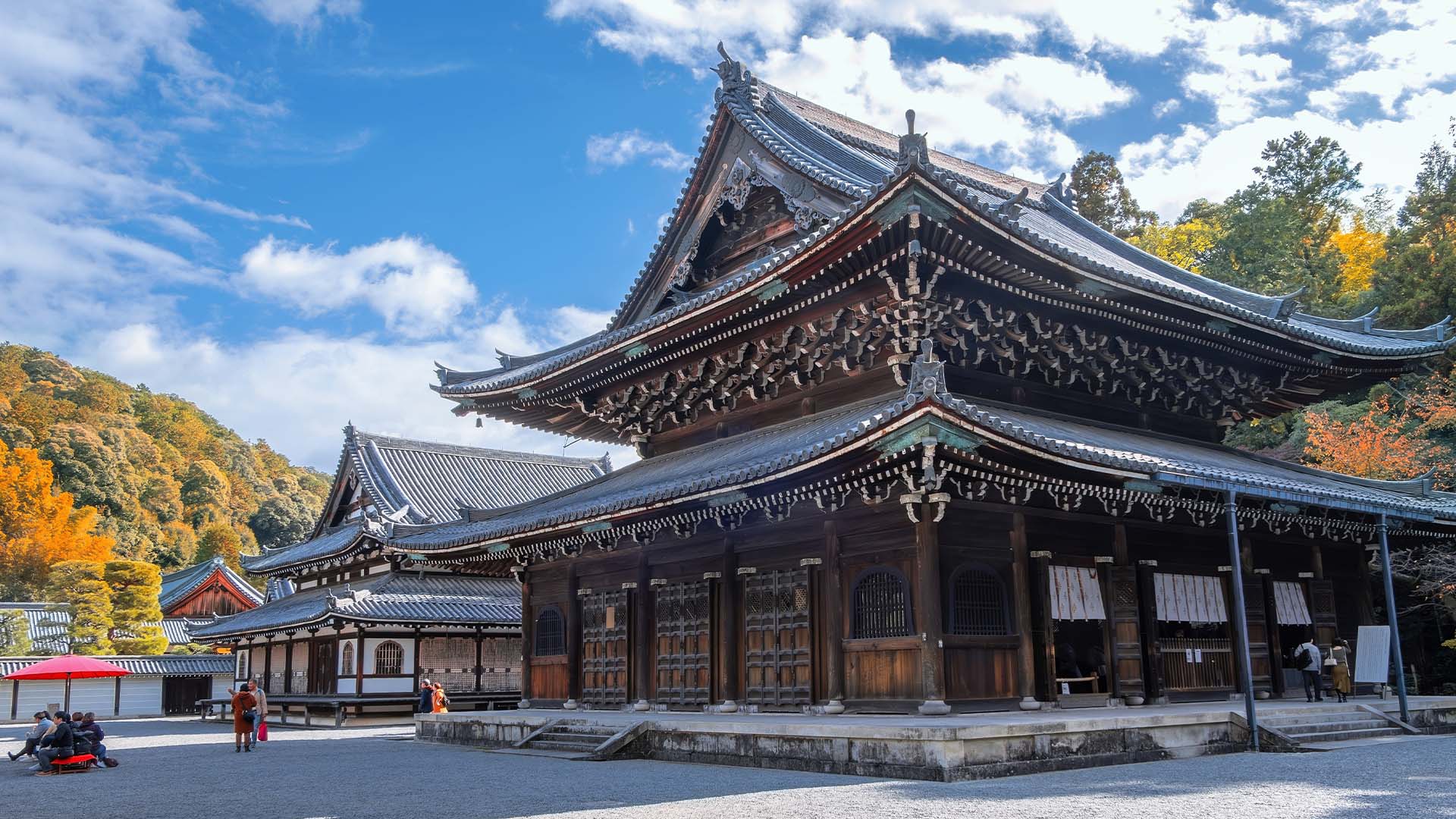
Kyoto needs no introduction as the embodiment of Japan’s imperial and spiritual beauty. Over 1,600 Buddhist temples and 400 Shinto shrines dot the city, yet over time, the same dozen or so names have gained international fame, bringing a constant flow of tourists through their gates. Everyone knows and visits Kinkaku-ji with its golden pavilion, Kiyomizu-dera with its awesome wooden balcony and city views, and Fushimi Inari Shrine, with its seemingly endless tunnel of vermillion torii gates. All these live up to the hype and are worth braving the crowds, though I recommend arriving for opening time at Kiyomizu-dera and visiting Fushimi Inari on a guided night tour for a uniquely atmospheric, crowd-free experience. You can also opt for a crowd-free night tour of Arashiyama and its famed bamboo grove—complete with ghost stories if that’s your vibe.
Beyond its regular roster of Instagram stars, Kyoto invites you to explore its spiritual and cultural offerings in a more meaningful and sustainable way. This might be a matcha tea ceremony or a Zen meditation session, or in our case, a guided experience through Sennyu-ji, Kyoto’s royal Shingon Buddhist temple.
Sheltered by hills just beyond Fushimi Inari in Kyoto’s southeast, Sennyu-ji has a history going back to the 9th century. Though its precise origins are still disputed, it’s long served as a mausoleum for nobles and members of the Royal Imperial household and remains the imperial family’s spiritual centre in Kyoto to this day.
We’re met at the gates by our guide for the afternoon, Buddhist monk Kenmei, who is… a white Canadian-American? While our host’s background is a surprise, it’s also a reminder that while Shingon may be a distinctly Japanese form of Buddhism, its teachings speak across cultures, and Kenmei is well-practiced at putting the rituals and practices we explore during the tour into terms we can easily understand.
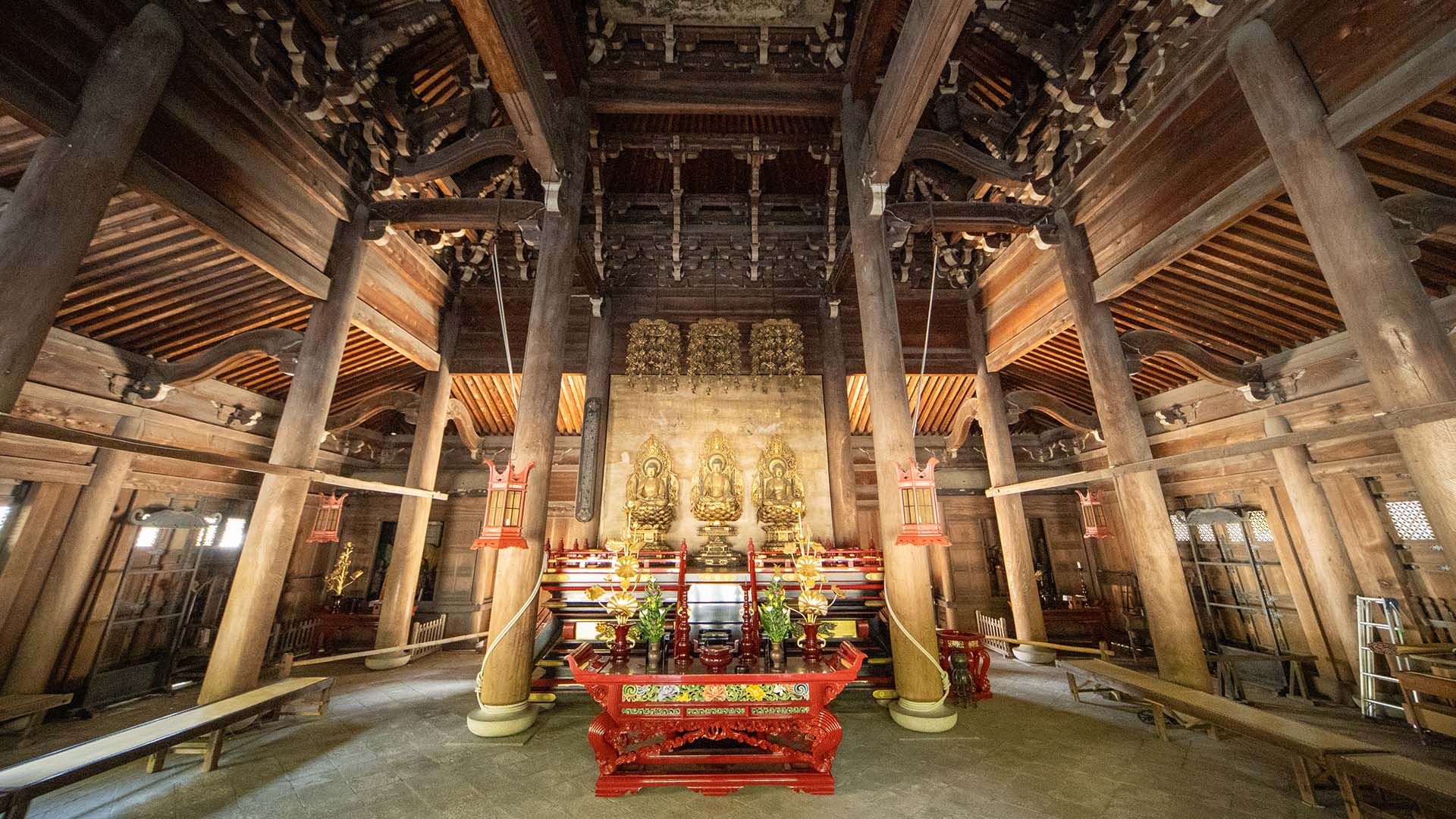
As an immersion into Buddhist practices and teachings, this tour goes well beyond architecture and history. Kenmei explains the purpose of each building we visit, as well as the structure and customs that shape a Royal Imperial visit. Admitting us to halls normally closed to the public, he shares with us the stories behind ritually significant items and artworks, and in perhaps the most exciting part of the tour, invites us to take part in a Goma fire ritual, where our prayers are burned on wooden sticks and offered up to the gods while burning away worldly desires.
An Ajikan meditation is another highlight that enshrines what differentiates Shingon Buddhism from other forms. Rather than a disciplinary approach focused on firm postures and clearing the mind, Shingon meditation acknowledges the needs and journey of the mind and body as they come, cultivating compassion and enlightenment that meets us where we’re at. Suddenly, I don’t feel so bad about constantly adjusting my position to soothe my screaming hips while sitting on the floor ahead of the Kechien Kanjo.
Our tour ends with matcha tea at sunset in the serene Gozasho garden, where Kenmei invites us to ask any last questions. While the wide variety of temples, shrines, and Buddhist practices we’ve seen throughout our time in Japan have raised some, this tour through one of Kyoto’s most important spiritual centres has also put all our sightseeing in a different light. Looking back on photos of Kinkaku-ji and Kiyomizu-dera leaves me wanting to know more about the continued life of each temple and shrine beyond its daily tourist flow and wondering which other temples in Kyoto might share their stories with us if/when we return.
While Japan’s spiritual identity is ever-changing and impossible to explore all in one trip, engaging with these sites through a guided tour or as part of a guided experience like the Kechien Kanjo opens up an appreciation for them beyond their aesthetics and history. Sometimes, catching a break from the snaking queues and crowds is its own serenity, but if you do find that moment, check in with your own mind and body. You never know where your Buddha nature might choose to reveal itself in the sacred corners of this incredible country.
Discover the spiritual traditions of Japan on a tailor-made vacation.

Christian’s first globetrotting adventure saw him get lost exploring the streets of Saigon. Following his nose to Asia’s best coffee, two lifelong addictions were born. A freelance writer and novelist, Christian’s travels have since taken him around his native Australia, Asia, Europe, and much of North America. His favourite trips have been through Japan, Spain, and Brazil, though with a love of off-beat, artsy cities, he’ll seize any opportunity to return to Paris, New York, or Berlin.