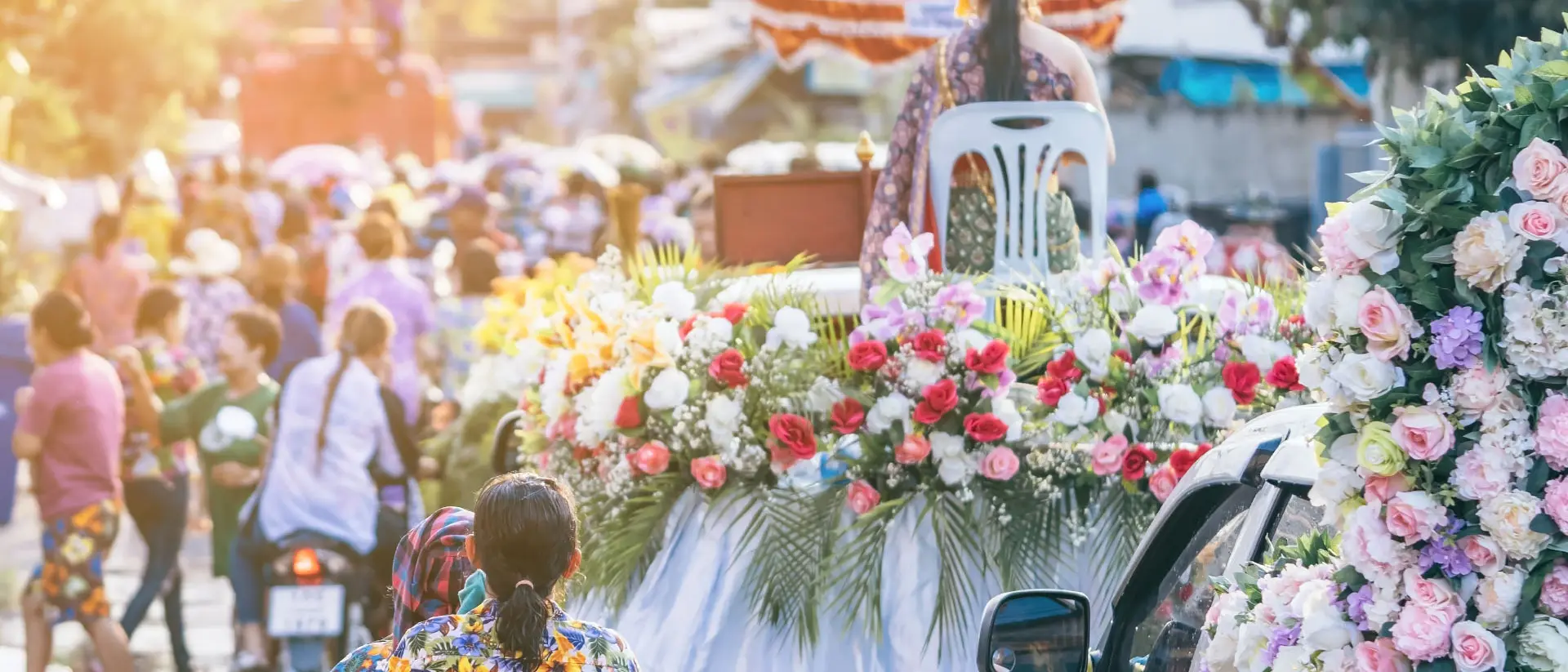
New Year’s traditions vary around the world, from fireworks displays to eating grapes under the table at midnight. In Thailand, however, the traditional New Year is celebrated in April with water guns, buckets, and joyful chaos in the streets. Widely known as the world’s largest water fight, Songkran transforms cities across the country into a jubilant, splash-filled festival each spring.
For travellers, joining the UNESCO-recognized festival is both a cultural experience and a full sensory immersion. From the energetic street parties of Bangkok to the ceremonial rituals at temples in Chiang Mai, Songkran is an unforgettable complement to a wider journey through the Land of Smiles.
What Is Songkran?
Songkran, the Thai New Year, is now associated with street-level water battles, but the festival is actually tied to ancient Buddhist and Hindu astrological traditions. Occurring each April after the rice harvest, Songkran comes from a Sanskrit word meaning “movement,” referring to the sun’s transition into Aries, the first sign of the zodiac.
At its heart, Songkran is about renewal, cleansing, and respect. Families deep-clean their homes, visit temples, honour ancestors, and spend time with elders. Water is symbolic, with Thai people pouring it over the hands of elders and Buddha images to wash away misfortune and welcome a fresh start to the year. Today, those traditions live on alongside the festival’s famously exuberant splash zones.
Songkran is one of the most exciting times to visit Thailand. Whether you come for the cultural rituals, colourful parades, or the chance to cool off during Thailand’s hottest month, Songkran offers a uniquely joyful window into Thai culture.
When & Where Songkran Takes Place
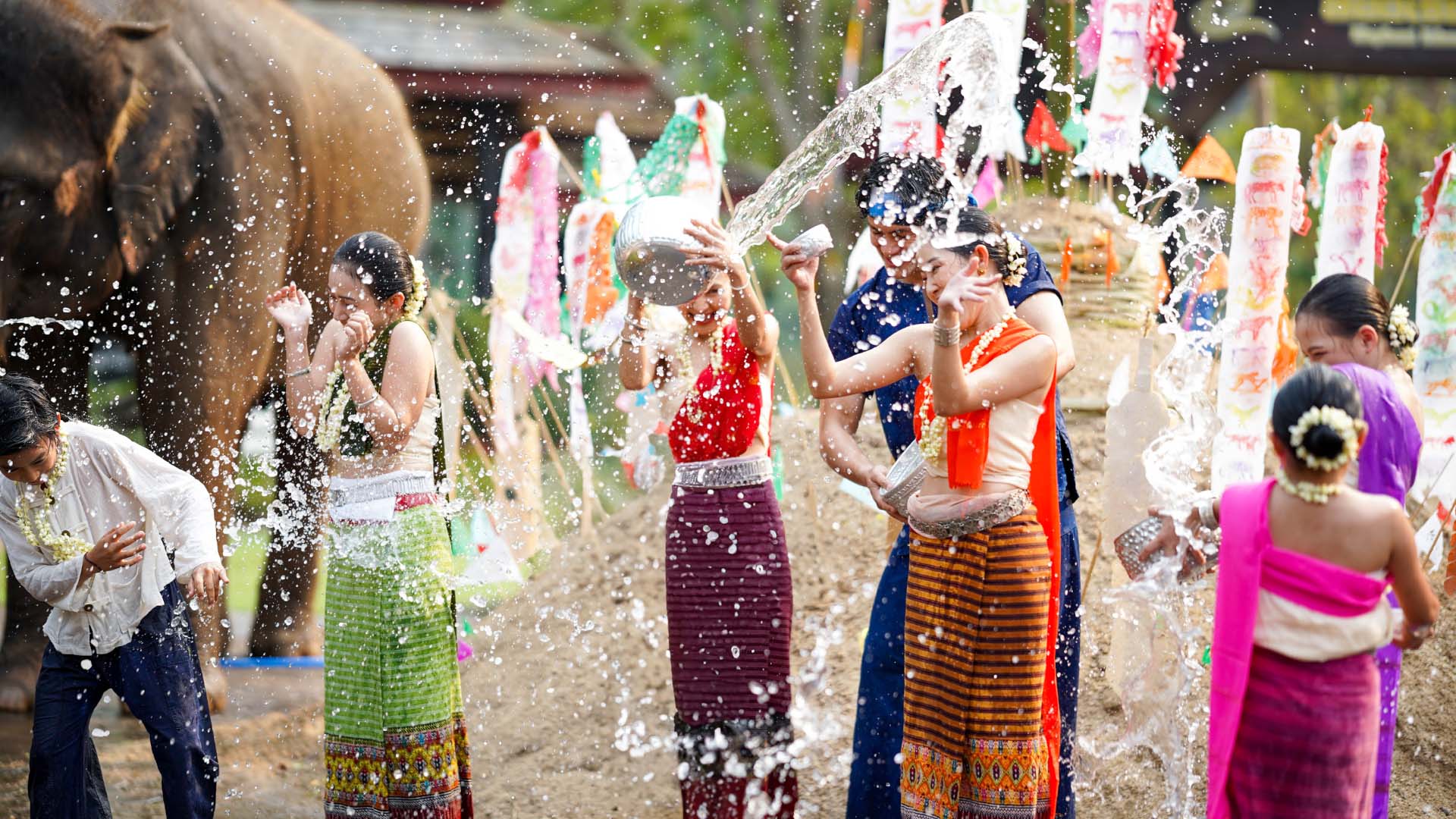
Songkran officially takes place each year from April 13 to 15, though celebrations in many regions begin earlier and can stretch nearly a week. April 13 is typically the liveliest day, with festivities gradually winding down afterward.
Chiang Mai is widely considered one of the best places to experience Songkran if you’re looking for a blend of traditional culture and spirited water fights. Festivities often begin with opening ceremonies near Tha Phae Gate, featuring cultural performances, parades, and Songkran pageantry with traditional Northern Thai costumes. During the holiday, the moat surrounding the Old City becomes the heart of the action, with crowds gathering to splash, refill water guns, and celebrate late into the evening.
Bangkok offers an even more energetic atmosphere, with music festivals, processions, and several party zones. While many locals leave the capital during the holiday, areas like Khao San Road transform into massive street-wide water battles, drawing revellers from around the world. Alongside, the Silom area is the epicentre of the city’s LGBTQ+ celebrations, with drag performances adding to the energy. Traditional ceremonies also take place at temples such as Wat Pho, home to the city’s famous Reclining Buddha.
The islands bring a distinctly tropical spin to the festivities. In Thailand’s beach destinations such as Phuket, Koh Samui, and Koh Phi Phi, beach roads and promenades erupt into lively all-day parties. Pattaya is another major Songkran party hub, extending festivities beyond the official dates with the Wan Lai Festival on April 19, known for its beachside concerts.
Schedules, road closures, and official programming vary by destination and year, so travellers should always confirm current details through official tourism sources before planning their trip.
How to Join In: Rituals, Water Fights & Events
First things first: prepare to get soaked. During Songkran, no one is truly spared, so it’s worth arming yourself with a water gun or bucket before heading out. In the weeks leading up to the festival, local markets fill with brightly patterned floral shirts, waterproof phone pouches, and colourful supersoakers.
While most travellers come for the playful drenching traditions, Songkran is also a time to observe traditional Thai culture. At temples decorated with colourful flags and flowers, locals gather to perform rituals such as Rod Nam Dam Hua (pouring scented water over Buddha statues) as a gesture of respect and blessing.
Another longstanding tradition is the building of sand pagodas, which symbolize the “return” of soil that visitors unknowingly carry away from the temple on their shoes throughout the year. Wat Chedi Luang in Chiang Mai hosts one of Northern Thailand’s largest sand pagodas, while Bangsaen Beach in Chonburi Province stages enormous sand sculptures and pagoda competitions during its Wan Lai festival after Songkran.
Food and drink also play a central role, with seasonal specialties such as khao chae (rice soaked chilled jasmine-scented water with savoury accompaniments) offering welcome relief from Thailand’s April heat.
Songkran celebrations vary widely across Thailand, so choosing the right destination for you is essential. Goway’s Destination Specialists can help travellers plan around the atmosphere they’re seeking, whether that’s family-friendly cultural immersion, island parties, or the country’s biggest water battles.
Where to Stay for Songkran
From boutique hideaways tucked away from the chaos to beachfront resorts in the heart of the action, where you stay during Songkran can shape the experience.
Best Areas by City
Bangkok
Staying near Khao San Road places you in the centre of the action, with nonstop waterfights, DJ booths, and bars that attract travellers from all over the world. For a more polished atmosphere, the Riverside area combines luxury hotels with easy boat access around the city, allowing you to circumvent the crowds. The upscale district of Sukhumvit strikes a balance between street-level revelry and upscale dining, shopping, and rooftop bars.
Chiang Mai
Basing yourself within or near the Old City makes it easy to reach major festival hubs like Tha Phae Gate and the famous moat water fights. For a calmer base, Nimmanhaemin offers a more modern atmosphere with stylish cafés, boutiques, and restaurants, while still being close to the festivities.
Phuket
For those chasing a tropical party atmosphere, Patong Beach delivers. Expect wild beachside gatherings and water-soaked streets, especially around Bangla Road. Families and those seeking a more relaxed stay often prefer nearby Kata or Karon, where the vibe is still playful but less intense.
Pattaya
Central Pattaya is known for high-energy street parties, live music, and all-day water battles. For a quieter stay, Jomtien Beach offers a more laid-back atmosphere, with smaller waterfights stretching along the shore.
Hotel Styles & Booking
Thailand offers a wide range of stays, from beachfront resorts to design-led city hotels, making it easy to tailor your Songkran experience.
For a beach-focused trip, Phuket’s resorts range from barefoot luxury villas to buzzy hotels close to Phuket Town and Patong’s nightlife. In Chiang Mai, boutique guesthouses are especially popular, often reflecting local flavour through art, design, and home-cooked breakfasts. In Bangkok, riverside 5-star hotels along the Chao Phraya River offer a more elevated escape, with boat access to major landmarks and a calmer retreat from the street-level noise.
Songkran is one of Thailand’s busiest travel periods, so booking at least six months in advance is strongly recommended, particularly for centrally located hotels with pools. Goway matches hotels to your Songkran plans, ensuring location, style, and budget align seamlessly with your broader Thailand itinerary.
Getting Around During Songkran
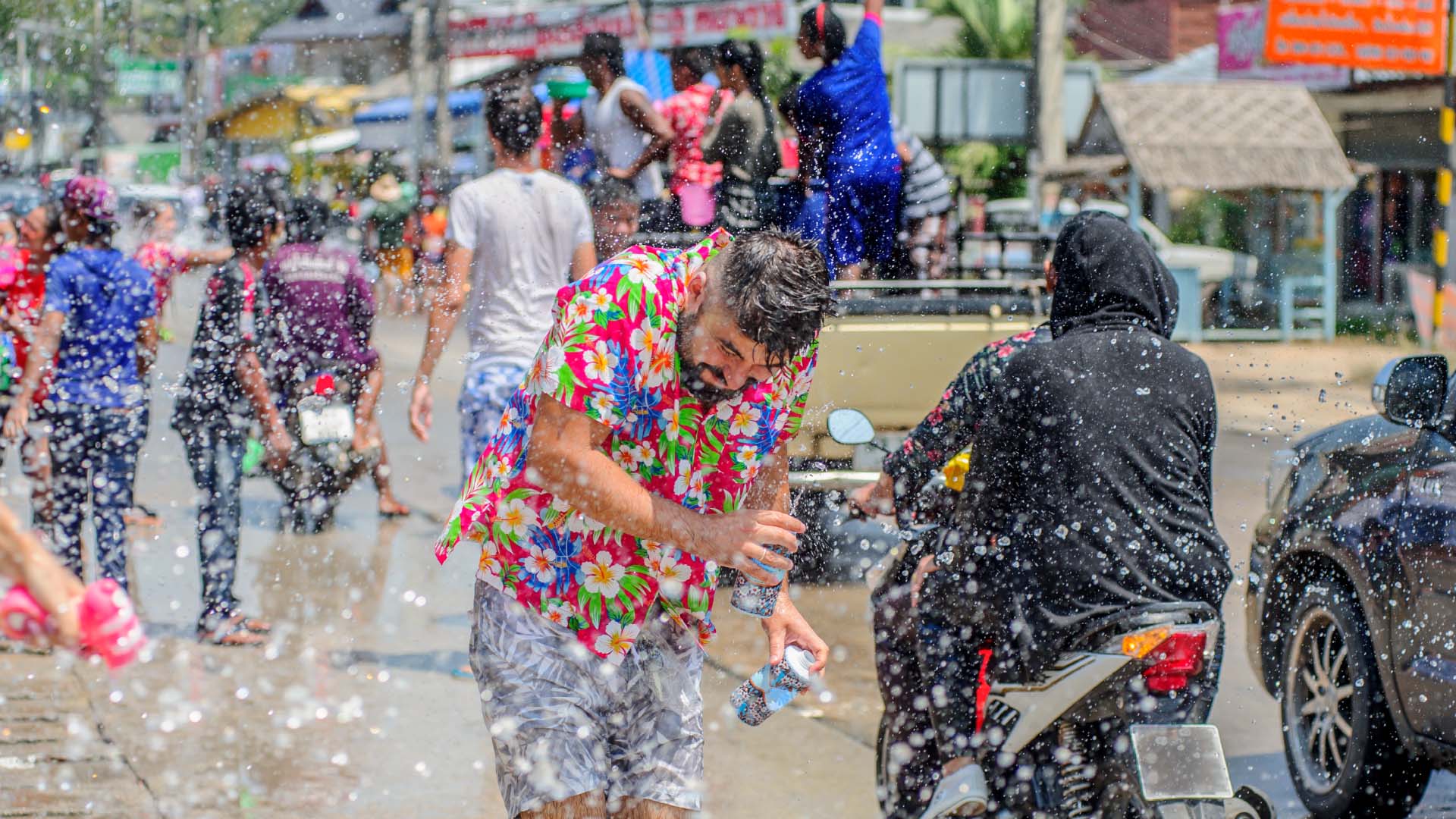
Getting around during Songkran requires a bit of strategy, as normal travel routines are often disrupted by traffic, road closures, and spontaneous water fights.
In Bangkok, the BTS Skytrain and MRT subway are the most reliable ways to avoid congestion. Ride-hailing apps and taxis are useful for shorter trips, though it’s wise to get dropped off away from busy festival zones.
In Chiang Mai, walking and songthaews (shared red trucks) are the most practical options. These can be flagged down and shared with other passengers, but be aware that open vehicles are fair game during Songkran, so you will likely get wet en route. The same applies to tuk-tuks, so waterproof bags for valuables are essential.
In Phuket, tuk-tuks, taxis, and ride-hailing apps are the main options, though surge pricing and delays are common during peak hours.
Motorbikes and scooters are generally discouraged across all destinations. Between slippery roads and unexpected splashes, they can be unsafe during festival days.
Wherever you are, avoid travelling during peak water-fight hours (roughly midday to early evening) when streets are at their busiest. For airport transfers, allow extra time and consider private transport where possible. Goway can help arrange seamless transfers to keep arrivals and departures as smooth as possible during the festival chaos.
What to Expect: Fun, Crowds & Safety
It’s hard to comprehend the scale of Songkran until you’re standing in the middle of it. Pickup trucks filled with groups armed with buckets roll through the streets, kids sprint through neighbourhoods with supersoakers, and locals line sidewalks ready with hoses. The result is a city-wide splash zone and a sense of rare collective joy.
The best way to experience it is simply to embrace it. You will get completely soaked, but preparation (and having the right attitude) goes a long way. Lightweight, quick-dry clothing is ideal, and many locals wear bright floral shirts for the occasion. Swimwear is best avoided in cities, where more modest dress is expected. A waterproof phone case is essential if you want to take photos and stay connected, along with a small dry bag for any extra clothes, cash, or valuables.
Keep in mind that not all water is clean, so avoid getting it in your mouth, eyes, or ears. Some travellers use goggles or earplugs for extra protection. Avoid splashing people in the face and never target monks. The same courtesy extends to elders, young children, and pregnant women. Most designated splash zones in cities are alcohol-free, so it’s best to save drinking for evening events and bars.
For a calmer experience, head to temples in the early morning, when traditional ceremonies take place before the street parties reach their peak in the middle of the day.
Beyond Songkran – Exploring Thailand
Songkran may be the highlight, but it’s only one part of a broader Thailand itinerary. April brings hot, sunny weather that’s ideal for beaches, islands, and outdoor exploration.
City Highlights
Beyond the festivities, Thailand’s cities are packed with enough cultural draws to fill a month or more. In Bangkok, must-visit spots include the Grand Palace, with its gilded stupas and intricate murals, and Wat Arun, where riverside spires are covered in shimmering porcelain mosaics. Between temple visits, the city’s food scene ranges from bustling Chinatown street stalls to world-class fine dining, offering something for every palate.
In Thailand’s cultural heart of Chiang Mai, Old City temples, night markets, and Lanna heritage showcase a slower, more traditional side of the country. Just outside the city, Wat Phra That Doi Suthep sits high on a mountain overlooking Chiang Mai, while ethical elephant sanctuaries offer immersive wildlife experiences.
Extensions
For many travellers, Thailand’s islands are a natural next step after exploring the cities. On the Andaman coast, destinations like Phuket and Krabi offer dramatic limestone scenery, beach resorts, and easy access to island-hopping routes, including the iconic (and often busy) Koh Phi Phi.
On the Gulf side, Koh Samui and Koh Phangan offer calm waters, palm-lined beaches, and a mix of nightlife and resort stays. Koh Samui in particular appeals to families and honeymooners, with modern infrastructure, polished resorts, and its own airport.
For a shorter Songkran itinerary, it’s usually best to focus on one island region (either Andaman or the Gulf), so you can balance beach time with cultural stops in Bangkok and Chiang Mai without feeling rushed.
Sample Songkran Itineraries
7 Days: Songkran in Bangkok and Phuket
- Days 1–3: Arrive in Bangkok; dive into the Songkran festivities on Khao San Road and beyond, and explore temples
- Days 4–7: Fly to Phuket for beach downtime, island hopping, and a slower post-festival pace
12 Days: Songkran in Chiang Mai and the Thai Islands
- Days 1–4: Arrive in Chiang Mai to partake in moat water fights, temple rituals, and Lanna New Year traditions
- Days 5–7: Travel to Bangkok to visit cultural landmarks and enjoy world-class dining
- Days 8–12: Continue to Krabi or Phuket for beach time, island excursions, and recovery by the sea
Goway can tailor every Thailand itinerary to your travel dates, preferred pace, and style.
Practical Planning Tips
Demand is incredibly high during Songkran, and hotels often sell out quickly, so planning your trip six to nine months in advance is recommended. April is also typically Thailand’s hottest month, especially in Bangkok and Northern Thailand, with temperatures often soaring above 30°C alongside intense humidity. Lightweight clothing, sunscreen, and hydration are essential, while sightseeing is best saved for the cooler morning hours. Travel insurance is also recommended, particularly for heat-related illness or travel disruptions.
Travellers from many countries, including the United States and Canada, can enter Thailand visa-free for up to 30 days. Entry requirements can change, so it’s best to confirm the latest regulations before departure and consult with a Destination Specialist on the most important things to know about Thailand before your trip.
How Goway Helps with Songkran
Songkran can look very different depending on where and how you celebrate it. One traveller might be looking for sunrise temple visits and family-run guesthouses in Chiang Mai, while another might be searching for Bangkok’s biggest street parties followed by a few restorative days on the beach.
Goway’s Destination Specialists can create a custom Songkran journey around the experience you actually want, balancing festival energy with downtime, cultural experiences, and stress-free logistics during one of Thailand’s busiest travel periods. From coordinating private transfers during road closures to curating the right hotels and activities, Goway’s Destination Specialists understand the nuances of planning a trip during the festival.
Request a custom Songkran quote to start designing your ideal Thai New Year itinerary.
What do the experts say?
Thailand is a friendly destination with fun & warm people, great food, and impressive cultural and beach experiences. Simply wandering neighbourhoods, visiting temples, shops & viewpoints, and eating at local restaurants are what I enjoy most when visiting Thailand. The south of Thailand is a special location with beautiful scenery and a seemingly laid back lifestyle, so visiting this area is always a special and memorable experience.

The experience of travelling from island to island on longtail boats in the south of Thailand is something that still resonates with me after many years.
For families, visiting a sustainable community in Koh Yao Yai can bring the trip to life with local interaction. For honeymooners, personalizing memorable experiences with special menus, in-room dining and more can really elevate the experience for Goway guests.
All the people that I met at the hotel, restaurants, and parks were always smiling at me. I can feel that they are grateful to all international tourists. A Thai smile inspires me most and makes me want to revisit.
Unlock more by subscribing to our newsletter.
With our newsletter, you’ll get access to regular communications that inspire you and help you explore the world your way.