Thailand’s nickname, The Land of Smiles, isn’t just a slogan; it’s something you feel the moment you arrive. Warm hospitality, politeness, and social harmony are deeply ingrained in Thailand’s culture. After all, Theravada Buddhism, the oldest surviving branch of Buddhism, has shaped Thai traditions for nearly 2,000 years. Today, more than 90 percent of the population follows its teachings, which emphasize respect (especially toward monks and elders) along with a calm, gracious approach to everyday life.
Across the country, wats (temples) serve not only as places of worship, but also as cultural and community centres that preserve art, architecture, and spiritual rituals. Travellers are welcome to visit these sacred spaces, whether to admire golden stupas, join a guided tour, or partake in a monk chat that offers insight into Buddhist philosophy.
Northern Thailand is one of the richest places to explore this heritage. Once the heart of the Lanna Kingdom (active from the 13th to the 18th centuries), the city of Chiang Mai is home to exquisite temples like Wat Phra That Doi Suthep, as well as intricate textiles, woodcarvings, and a distinctive blend of Buddhist and regional traditions.
“Many temples have a dress code, and dressing modestly, with knees and shoulders covered, is a requirement,”Destination Specialist Steve Hope says. “Travellers should also know that Thailand is a monarchy, with a deep reverence among its people for the Royal Family, for traditions, and for history.”
Indeed, Thailand’s respect for hierarchy reaches its most visible expression in the respect it shows its monarchs. The Royal Family plays a central role in national identity, and laws and customs surrounding royal images and traditions are taken seriously. From standing for the royal anthem to preserving historic palaces and sacred sites, this allegiance shapes both public life and cultural continuity. Understanding these nuances adds depth to a visit.
For a deep dive into the country’s enduring traditions, book a cultural escape to Thailand with Goway today.
Thailand’s Buddhist Heritage and Spiritual Life
Thailand’s Buddhist traditions are deeply ingrained in everyday life. You see them at dawn during almsgiving, when saffron-robed monks walk barefoot through quiet streets, and locals fill their bowls with rice, fruit, and drinks, in a ritual of “making merit” or earning good karma through generosity.
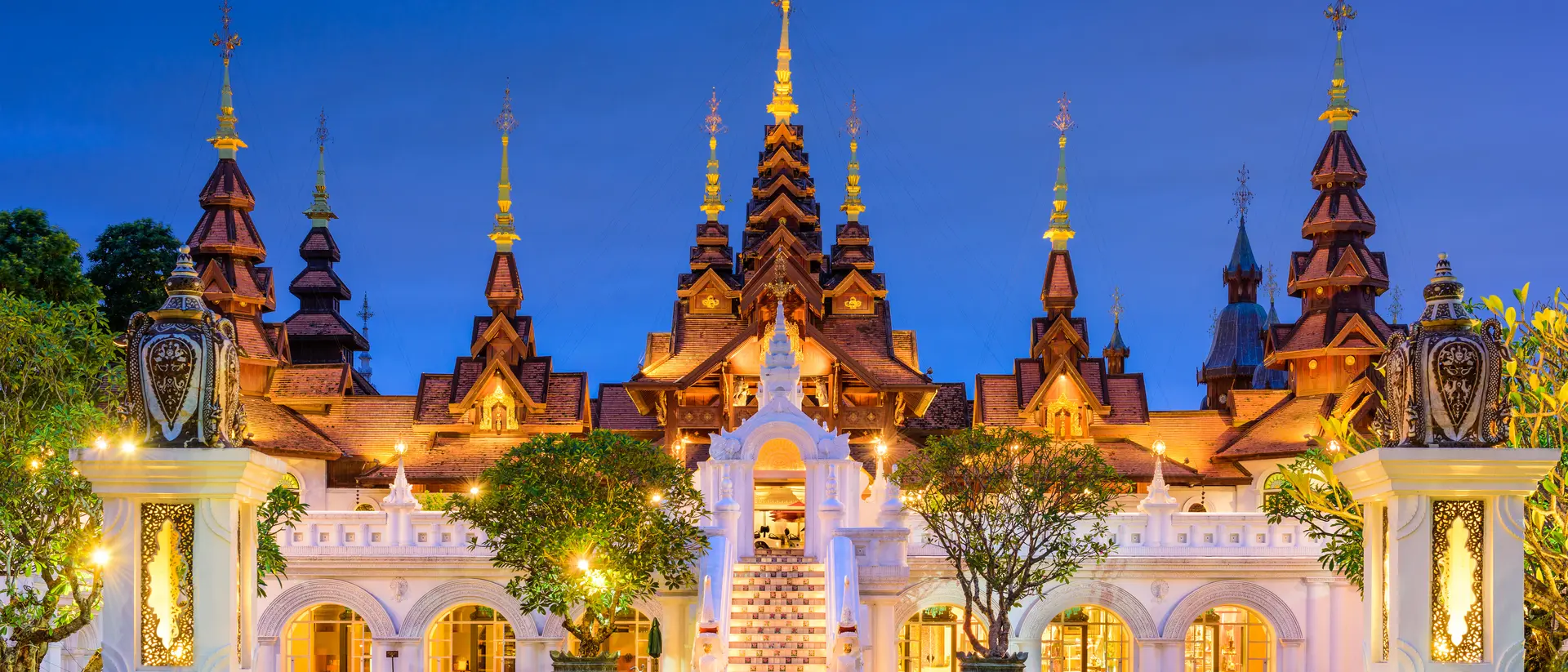
That spiritual foundation is also expressed through Thailand’s extraordinary temples. Multi-tiered roofs rise into sky-pointing finials (chofa), while bell-shaped stupas (chedis) reflect a distinctive blend of Thai, Indian, and Khmer influences. Many are so lavishly detailed they feel almost otherworldly.
In Bangkok, Wat Pho is also one of Thailand’s historical highlights, home to the city’s 46-metre-long Reclining Buddha and the largest collection of Buddha images in Thailand. It’s also the country’s earliest centre of public education, with UNESCO-listed inscriptions, vivid murals, glazed tiles, and labyrinthine courtyards. Within the complex is one of the country’s leading Thai massage schools, where visitors can enjoy a massage or even take a short course.
Northern Thailand offers equally powerful experiences, from meditation retreats to pilgrimage-worthy temples. Wat Phra That Doi Suthep, founded in 1383 on a mountain overlooking Chiang Mai, rewards those who climb its 300-plus Naga steps (or ride the funicular) with a radiant golden stupa, intricate shrines, and sweeping city views.
For a strikingly different take on sacred space, Wat Rong Khun (The White Temple) near Chiang Rai merges Buddhism with contemporary art. Designed by artist Chalermchai Kositpipat in the 1990s, its gleaming white exterior resembles porcelain, while its interior murals, featuring everything from Superman to Hello Kitty, showcase a surreal interpretation of samsara, the cycle of death and rebirth.
Last but not least, says Destination Specialist Leo Liu, Mae Hong Son Province, with its rich hill-tribe culture and breathtaking scenery, is also worth a trek. The remote, mountainous territory borders Myanmar (Burma) in the northwest part of the country.
Thai Festivals and Holidays
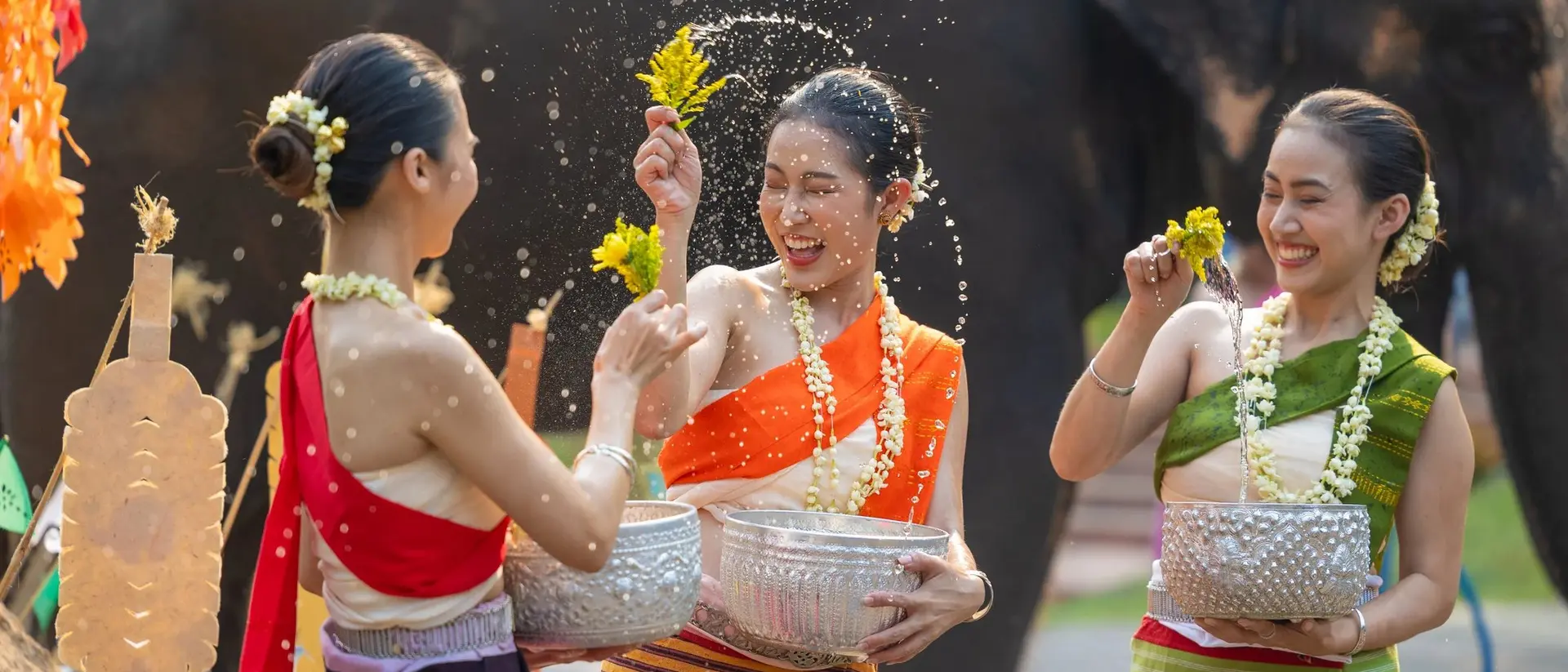
Thailand celebrates festivals year-round, but few rival Songkran, the Thai New Year, held each April 13 to 15. During this national holiday, jubilant water fights sweep through cities and villages, with Chiang Mai hosting some of the country’s biggest celebrations. Recognized by UNESCO, the splash-filled festival offers relief from the heat while symbolizing purification and renewal. It also marks the start of the traditional Southeast Asian solar calendar and the end of the dry season following the rice harvest.
Alongside this solar calendar, Thailand also follows a lunar system based on the Buddhist calendar, which determines many religious and traditional observances. In the 12th lunar month, usually in November, Loy Krathong fills rivers and canals with candle-lit lotus baskets floating across the water. Celebrated in Chiang Mai, Bangkok, Sukhothai, and beyond, the festival symbolizes gratitude, spiritual cleansing, and new beginnings, often accompanied by parades, music, and fireworks.
Another major seasonal celebration is the Candle Festival in northeastern Isaan, near Laos, typically held in July. Coinciding with the start of Buddhist Lent (Khao Phansa), elaborate parades of hand-carved beeswax floats depicting the Buddha, mythical figures, and sacred stories wind through the streets of Ubon Ratchathani, blending religious devotion with spectacular craftsmanship.
Thai Royal Influence and Social Etiquette
Thailand’s social etiquette can feel complex at first, but a few guiding principles go a long way. Visitors are expected to show cultural awareness, particularly around religion, the monarchy, and public behaviour. Calmness, courtesy, and restraint are highly valued in daily interactions.
Most Thais greet one another with a wai (hands pressed together with a slight bow, in a gesture adapted from ancient Indian traditions). The wai is used not only as a greeting, but also to show thanks, offer an apology, or acknowledge something sacred, such as when passing a temple. Younger people usually wai first, and the depth of the bow reflects social status. Visitors aren’t expected to master these nuances, but returning a wai to elders or in formal situations is seen as a thoughtful sign of respect. It’s not customary, however, to wai service staff, shopkeepers, or children.
As seen at The Grand Palace, the monarchy plays a powerful role in Thailand’s national identity, and respect for the Royal Family is taken very seriously. Strict lèse-majesté laws prohibit any form of insult or defamation toward the King, Queen, or heir (including on social media) and apply to foreigners as well. Penalties can be severe, so visitors should avoid jokes, criticism, or careless behaviour involving royal images. This includes small gestures, such as never stepping on Thai currency, which bears the King’s portrait. In public spaces, you’ll also be expected to stand for the national anthem, played daily at 8:00 a.m. and 6:00 p.m.
This reverence for hierarchy extends to religious spaces. When visiting temples, modest dress (covered shoulders and knees, loose clothing) is essential. Carrying a lightweight scarf or sarong is useful for quick coverage. Shoes, hats, and sunglasses should be removed before entering. Photography is usually welcome, but avoid using a flash.
Thai body language follows its own set of rules, too. The head is considered sacred, while the feet are viewed as the lowest and least clean part of the body. Never touch someone’s head, point your feet at people or Buddha images, or show the soles of your feet inside a temple. Pointing is considered rude, so remember to gesture with an open palm if necessary. When exploring Thailand’s food and drink scene, remember to only pick up food with your right hand, as the left is considered unclean.
Thai Language and Expression
While English is widely understood in tourist areas, there are a few key Thai phrases you’ll likely use frequently during your trip.
Hello and goodbye is “Sawasdee,” with men adding “khrup” and women adding “kha” to the end for politeness.
Similarly, thank you is “Khop khun khrup” (men) or “Khop khun kha” (women).
Sorry or excuse me is “Khor thot,” again with khrup/kha for courtesy.
Thai is a tonal language, so pronunciation is just as important as the words themselves. A warm smile and a soft, respectful tone will help you communicate effectively and will often make your interactions with locals more meaningful and enjoyable.
Thailand’s Cultural Experiences with Goway
Thailand rewards those who venture a little deeper—and with the right local expertise, those moments unfold effortlessly.
For starters, picture a spiritual journey that begins in Chiang Mai with a private monk chat and guided meditation at a serene temple. In Chiang Rai, step into a Lanna village to meet Karen hill-tribe artisans and learn the art of traditional weaving.
Down south in Phuket, explore culture through romantic culinary experiences. Shop local markets with a chef, then turn fresh ingredients into classic Thai dishes before wandering Old Phuket Town’s pastel Sino-Portuguese shophouses and historic Chinese schools, now reborn as stylish cafés and restaurants.
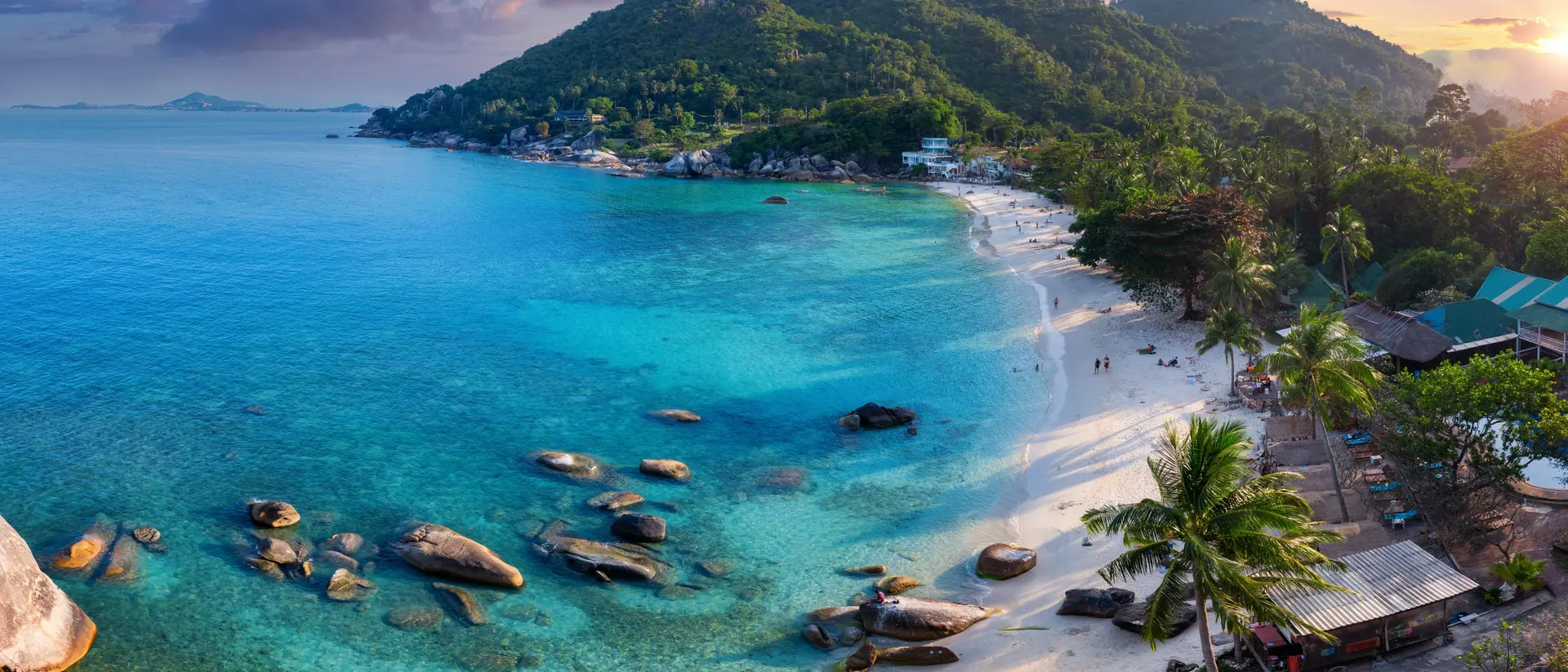
These intimate encounters reveal the soul of Thailand, where history, hospitality, and insider access turn every journey into an unforgettable adventure. “Visiting islands and beaches is of course a big part of the Thai experience,” says Destination Specialist Steve Hope, “but taking in the city sites and culture in Bangkok, the old streets of Chiang Mai, the rural villages, and the historic ruins in places like Ayutthaya and Sukhothai provide a fun, enjoyable, and truly fulfilling perspective on Thailand.”
Let Goway craft your custom Thai cultural journey.