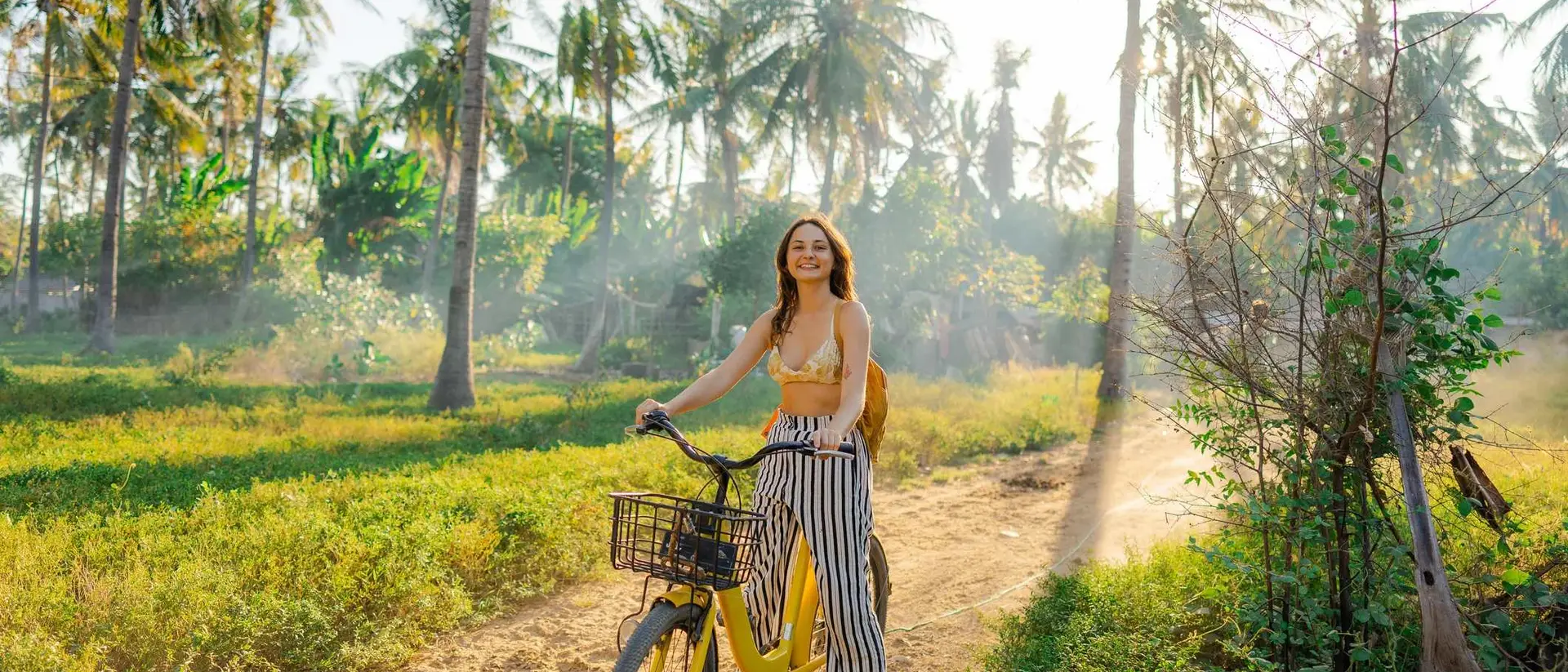


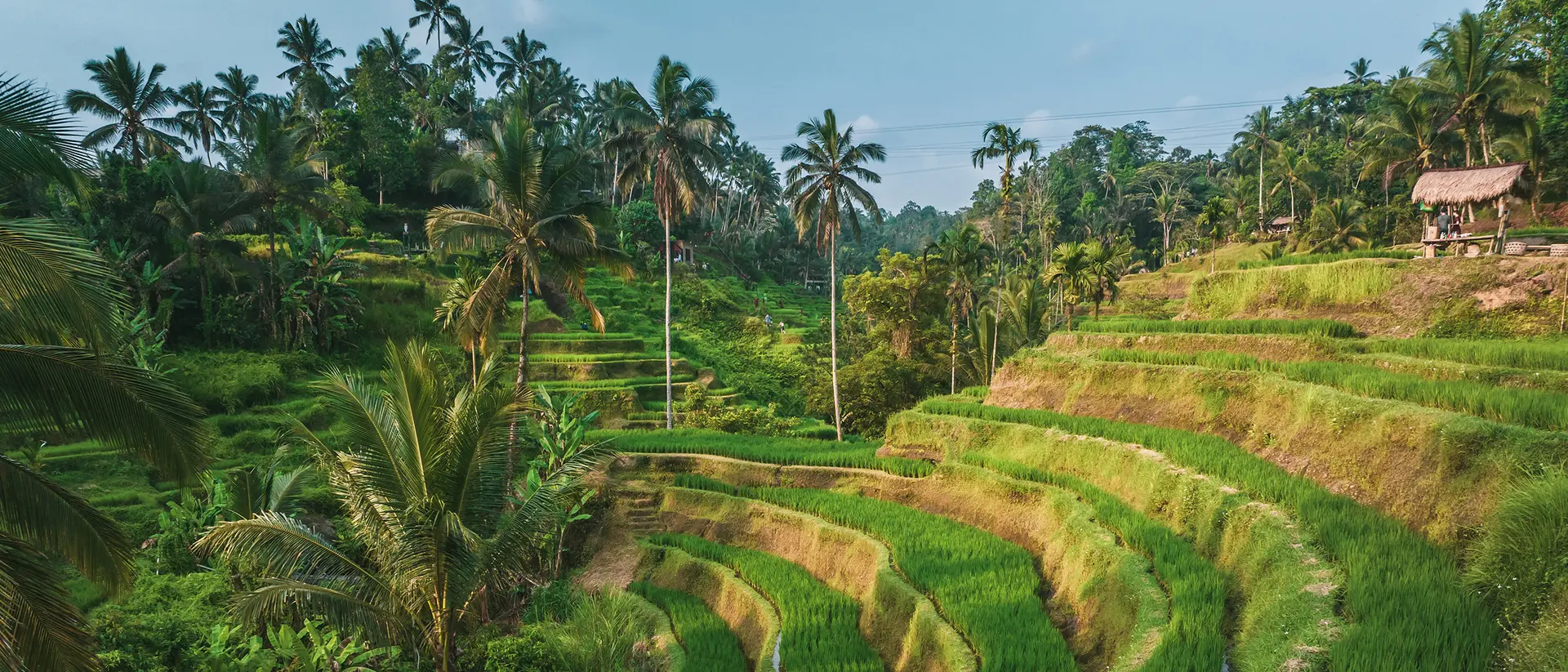
Generally, May to September offers the driest weather, with sunny days and low humidity. This is the best time for beachgoing, sightseeing, and attending cultural festivals, on islands such as Bali, Java, Lombok, and Komodo.
Indonesia Travel Information
Not sure which theme is right for you?
Best Time to Visit
Indonesia’s tropical climate offers year-round appeal, but the experience changes depending on the season and where you travel. Spanning the equator, the country’s weather patterns vary widely, so timing your visit can be shaped by your interests, from temple ceremonies and island-hopping to diving or wildlife spotting.
The dry season, generally May to September, is ideal for beaches, trekking, and cultural festivals, while the wet season, from October to April, brings lush landscapes and quieter temples. Different regions, from Bali and Java to Sumatra and Sulawesi, have unique climates and highlights, so the best time to visit depends on whether you want sun-drenched adventures, vibrant celebrations, or a deeper connection with Indonesia’s natural wonders and traditions.
Understanding Indonesia’s Seasons
Dry Season (May to September)
This is the most popular time to visit, with sunny skies, lower humidity, and calm seas. It is ideal for Bali’s beaches, Java’s cultural sites, and sailing to Komodo National Park. As Destination Specialist Amelia Chee notes, this season is perfect for combining beach days with cultural exploration and outdoor adventures.
Wet Season (October to April)
Rainfall patterns differ across the islands. In Bali and Lombok, showers are often brief and followed by sunshine, while in Sumatra and Kalimantan (Indonesian Borneo), rains can be heavier and more sustained.
Monsoon winds can occasionally disrupt ferry schedules and affect diving visibility. But even during the wet season, Destination Specialist Steve Hope says, travel can be rewarding, especially in quieter regions like Munduk or Amed, where lush landscapes and fewer crowds create a different kind of magic.
Borneo and Sumatra experience more consistent rainfall than Bali or Lombok, making them better suited to wildlife enthusiasts who do not mind occasional downpours for the chance to see orangutans and other rare species.
The Best Times to Visit Indonesia According to Your Interests
Beaches and Outdoor Exploration
From May to August, the weather is sunny and dry across Bali, Lombok, and Flores, creating perfect conditions for beach days, hiking, and outdoor sightseeing.
Diving and Snorkeling
For Komodo and Raja Ampat, the best conditions run from April to October, with calm seas and excellent visibility. In the Banda Sea, the prime diving season is from November to March, attracting divers who seek remote reefs and encounters with marine life.
Wildlife Viewing
In Borneo, orangutans are most easily spotted from June to September, when drier conditions make forest treks more accessible. Komodo dragons can be seen year-round, but the dry season from May to August offers the clearest visibility and most comfortable weather for island exploration.
Cultural Festivals
Nyepi, Bali’s Day of Silence, typically occurs in March, bringing the entire island to a reflective standstill. Galungan and Kuningan, celebrated every 210 days, fill Bali with offerings, decorations, and ceremonies. Eid al-Fitr marks the end of Ramadan and varies by year, while the Buddhist festival of Waisak at Borobudur occurs during the May full moon and draws pilgrims from across Asia.
Learn more about these festivals through our guide to Indonesia’s culture and traditions.
Peak, Shoulder and Off-Peak Travel to Indonesia
Peak travel seasons in Indonesia include July and August, when European and North American summer holidays align with the country’s sunny, dry weather, and the Christmas to New Year period, when resorts and flights often book far in advance.
Shoulder months such as May, June, September, and October offer the same excellent conditions with fewer visitors, making them perfect for travelers who value more space and flexibility.
Off-peak travel from January to March brings a higher likelihood of rain, but rewards visitors with lush scenery, quieter attractions, and greater choice in sought-after stays.
Pricing can vary by destination and accommodation, but peak season generally sees higher rates and lower availability, while off-peak periods often offer more competitive options.
Regional Highlights to Plan Your Indonesia Trip Around
Bali, Java and Lombok
These islands have the most predictable climate, with a dry season from May to September and a wet season from November to March. Rain typically comes in short bursts, with plenty of sunshine in between.
Sumatra
Wetter than many other parts of Indonesia, especially along the west coast, where rains are more frequent year-round. The eastern side tends to be drier.
Komodo and Flores
Hot and dry in peak season, with very little rainfall from June to August. Excellent for trekking, island-hopping, and seeing the Komodo dragons in comfort.
Raja Ampat
A diving paradise best visited between October and April, when the seas are calmer and visibility is excellent.
Sulawesi and Papua
Expect microclimates across these vast regions, with weather varying significantly between coasts and highlands. Local advice is key for timing outdoor adventures.
For regional food specialties tied to the seasons, consult our Indonesia food and drink guide.
How Long Should You Stay in Indonesia?
Plan for at least 10 to 14 days to fully appreciate Indonesia’s diversity. Internal flights are often needed to travel among islands, and travel times can be longer than expected. Multi-island itineraries benefit from expert coordination, especially during monsoon months when schedules may shift.
Goway’s Destination Specialists can help match your interests with the best travel windows for each region, ensuring smooth connections and the right pace for exploration. Explore sample itineraries via our Indonesia vacation hub.
Let the Seasons Shape Your Indonesia Journey
Every traveler experiences Indonesia differently, and timing your visit around your passions can make the journey unforgettable. Divers might prioritize calm seas and crystal-clear visibility, while cultural travelers may wish to align their trip with festivals like Nyepi or Waisak. Wildlife enthusiasts can plan for the dry months when orangutans, Komodo dragons, and marine life are easiest to spot.
Those who value serenity might prefer the quieter shoulder seasons, when popular spots feel more personal. Goway’s experts can match your priorities with the right season, ensuring you get the most from every island you visit.
Plan your ideal Indonesia getaway with the perfect season in mind.
Featured Indonesia Trip Ideas
Indonesia Travel PackagesClassic Bali: Ubud, Highlands & Sanur
Bali, Sanur, Uluwatu Temple, and UbudDiscover Bali's scenic rice terraces, sacred temples, vibrant markets, tropical beaches and cultural traditions from Ubud to Sanur.
12 days
From US$3,274/p.p.
Request a Quote
Classic Bali: Ubud, Highlands & Sanur
Bali, Sanur, Uluwatu Temple, and UbudDiscover Bali's scenic rice terraces, sacred temples, vibrant markets, tropical beaches and cultural traditions from Ubud to Sanur.
12 days
From US$3,274/p.p.
Request a Quote
Most Popular Time to Travel
Know when to go.
Place
Conditions
Daily max temperatureMonthly rainfall
BenoaMostly Sunny
33°C / 91°F
25mm / 1.0"
Denpasar BaliMostly Sunny
33°C / 91°F
25mm / 1.0"
JakartaPartly Cloudy
35°C / 95°F
35mm / 1.4"
JimbaranMostly Sunny
33°C / 91°F
25mm / 1.0"
KutaMostly Sunny
33°C / 91°F
25mm / 1.0"
Nusa DuaMostly Sunny
33°C / 91°F
25mm / 1.0"
Weather data is based on monthly averages.Popularity rating
-
Travel Stories
Get inspired about Your Trip to Indonesia
K-Beauty at the Source: Why Your Wellness Routine Leads to South Korea
South Korea's beauty industry has almost certainly reached your home already. According to Korea's Ministry of Food and Drug Safety, the country expor...
Hitting the Streets on a Pedicab Tour of Seoul
South Korea has earned a unique spot among Asian destinations for its food, history, traditions, and, more recently, its pop culture. Over the last se...
Exploring Rugged & Beautiful Mongolia
“Hold the dogs,” shouts the local guide as we approach a nomad’s home in the Gobi Desert somewhere in the middle of Central Mongolia. It’s a Mongolian...
Frequently Asked Questions
When is the dry season in Indonesia?
What is the best time to visit Bali?
May to September is the best time for dry, sunny conditions and clear seas along the beaches, but the rest of the year offers lush interior landscapes and quieter resorts.
Is Indonesia a year-round travel destination?
Yes, but conditions vary by island and season. The dry season from May to September is ideal for beachgoing, sightseeing and wildlife viewing on islands such as Bali, Java, Lombok, and Komodo, while the period from October to April is better for diving and hiking in places such as eastern Sumatra (which sees less rain than the western side of the island) or remote Raja Ampat (where seas can be calmer).
When is the rainy season in Indonesia?
Rainy season is typically October to April, with heavier downpours in western Sumatra and Borneo.
When are the best festivals and events in Indonesia?
March for Nyepi, May for Waisak, and various dates for Galungan, Eid al-Fitr, and local festivals. Consult one of our Destination Specialists for help in planning the right trip for you
Indonesia Travel Information
Not sure which theme is right for you?
Unlock more by subscribing to our newsletter.
With our newsletter, you’ll get access to regular communications that inspire you and help you explore the world your way.Exclusive Savings
Insider Benefits
Trending Stories

ExcellentBased on 5,298 ReviewsThis was the first time we had utilized Goway. We wanted a custom itinerary for a 3 week Italy, Athens and Greek Island adventure. Edwina Brislane was receptive to our goals for the trip, had helpful suggestions and reacted well to our requested revisions. Lisa Dachuk helped "tie a ribbon" on the trip and ensured we had considered all aspects of the experience. Lisa dealt quickly with a couple of requests while on the trip and celebrated a successful trip with us.
We enjoyed working with both Edwina and Lisa. Their knowledge and enthusiasm contributed to our very memorable trip.Dan & GailI had a great experience booking Australia and New Zealand trip through Goway Travel. Lori Mezzoro was very helpful and organized. All the recommendations she made were very good. I had a great trip with my kids.LauraI recently traveled to Greece with friends, and our entire experience was exceptional thanks to the planning support we received from Avery at GoWay. Every part of our itinerary was organized with care, accuracy, and great attention to detail.
Our accommodations — Hera Hotel Athens and Sofitel Athens Airport — were comfortable, well‑located, and exactly what we needed. All airfares from Calgary and the multiple transfers (airport to city centre, city centre to Piraeus Port, and back again) were perfectly coordinated and made the trip completely stress‑free.
The 7‑night Idyllic Aegean Cruise was a major highlight. It was beautifully arranged and gave us an unforgettable way to explore the islands. Our excursions were equally impressive:
Skip‑the‑Line Acropolis & Acropolis Museum timed entry, which made sightseeing smooth and efficient
Classical Greece: Olympia, Delphi & Meteora, a breathtaking and well‑paced journey through some of Greece’s most iconic historical sites
Avery was consistently responsive, knowledgeable, and proactive throughout the planning process. Every confirmation, transfer, and timing detail was handled flawlessly, allowing us to simply enjoy the trip without worrying about logistics.
I highly recommend GoWay Travel — and especially Avery — for anyone planning a trip to Greece. This was one of the best travel experiences I’ve had, thanks to their outstanding service and organization.LorraineMy husband and I just returned from a wonderful 2 week trip to Chile, South America arranged for us by Goway Travel. Every detail of the trip was outstanding. The hotel choices were perfect for us as were the tours Goway arranged. All the guides were prompt, friendly and very knowledgeable. Our Destination Specialist, Karen Larrota, did an fantastic job setting up the itinerary. Communication with her during the booking process was excellent. The Goway customer service team reached out to us several times during the trip (as did Karen) which was very reassuring.
We have traveled with Goway previously and will surely do so again. Regina ChaplesAn Extraordinary Tour Guide in Xi’an China Leo a blessing we will never forget
There are some people who come into your life and leave footprints on your heart that will last forever, Leo was one of those people for us.
My husband, Keith, and I dreamed of visiting China for more than 30 years and Leo helped make that dream an unforgettable blessing. He was more than a tour guide. He was a wonderful teacher, a caring soul, and a blessing from God.
His knowledge of Chinese history and culture was remarkable from the terra-cotta warriors to the ANCIENT city wall, the Monastery, and the local art gallery, Leo brought every experience to life. He taught us so much and helped us appreciate the beauty and history of China in ways we will never forget.
What touched me most was his compassion for my husband Keith, knowing Keith had difficult breathing and walking long distance and walking Leo thoughtfully arranged a wheelchair so he could enjoy the journey with everyone that kindness meant more to me than words can express
Leo patience, professionalism kindness and genuine care for our group. May every moment special. He make sure we were comfortable learned something new and enjoyed authentic Chinese food and created memories we will cherish for a lifetime
I truly believe God placed special people in our lives for a reason, and Leo was certainly one of those blessings for our group. We are forever grateful for the knowledge, laughter, compassion, and beautiful memorial. He gave us
I recommend Leo wholeheartedly, to anyone visiting Xi’an China. You will leave with more than photograph you will leave, with knowledge appreciation, and memories that stay in your heart forever
Leo may God continue to bless you, protect you, and guide you as you touch the lives of travelers from around the world. Thank you for being such a beautiful part of our China story. You will never be forgotten
With love and gratitude
Lisa & KeithLisa PaulMy wife and I have just returned from our 5th trip with Goway. Once again everything ran smoothly from first day to last. This trip was the 9 day all Ireland tour which covered both north & south Ireland. The tour was operated by Rabbies tours whom we used in Scotland and the 16 passenger van only had 6 passengers including us.Other than a couple of days the weather was prety good although the wind did get a bit wild. The pub food was delicious & i got a taste for real Guiness. We spent a few extra days in Dublin and found it very expensive, the excange rate didn't help. Our travel consultant Jaqueline personalised the trip and was very helpful. George CroomeWe were able to see the perfect amount of sites during our nearly 3 weeks in Australia. Sam Day was extremely knowledgable about every step of the travel process. He was incredibly patient with all the demand my wife and me had. We really look forward to using his services again.Alan RosenbergMy husband and I booked a tour to Portugal using Goway travel. Working with Phoebe was a pleasure. She responded promptly and professionally to all of my requests, concerns and queries. Our trip was filled with lovely details and unexpected treasures.Kristen RemsenMy trip to China was a wonderful experience, and everything was planned very well. The itinerary was well organized by Ms. Harpreet Litt. The arrangements were smooth, and the overall trip was enjoyable.
I appreciated the attention to detail and the excellent coordination throughout the journey. It was a memorable experience, and I would highly recommend this trip to anyone planning to visit China!edytaHarpreet Litt provided us with a rich experience for our week. She offered good choices for local tour companies. We had a very good guide in Osaka. She is an Osaka resident with good English skills. She took extra pains to include opportunities we requested Osaka was a beautiful city at night. My photos of restaurants and street food were colorful and fun. Food was good too.Noel Chrisman
Verified
Verified
Verified
Verified
Verified
Verified
Verified
Verified
Verified
Verified