

Indonesia is predominantly Muslim, but Bali is mainly Hindu, and there are significant Christian, Buddhist, and animist communities across the archipelago
Indonesia Travel Information
Not sure which theme is right for you?
Culture & Traditions
Indonesia is one of the most culturally diverse countries in the world, home to over 700 languages and more than 1,300 ethnic groups. A rich blend of Islamic, Hindu, Buddhist, Christian, and animist beliefs shapes daily life across its 17,000 islands. This dynamism is evident wherever you travel here, whether it’s experienced through the country’s many sacred ceremonies, its vibrant festivals, or the warm social customs that connect communities.
“Religious offerings are placed everywhere in Indonesia,” says Destination Specialist Amelia Chee, “on sidewalks, at entrances, in shrines. Never step on or disturb them, and dress modestly at temples. The people of Bali are warm and welcoming, but showing respect for their beliefs goes a long way.”
With the right guide, travellers can step with ease into authentic spaces, from mountain villages to temple courtyards, to experience traditions that have been passed down for centuries. To embark on your own immersive Indonesian odyssey, speak with one of our Destination Specialists today.
Indonesia’s Indigenous and Foundational Heritage
Indonesia’s cultural roots stretch back to Austronesian seafarers who settled the islands thousands of years ago. This foundation was enriched over time by Indian and Chinese trade, the spread of Islam, and centuries of Dutch colonial rule. The result is a country where mosques stand alongside temples, where shadow puppet performances and gamelan music still carry spiritual weight, and where local customs reflect a deep respect for ancestors and nature.
Bali’s Hindu traditions, for instance, are characterized by daily offerings and elaborate ceremonies, while Java combines Islamic practices with ancient Javanese court arts.
In Sumatra, tribal communities preserve rituals and beliefs that predate organized religion, creating a cultural mosaic found nowhere else in the world.
Indonesia’s Multicultural Identity
Indonesia’s island geography has allowed distinct regional identities to thrive, with traditions, languages, and customs often unique to a single island or province. At the same time, contemporary cities like Jakarta, Yogyakarta, and Denpasar blend these diverse influences, creating vibrant hubs where ancient traditions meet modern life.
In West Papua, Papuan tribes maintain cultural practices tied to the land and sea. Sulawesi’s Bugis people are renowned seafarers whose maritime skills are legendary across the archipelago.
In West Sumatra, the Minangkabau uphold a rare matrilineal system in which property and family names pass down through the female line. Dutch colonial architecture still frames old town districts, while Chinese and Indian heritage can be found in historic temples, spice markets, and layered culinary traditions.
Indonesian Daily Life and Etiquette
Daily life in Indonesia is shaped by strong displays of respect and community, and visitors are warmly welcomed when they observe local customs. Shoes should be removed before entering homes or temples. Dress should be modest, particularly in rural or religious settings, with shoulders and knees covered.
Always offer or receive items with your right hand, as the left is considered impolite for such gestures. Avoid touching anyone’s head, which is viewed as sacred.
In public, displays of affection are best avoided, and elders or religious leaders should always be treated with courtesy. These gestures, though simple, go a long way in building mutual respect and connection.
For more on Indonesia’s customs and observances, check out our Insider Travel Tips.
Indonesian Celebrations, Festivals and Holidays
Indonesia’s cultural calendar is filled with celebrations that reflect its rich heritage and religious diversity.
In Bali, Galungan marks the victory of good over evil, with temples adorned in offerings and streets lined with tall, decorated bamboo poles. Shortly after comes Nyepi, the Balinese New Year, a day of complete silence when shops, roads, and even the airport close. Across Java and Sumatra, Ramadan is observed with fasting during the day, nightly prayers, and lively gatherings that culminate in Eid al-Fitr, a time of feasts and family reunions.
In Central Java, Waisak draws thousands to Borobudur Temple for a Buddhist celebration under the full moon. In Sulawesi, the Toraja hold elaborate multi-day funeral ceremonies that honour the dead with music, dance, and communal feasts.
Indonesia’s Independence Day on August 17 is a joyful nationwide occasion, with parades, games, and flag-raising ceremonies.
Travellers are often welcome to observe and, in some cases, participate in the public aspects of these events, provided they approach with respect and cultural sensitivity.
The Arts in Indonesia
The arts are central to Indonesian identity, with traditions that have been passed down for centuries. Wayang Kulit shadow puppetry tells ancient Hindu epics through intricate figures and live narration. Gamelan orchestras, with their distinctive percussive sound, accompany dances, ceremonies, and theatrical performances.
Textile arts such as batik and ikat showcase regional patterns and natural dyes, with each design carrying symbolic meaning.
Dance is an integral form of storytelling, from the refined movements of Balinese Legong to the stately Javanese court dances and the bold warrior dances of Papua.
Modern art also thrives in places like Jakarta, Yogyakarta, and Ubud, where galleries, murals, and installations mix traditional themes with contemporary expression.
Communicating in Indonesia
Bahasa Indonesia is the national language, uniting a country where more than 700 languages and dialects are spoken.
In many regions, locals also speak their own language, such as Balinese or Javanese, alongside Bahasa. Visitors will find that learning a few phrases goes a long way toward fostering genuine connections. Common greetings include “Selamat pagi” for good morning and “Terima kasih” for thank you.
Slang terms such as “bule,” meaning foreigner, are often used casually and without offense. Taking the time to greet locals in their language or show curiosity about their dialects is appreciated and often sparks friendly conversation.
Plan Your Indonesian Cultural Journey with Goway
Indonesia offers countless ways to experience its living traditions up close. In Bali, join a temple ceremony and experience offerings, prayers, and music that bring the island’s spirituality to life.
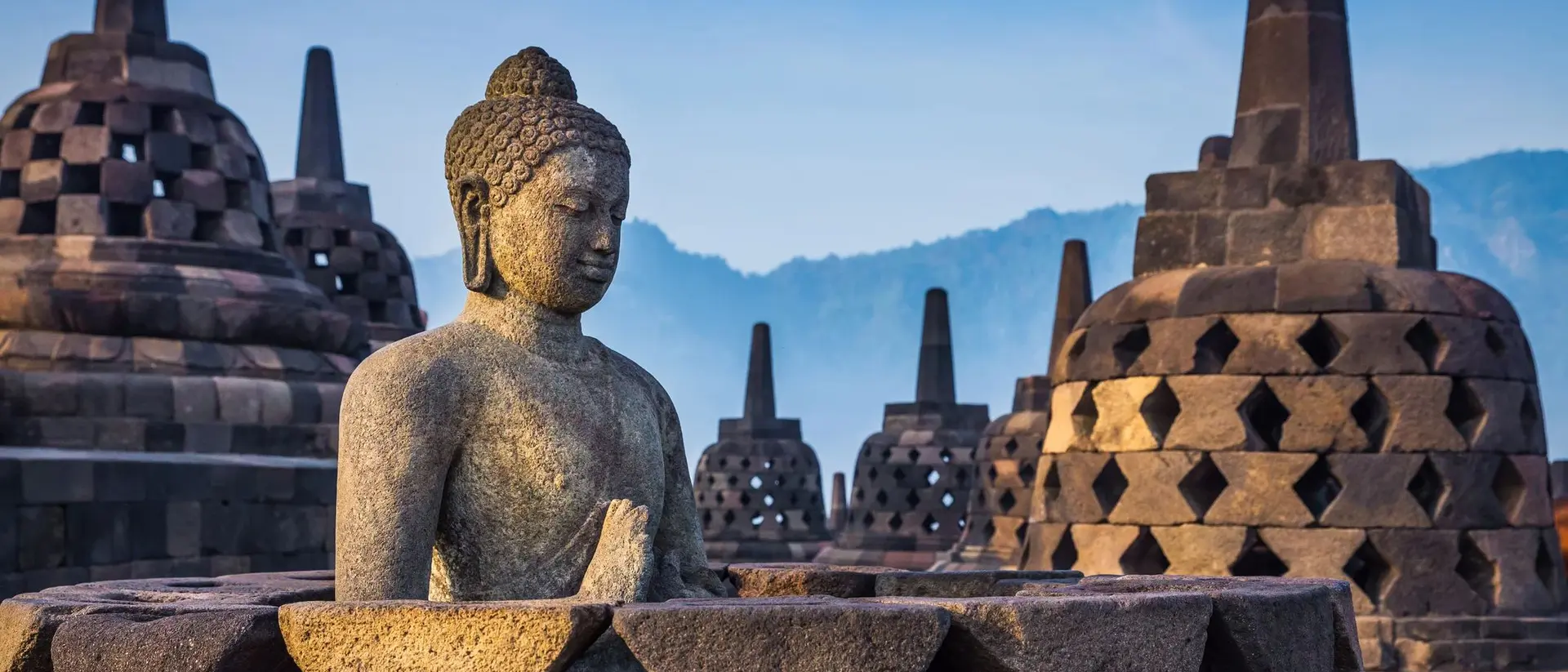
In Central Java, meanwhile, greet the sunrise at Borobudur, watching the ancient stone carvings glow in the early light. In Yogyakarta, attend a shadow puppet performance showcasing the talents of master puppeteers, who weave epic tales accompanied by gamelan music.
For an even more immersive experience, stay in a tribal village in Sulawesi, learning about Toraja customs and rural daily life. Traveling with a knowledgeable local guide ensures that these moments are both accessible and enriching, providing deeper insight into the customs and meanings behind what you see.
To start planning your own Indonesian cultural journey, speak with one of our Destination Specialists today
Featured Indonesia Trip Ideas
Indonesia Travel PackagesClassic Bali: Ubud, Highlands & Sanur
Bali, Sanur, Uluwatu Temple, and UbudDiscover Bali's scenic rice terraces, sacred temples, vibrant markets, tropical beaches and cultural traditions from Ubud to Sanur.
12 days
From US$3,322/p.p.
Request a Quote
Classic Bali: Ubud, Highlands & Sanur
Bali, Sanur, Uluwatu Temple, and UbudDiscover Bali's scenic rice terraces, sacred temples, vibrant markets, tropical beaches and cultural traditions from Ubud to Sanur.
12 days
From US$3,322/p.p.
Request a Quote
Travel Stories
Get inspired about Your Trip to Indonesia
Why Seoul Belongs on Every Beauty Lover's Travel List
Typically, when I travel, I only bring a carry-on suitcase, even internationally. However, flying into Incheon Airport for the first time, I had a che...
K-Beauty at the Source: Why Your Wellness Routine Leads to South Korea
South Korea's beauty industry has almost certainly reached your home already. According to Korea's Ministry of Food and Drug Safety, the country expor...
Hitting the Streets on a Pedicab Tour of Seoul
South Korea has earned a unique spot among Asian destinations for its food, history, traditions, and, more recently, its pop culture. Over the last se...
Frequently Asked Questions
What are the main religions in Indonesia?
What are the traditional customs tourists should know in Indonesia?
Dress modestly, remove shoes before entering homes or temples, use your right hand for giving or receiving, and show respect to elders and religious leaders.
What is the significance of Balinese ceremonies?
Balinese ceremonies honour local gods, mark life events, and maintain balance between the spiritual and physical worlds. They often involve offerings, music, and dance.
How do Indonesians typically greet one another?
A handshake combined with a slight bow is common, often accompanied by “Selamat pagi” (good morning) or other time-appropriate greetings.
What are some cultural taboos to avoid in Indonesia?
Avoid touching someone’s head, pointing with your feet, stepping on religious offerings, or displaying affection in public.
Indonesia Travel Information
Not sure which theme is right for you?
Unlock more by subscribing to our newsletter.
With our newsletter, you’ll get access to regular communications that inspire you and help you explore the world your way.Exclusive Savings
Insider Benefits
Trending Stories
ExcellentBased on 5,318 ReviewsThank you to Goway for a great and enjoyable 7 day tour in China, for our Canadian group of 14! Very special thanks to the local guides in Shanghai, Xi’an and Beijing ( Richard, Richard and James) who were second to none! Each was a knowledgeable ambassador for their home city, working hard to ensure our enjoyment and comfort, and to showcase the beauty of each area and its current and historical sites. They very kindly and patiently assisted everyone, and especially accommodated 2 of our group who encountered unexpected wellness challenges. The local bus drivers for our group were experts too, keeping us on time and safe on the roads and highways. Hotels were beautiful, welcoming, well located and appointed, quiet, comfortable and clean. Additional travel arrangements by air and high speed train went off without a hitch. KATHLEEN LLOYDThis was the first time we used Goway Travel and Brooke Theron was absolutely the best to deal with. Our safari in Africa was fabulous and we were able to have all four questions answered before we left. It was a trip to remember and we would recommend both Brooke and Goway to other who are looking for a great experience. Thanks Brooke and Goway.Joyce RobinsonWe decided to go to France for 3 weeks in September and knew we needed help planning the trip (we made this decision in August so a very short time frame. We had traveled with Goway a few years ago and were hoping they could help. Our specialist, Farnaz Bagheri, was fantastic, she listened to what we wanted to do and where we wanted to go. She literally arranged everything with her French partners. The guides and drivers were wonderful the accommodations were excellent. Communication was easy from the first discussion to the time we got home. Farnaz planned for us an exceptional trip in a very short time frame. Promise next trip we will contact Goway much earlier. Thanks againSue BlakeOur experience was amazing! The booking process went great. We just had to pack our clothes and everything else was taken care of thanks to Goway Travel… Lori Mezzomo!!! Lori was fantastic. Everything from flights to transfers to excursions was perfect! Can’t wait to go back and i would definitely use Goway Travel again!!!Marie IdolMaria Spitman provided exemplary service to us! Her expertise, attention to detail, timely replies and kindness were unmatched. We will definitely recommend her to others who we know are considering travel to Asia. Alice StaniforthMichael Keon and his crew did a fine job coordinating our trip to Turkey. His contact in Turkey, Mr. Omer was in contact with us almost daily reminding us of our schedule and pick up info. He was terrific. Very informative and insightful guides. And large comfortable vehicles on every trip. Awesome trip. Tom and Sharon Tom and Sharon, Toronto, Canada We loved the trip itinerary and everything was organized so well! Lori was always very responsive and answered our questions promptly. Thank you for an amazing trip!Jelena PoprzenAs a travel advisor, I recently booked a group of clients on a Goway tour in China following their paddleboat competition, and I couldn’t be happier with the experience.
Christine and Tanya in the groups department were incredibly helpful and made the entire process seamless. Their support was greatly appreciated!
The feedback from my clients was overwhelmingly positive, with particular praise for the local tour guides, who helped make the trip so memorable. Everyone had a wonderful time.
Thank you, Christine, Tanya, and the Goway team, for taking such great care of my clients. I would happily recommend Goway and look forward to working with them again!customerI wanna start off by saying that Farnaz our agent was excellent!!! she planned the whole experience from start to finish. We did not have to worry about one thing the entire trip. All the hotels were great. Our transfers from hotels to fairies to airports were all available and always on time. The excursions she planned for us were all top-notch. I was a little skeptical, but just finding GOWAY online stumbling across it. But I’m so glad I made the choice to use them. I hope they definitely using the company again and especially our agent Farnaz!!! Thank you do mych for a wonderful experience! CatherineOur goal for this trip was a stress free honeymoon where we did not have to think about anything! Goway made that successful. Everything was planned and ready for us. We just had to show up. Brooke recommended fantastic accommodations that were in great locations, clean and comfortable. The tours were took with Thompson's Africa were incredible as well. Brooke was helpful throughout the entire booking process & we wouldn't have had such an incredible experience without her. We really loved our South African holiday and hope to travel there or other locations again with Goway.Taylor
Verified
Verified
Verified
Verified
Verified
Verified
Verified
Verified
Verified
Verified